Triumph TR7 Production Years
Eight years from the first pilot-production cars at Speke in 1974 to the last sales of 1982, each in turn: where the TR7 was built, what changed, what happened on the stages and the circuits, and how the American model years ran.
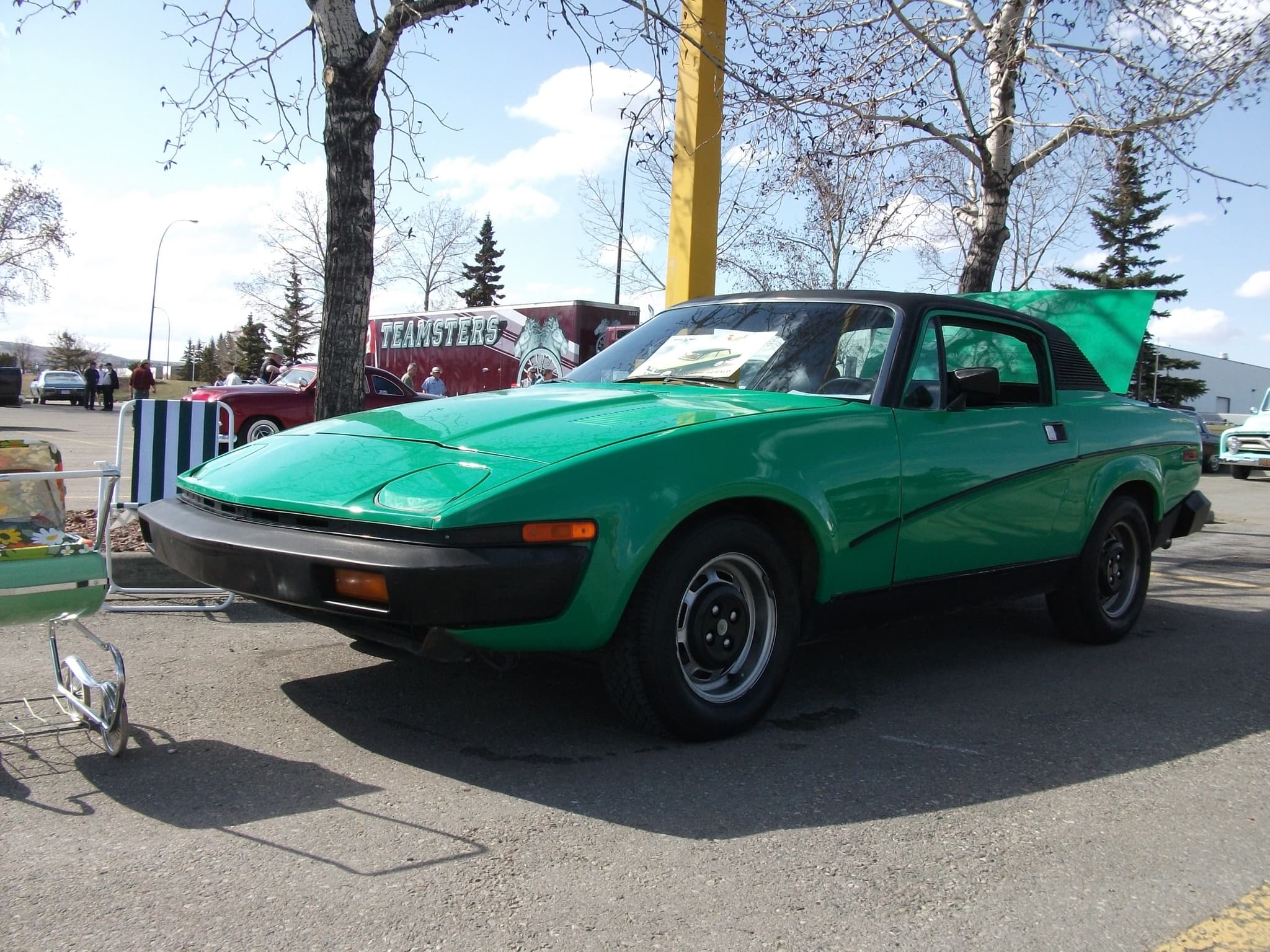
The TR7's years can be counted in three ways: by when the car was built, by when it was sold, and, in America, by model year. Building began at Speke in September 1974 and ended at Solihull in October 1981; sales began in the United States in 1975 and in Britain in 1976, and new cars were still being sold in 1982.source 1source 2source 3
Calendar years and model years
Each year below is a calendar year at the factory: where the TR7 was built, what changed, and what happened on the stages and circuits. After the first, which began with ACL 1 in January 1975, each American model year began in the summer or autumn of the year before it, as the sections below note. The North American TR7s page gives each model year's numbers.
BL's own table by calendar year has a row for the TR7 fixed-head coupé, for home and for export:
| Year | BL's TR7 FHC row | For Britain |
|---|---|---|
| 1975 | 15,401 | 41 |
| 1976 | 32,743 | 6,923 |
| 1977 | 22,936 | 8,408 |
| 1978 | 6,782 | 1,265 |
| 1979 | 18,658 | 2,451 |
| 1980 | 1,262 | 1,174 |
The table has a separate row for the drophead only from 1980, although American convertibles were built from January 1979, so its 1979 row holds them too. The dropheads of 1980 and 1981, and the coupés of 1981, are counted on the convertible and coupé pages. Ate Up With Motor's round figure for 1976, almost 33,000, agrees with the table.source 2source 4
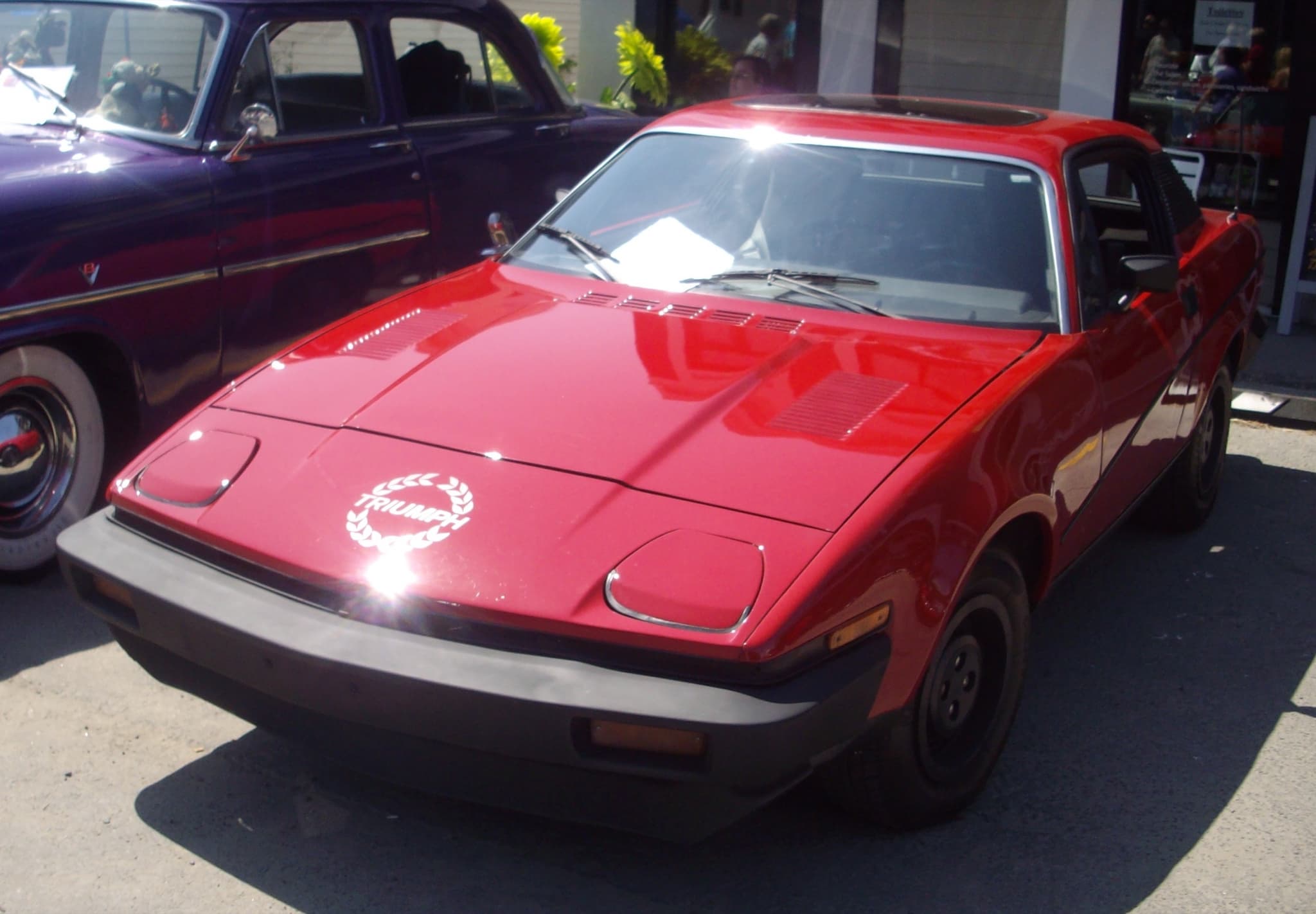
1974
A pilot line at Speke No. 2, Liverpool, began building TR7s in September 1974, after a slow passage from the board's decision of 1971 through the merger of Rover and Triumph, and BL's figures for its year to the end of that September already include the first cars. The numbered American cars followed in January 1975.
1975
January ended with a press launch in America, and Chicago's show, by AROnline's account, gave the public its first look; from April dealers had a few cars to sell. AROnline counts 6,211 sold in America that year. Home-market numbering, ACG, began in June, almost a year before British sales, and in October the London Motor Show had Britain's first public TR7 on its stand, when Speke was building about 600 a week. The American 1976 model year began in September, with five-speed and automatic gearboxes (transmissions) as options, though no automatic for California.source 8source 1source 9source 2source 10source 4source 11
1976
Geneva saw the European car in March, and British sales opened on 19 May. To help it, Leyland ended European sales of the MGB and the Midget in June, and the last TR6 was built on 15 July. No other year in BL's table is larger than 1976. In America BL sold two special editions from mid-year, the regional Southern Skies and the Victory Edition; Group 44 took a TR7 to the SCCA's national races; and about 16,000 TR7s were sold. The works team at Abingdon began rallying the car, and in October won its first rally, the Raylor, a national event. The American 1977 model year began in September, with ACW numbers.source 4source 12source 13source 2source 14source 15source 11
1977
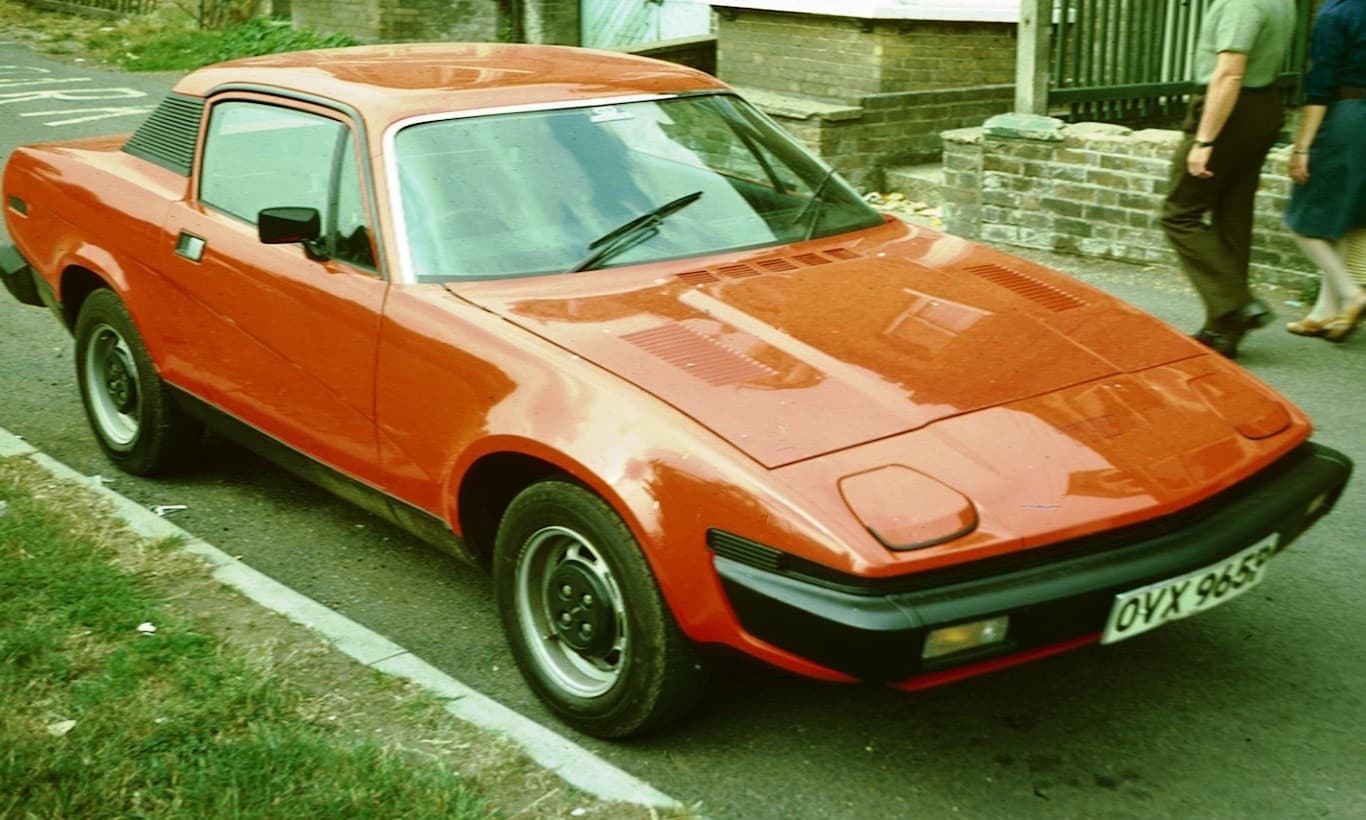
March brought tartan to the seats, new wheel trims and retuned suspension; earlier in the year shorter springs had lowered the car. Between February and October Speke built the TR7 Sprints and the pre-production V8 coupés that became the TR8. Seven of the year's home-market coupés in BL's table were V8s, which the table marks as possibly rally cars. The American 1978 model year began in June; the 1978 model's bodies had interior lights in the doors, Graham Fountain notes of the Sprints built on them. For weeks in March, and again in September and October, Speke's line stood still, waiting on disputes at suppliers and elsewhere in BL; then, on 1 November by AROnline's date, Speke's own workers walked out, for the first time, Ate Up With Motor writes.
On the stages, Tony Pond and Fred Gallagher won the Boucles de Spa in February, the works team's first international victory, and in America John Buffum won the first of his four SCCA Pro Rally titles in Triumphs. About 18,000 TR7s were sold in America.source 10source 4source 2source 16source 5source 14source 17source 11
1978
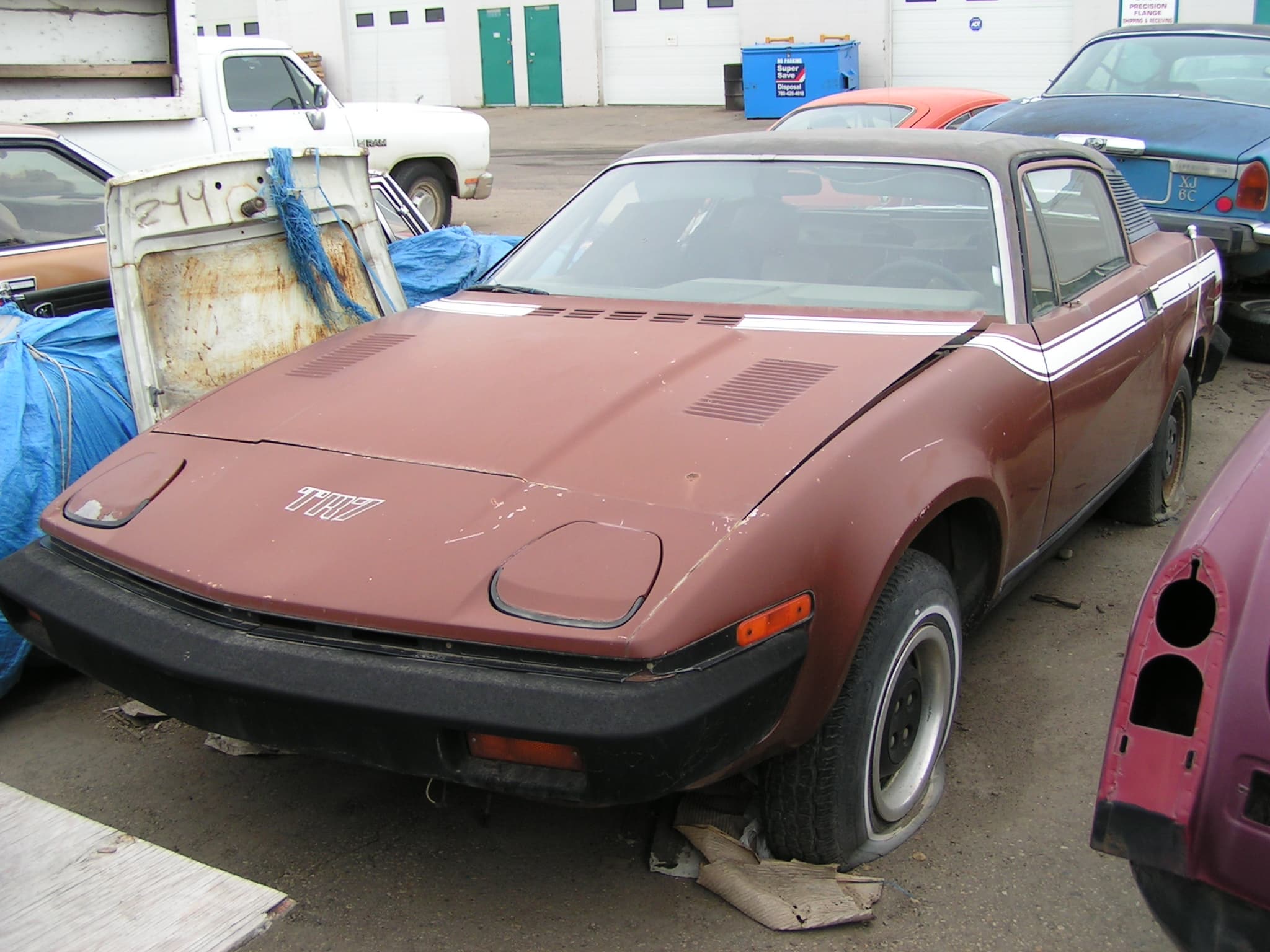
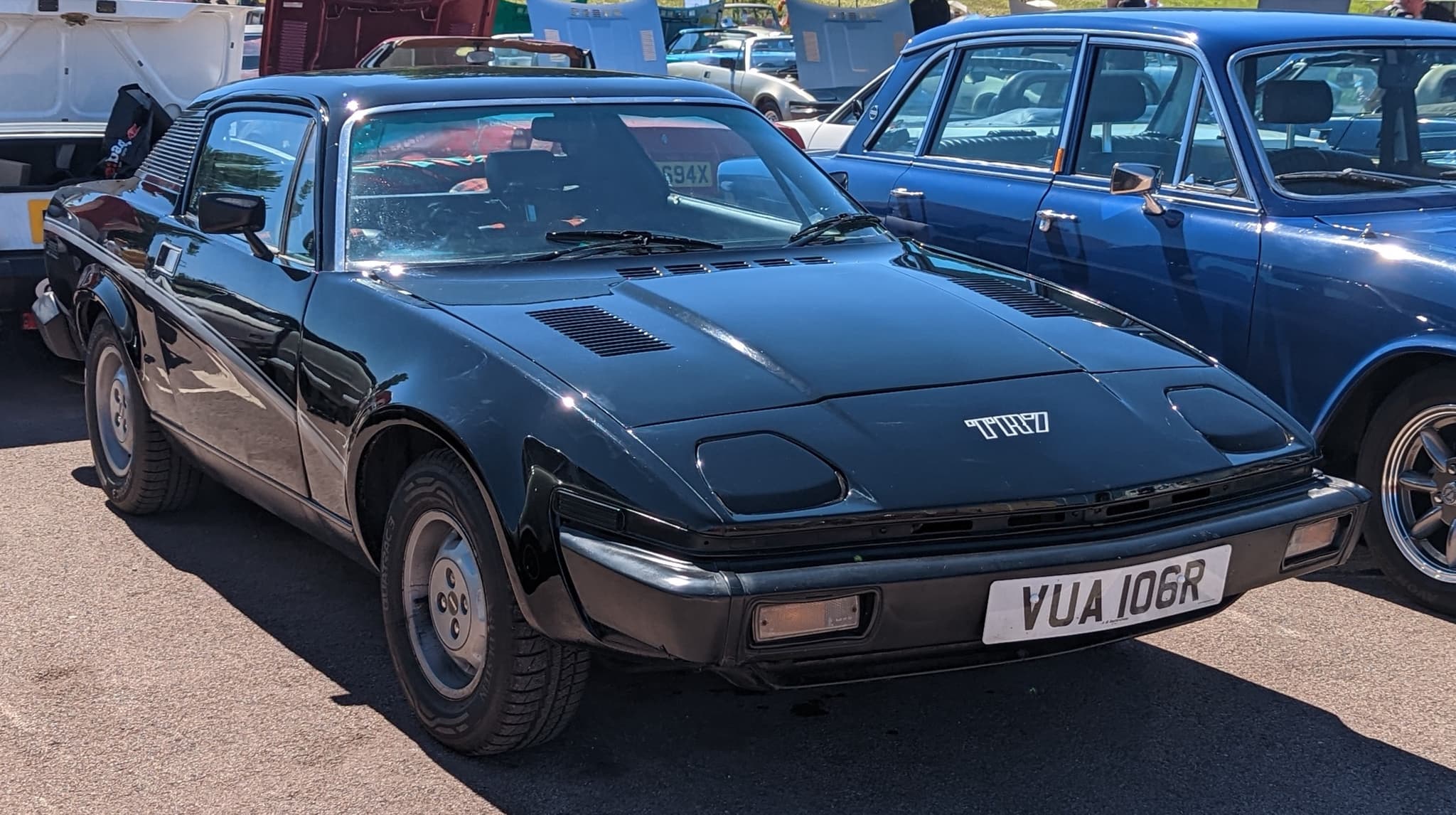
On 15 February the closure of Speke No. 2 was announced. When the strike ended, Speke built nearly 6,000 more TR7s that spring, and its last cars included, in April and May, about 10 prototype convertibles for America, before it closed in May. In America that July, owners filed a class action over the early cars' faults. The TR7 came back at Canley in October, with more than 200 changes, the five-speed gearbox standard and a laurel-wreath badge on its nose.
The works team's TR7 V8 was homologated on 1 April, and Pond won with it at Ypres in June and on the Manx in September. The American 1979 model year brought Canley's TCW coupés and, from January 1979, the TCT convertibles.source 18source 4source 2source 19source 20source 14source 21

1979
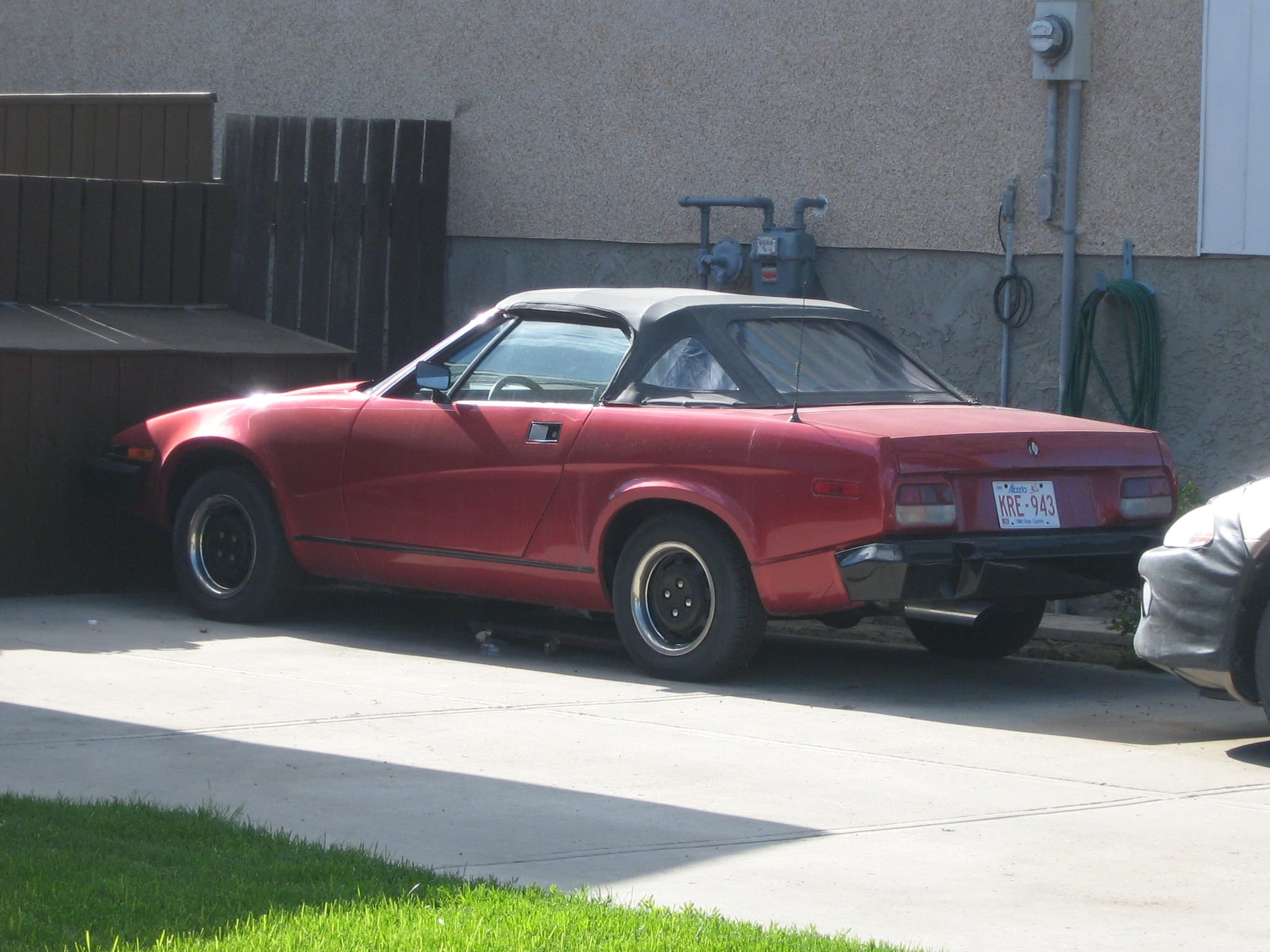
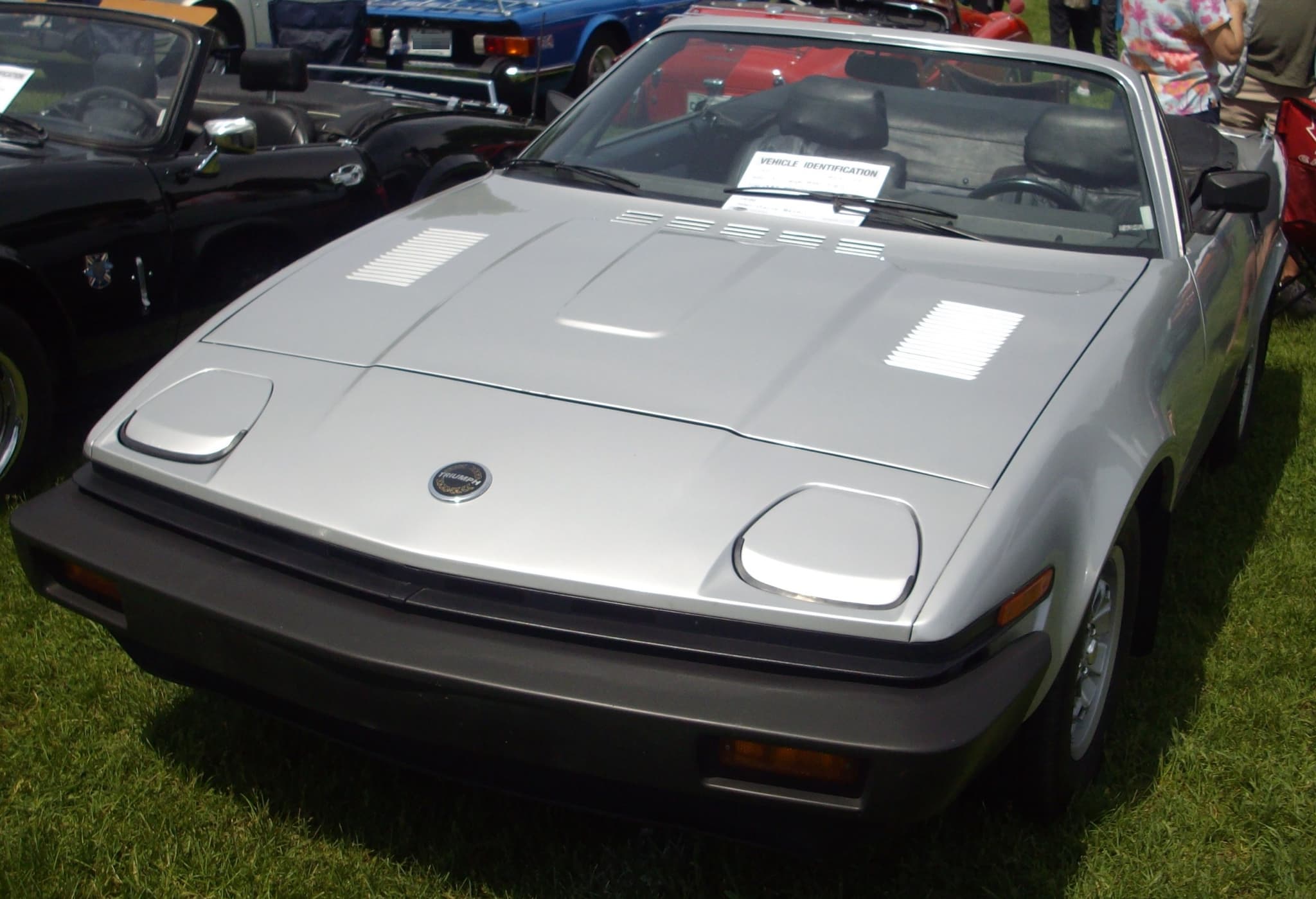
Canley's only full year. The convertible was built from January, shown at the Los Angeles Auto Expo in the spring and on sale in America in July; BL's table counts it among the coupés. Abingdon's MG factory was to close, BL said in September, and Canley was next: car assembly there would stop in 1980, BL said a few months later. From October every new TR7 carried a VIN. Lee Mueller was the SCCA's D Production champion in a TR7, by Ate Up With Motor's account, and Tony Pond spent the year with Chrysler and Talbot in the Sunbeam Lotus. The convertibles' 1980 model year began in June, with the second series of TCT numbers.source 2source 20source 22source 4source 23
1980
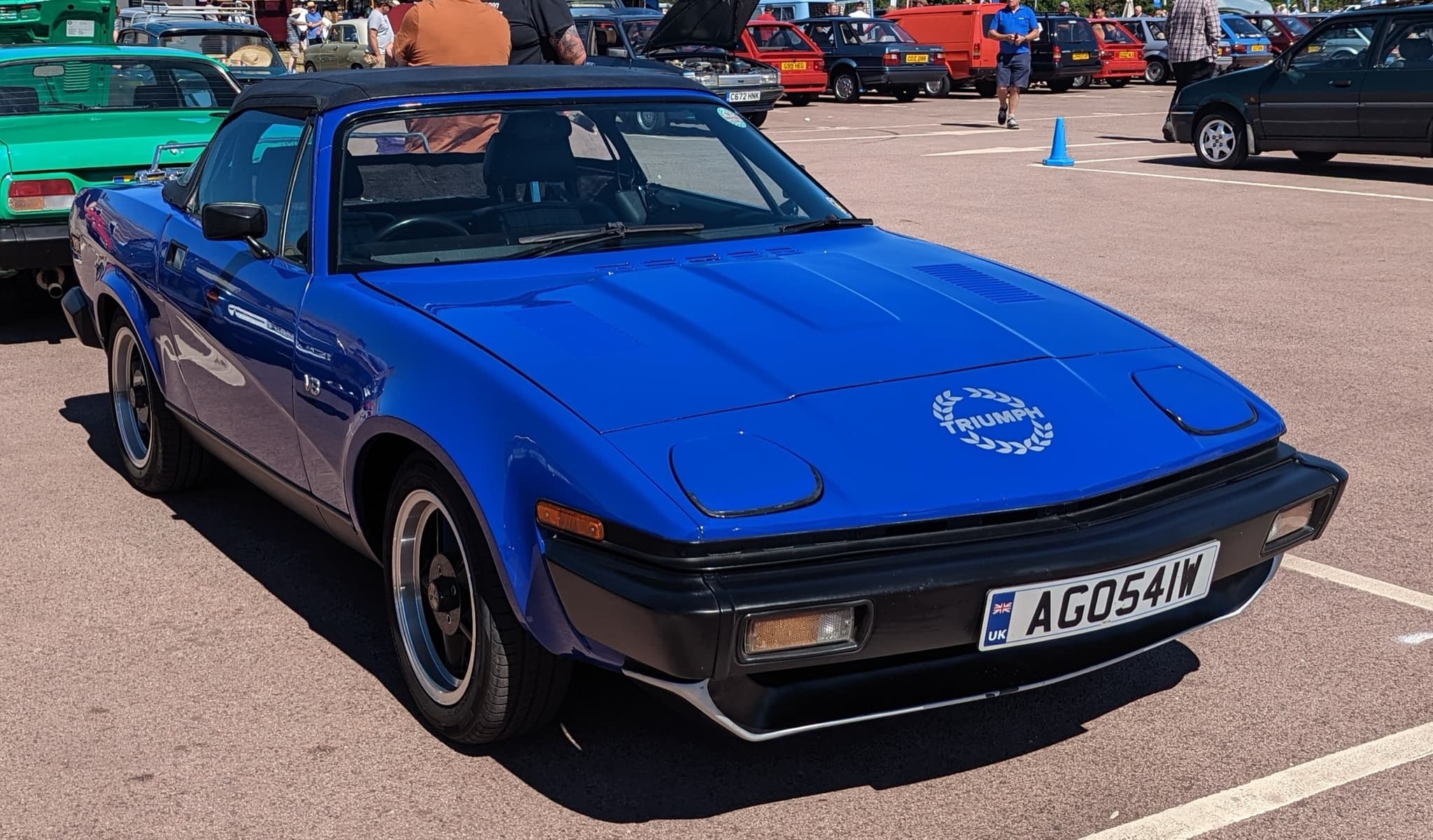
The British TR7 Drophead was launched in March and shown at Geneva. On 1 April Solihull began building TR7s; its whole first run, by Michael Hart's count, went to America as convertibles, most of them TR7 Spiders, and from 1 July California's cars had fuel injection. Canley's line stopped in August. By midsummer BL had dropped the Boxer, its MG-badged TR7. In June the Janspeed and ADA Le Mans TR7 turbo failed to qualify for the 24 Hours. Pond, back with the works team, won Ypres and the Manx again, and the RAC Rally in November was the team's final outing. The American 1981 model year began in September, every car of it injected.source 24source 10source 25source 2source 4source 26source 21source 14source 27source 23
1981
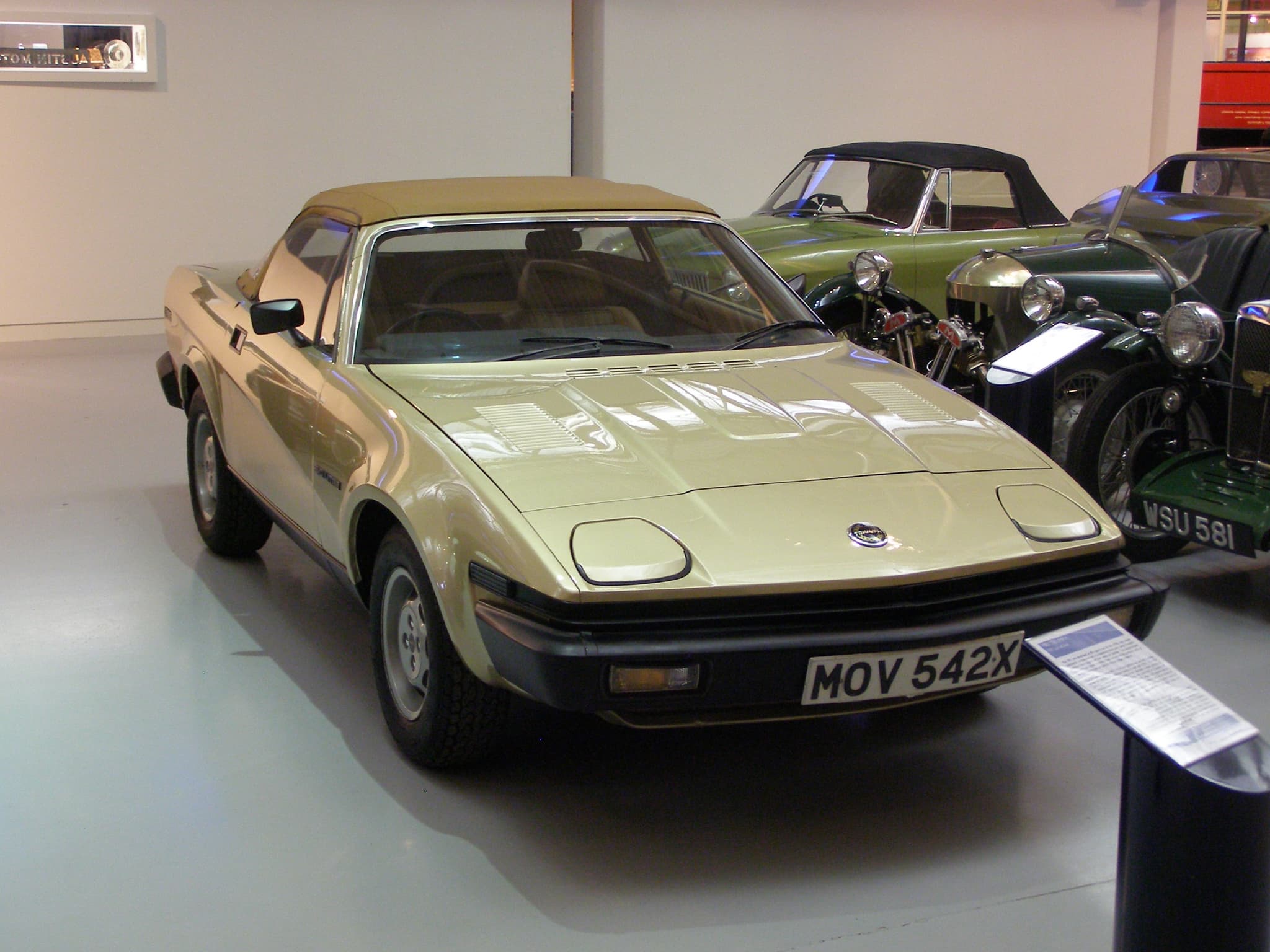
From May Solihull's VINs began with SAT. In the same month BL said Solihull would build no more cars, which ended the TR7, and most of the development cars for the O-Series TR7, due that autumn, were listed as scrapped in June; Canley Classics' records show that many survived. In August more than 100 newly registered TR7s from BL's fleet were sold at auction at Measham. Solihull stopped building TR7s in October; by chassis number the last was a right-hand-drive drophead.source 4source 2source 1source 28source 27
1982
No TR7s were built in 1982. New ones were still on sale, and in Canada they were advertised as 1982 models.
Sources
Every source the site cites is on the sources page.
- Primarymade at the time, by the maker or by people who were there
- Referenceserious later work: clubs, specialists, magazines, books
- Uncheckedencyclopaedias and enthusiast sites: cited beside a good source, named in the sentence, or marked Unchecked
- Keith Adams, "The Cars: Triumph TR7/TR8 development story", AROnline, updated 8 Feb 2024, timeline, September 1974 to October 1981; timeline: production starts at Speke, September 1974; Chicago show caption; timeline, May and October 1981. aronline.co.uk/cars/triumph/tr7-tr8/bullet-development-story Reference
- Paul Towle and Rex Holford (update) and Mark Elbers (update), "TR7 & TR8 Identification & Production Data Explained", TR Drivers Club, 1987, updated (© 2016), the factories' dates; BL's tables; BL production figures by calendar year (table b), the TR7 FHC rows, home and export; the 1976 model year from September 1975; Speke, the financial year to September 1974; ACL 1, January 1975; ACL 1, January 1975; ACG from June 1975; the 1976 model year from September 1975; ACW from September 1976; ACH and ACN, February to October 1977; the 1977 row's seven V8 coupés; the 1978 model year from June 1977; ACT, April and May 1978; Speke's 1978 output; TCW and TCT; TCT from January 1979; the 1979 FHC row; VINs from October 1979; TCT 110001 from June 1979; the 1980 FHC row; Canley to August 1980; SAT from May 1981; the last car, 408534; the model-year letters A, B and C. trdrivers.com/tr7_-_tr8_vin_numbers.htm Reference
- Chris Cowin, "History: Exporting British cars to Canada – Part Two: The British Leyland Years", AROnline, 19 Aug 2025, 1982 TR7s advertised; 1982 TR7s advertised in Canada. aronline.co.uk/history/exporting-british-cars-to-canada-pt2 Reference
- Aaron Severson, "Way of the Wedge: The Triumph TR7 and TR8", Ate Up With Motor, 5 Feb 2012, pp. 1–5, p. 4, almost 33,000 in 1976; p. 2, pilot production in mid-1974; p. 3, the 1976 model-year options; no automatic in California; p. 3, Geneva; the end of European MGB and Midget sales; Southern Skies and the Victory Edition; p. 2, the lower ride; p. 4, the stoppages and the strike; p. 3, the class action; p. 4, nearly 6,000 built at Speke in the spring; the closure; p. 3, Mueller's title; p. 4, Abingdon and Canley; p. 4, the Boxer cancelled; p. 2, every 1981 model-year car injected; p. 4, the announcement and the rebates. ateupwithmotor.com/model-histories/triumph-tr7-tr8 Reference
- Keith Adams, "Concepts and Prototypes: Triumph Lynx (1972–1978)", AROnline, 20 Jan 2024, the start of TR7 production, September 1974; 1 November 1977. aronline.co.uk/cars/triumph/tr7-tr8/triumph-lynx Reference
- Malcolm Paris (compiler), "Triumph TR7 / TR7 V8 and TR8 Buyers Guide", TR Register, facts table, "September 1975". tr-register.co.uk/resources/buyers-guide/triumph-tr7-tr8 Reference
- Wikipedia (DE), "Triumph TR7", the 1975 start. de.wikipedia.org/wiki/Triumph_TR7 Unchecked
- Clive Richardson ("C.R."), "The TR7 makes a quiet British bow", Motor Sport, Feb 1975, p. 30, p. 30, the American press launch. motorsportmagazine.com/archive/article/february-1975/30/the-tr7-makesa-quiet-british-bow Primary
- Triumph Sports Owners Association, Triumph Sports Owners Association Newsletter, May–June 1976, May–Jun 1976, April 1975. vintagetriumphregister.org/tsoa/TSOAMayJun76.pdf Primary
- Motor Sport, News, editorials and short items on the TR7 (group), Jul 1975 – Aug 1981; Apr 2002, Nov 1975, p. 30, the London show and 600 a week; Apr 1977, p. 33, the March changes; Apr 1980, p. 58, Geneva. motorsportmagazine.com/archive Primary
- Chris Cowin, "History: Exporting British cars to the USA – Part Two", AROnline, 31 May 2025, updated 21 Oct 2025, 6,211 sold in the US in 1975; about 16,000 sold in the US in 1976; 18,000 sold in the US in 1977. aronline.co.uk/history/exporting-british-cars-to-the-usa-part2 Reference
- Clive Richardson ("C.R."), "Triumph TR7: sports car or two-seater saloon?", Motor Sport, Jun 1976, p. 63, p. 63, 19 May 1976. motorsportmagazine.com/archive/article/june-1976/63/triumpuh-tr7 Primary
- Graham Robson (foreword), Triumph TR6 1969–1976 Parts & Accessories Catalogue, Rimmer Bros, edn 2.2 (source code TR600313), p. 5, the last TR6, 15 July 1976. rimmerbros.com/images/PDFs/TR6-Esther.pdf Reference
- Chris Turner (credited by the club), "The Works Triumph TR7 V8 Rally Cars" and the car pages (group), TR Drivers Club, rally history, 1976; the Raylor, October 1976; the Boucles de Spa, February 1977; Buffum's first title; homologation, 1 April 1978; Ypres 1978; Ypres 1980. trdrivers.com/articles21/rallyhistory.html Reference
- Triumph Sports Owners Association, Triumph Sports Owners Association Newsletter, March–April 1976, Mar–Apr 1976 (vol. 22 no. 2), Group 44's first races in the TR7. vintagetriumphregister.org/tsoa/TSOAMarApr76.pdf Primary
- Graham Fountain, "The TR7 Sprint Story", TR Driver (TR Drivers Club), 1991 no. 2, the 1978 model-year body. trdrivers.com/articles21/tr7sprintarticle-1991.html Reference
- Motor Sport, "Lunch with Fred Gallagher", Apr 2019, p. 53, p. 53, Spa 1977. motorsportmagazine.com/archive/article/april-2019/53/lunch-with-fred-gallagher Reference
- House of Commons (Hansard), "British Leyland", HC Deb 16 Feb 1978, vol 944 cc680–2, c681; the Speaker on the previous night's news. api.parliament.uk/historic-hansard/commons/1978/feb/16/british-leyland Primary
- BBC Liverpool, "The failure of Triumph in Speke", 8 Dec 2009, May 1978. news.bbc.co.uk/local/liverpool/hi/people_and_places/history/newsid_8401000/8401200.stm Reference
- Clive Richardson ("C.R."), "The Triumph TR7", Motor Sport, Jun 1979, p. 58, p. 58, the restart in October 1978; the Canley changes; p. 58, the Los Angeles Auto Expo. motorsportmagazine.com/archive/article/june-1979/58/the-triumph-tr7 Primary
- Motor Sport, Rally reports on the works TR7s (group), Jun 1976 – Jan 1981, Dec 1978, p. 68, the Manx; Oct 1980, p. 102, the Manx; Jan 1981, p. 67, the RAC. motorsportmagazine.com/archive Primary
- Thos L. Bryant, "New from Britain: Triumph TR7 Convertible & TR8", Road & Track (reprinted by the TR Drivers Club), 1979, on sale from July 1979. trdrivers.com/articles21/newfrombritain1.html Primary
- John Davenport, "Public face, private man" (Tony Pond), Motor Sport, Apr 2002, p. 60, p. 60, Pond's year with the Sunbeam Lotus; p. 60, Pond's return for 1980. motorsportmagazine.com/archive/article/april-2002/60/public-face-private-man Reference
- "C.R.", "The Triumph TR7 Drophead" ("Sunshine Seven"), Motor Sport, Apr 1980, p. 35, p. 35, the drophead in Britain. motorsportmagazine.com/archive/article/april-1980/35/sunshine-seven Primary
- Michael Hart, "Counting TR7 Spiders: A Day at the Gaydon Archive", Triumph Wedge Owners Association, © 2013, Solihull from 1 April 1980; the Spiders; injection from 1 July 1980. triumphwedgeowners.org/spider Reference
- Jim Johnson, "The Le Mans TR7 Turbo Entry", TR Drivers Club, Le Mans 1980. trdrivers.com/articles21/lemanstr7turbo1.html Reference
- Keith Cox, "Gaydon cars with a TR7 connection", TR Drivers Club, the rally cars' career ended in November 1980; the last TR7. trdrivers.com/articles21/gaydoncars.html Reference
- Canley Classics, "TR7 & TR8 Experimental Records", the O-Series fleet; the Measham sales, August 1981. canleyclassics.com/api/archive/article/?q=tr7-tr8-experimental-records Primary