Triumph TR7 Review
What the press made of the TR7, from the American launch of January 1975 and the British launch of May 1976 to the Canley car and the convertible: praise for the handling and the cabin, complaints about the brakes and the power, and a divided verdict on the shape.
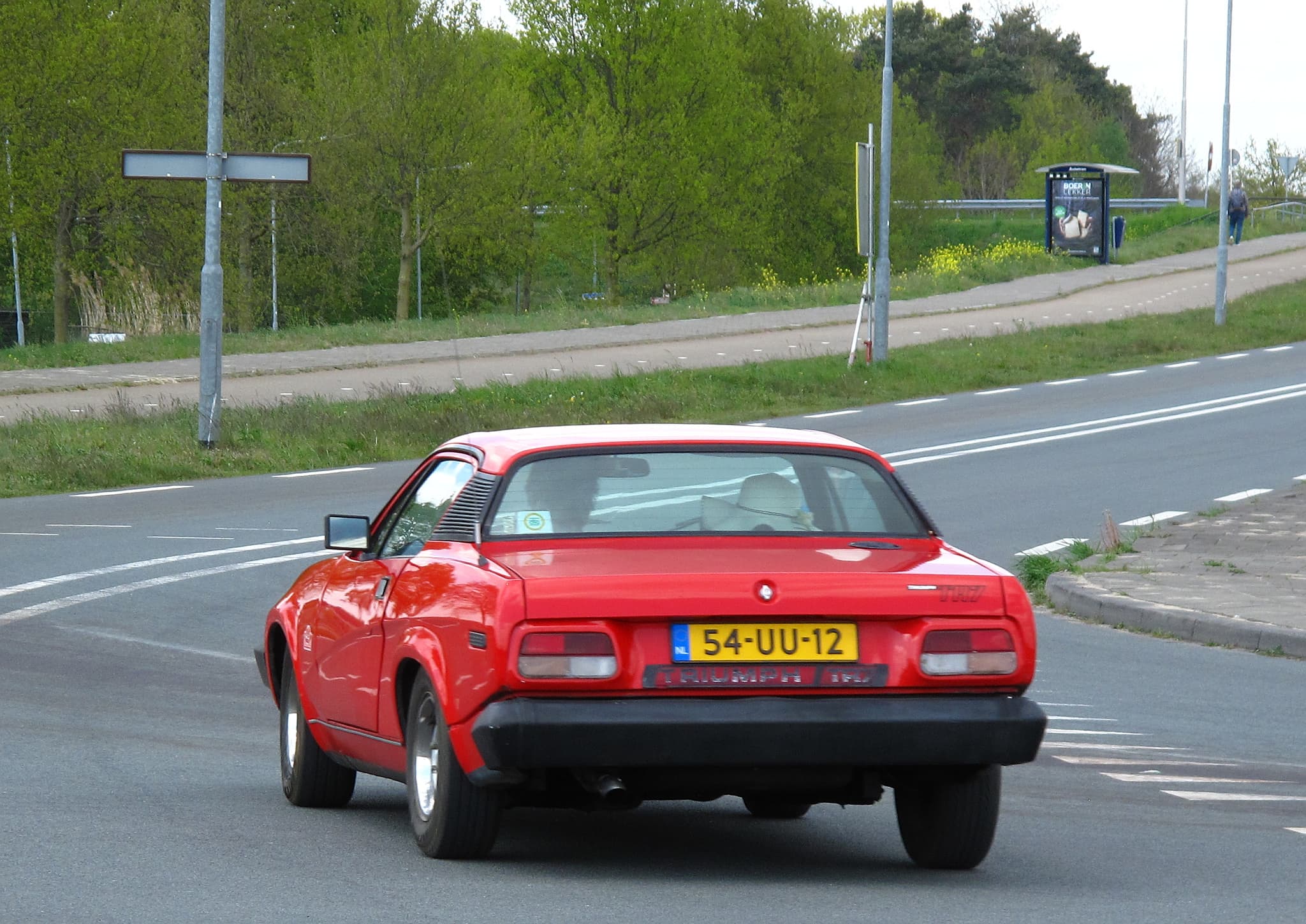
The TR7 met two presses a year and a half apart. Americans drove it first, in January 1975, and found much to like and much to criticise; the British drove it in May 1976 and said much the same, more sharply. By the time the convertible arrived, Motor Sport at least had made up its mind: comfortable, but no sports car. The open car changed the tone.source 1source 2
America, 1975
The American launch was at the end of January 1975, and the reception, as AROnline tells it, was generally favourable except about the styling; Ate Up With Motor, drawing on the magazines of the time, calls it mixed. The testers liked the handling, the tight turning circle and a cabin roomier and more comfortable than the TR6's, and noted that air conditioning could be had. They disliked the brakes and the gearing, short and without overdrive, and Ate Up With Motor adds that the federal engine could not match the TR6's six. Road & Track tested one in April 1975.
The American importer's owners' newsletter collected the magazines' lines for its readers that spring. It quoted Car and Driver as saying, against Ate Up With Motor's verdict on the engine, that the old TR6 "would be the loser in any kind of speed contest", and John Lamm of Motor Trend as writing: "If British Leyland can hold the price of the TR 7 to roughly that of the TR6…". British readers had a preview from Motor Sport, which saw the American car in London and agreed with Triumph on one point: "We agree with Triumph's claim that the TR7 has one of the best and most functional interiors of any sports car (disregarding the stowage complaint)."source 1source 2source 3source 4source 5
Britain, 1976
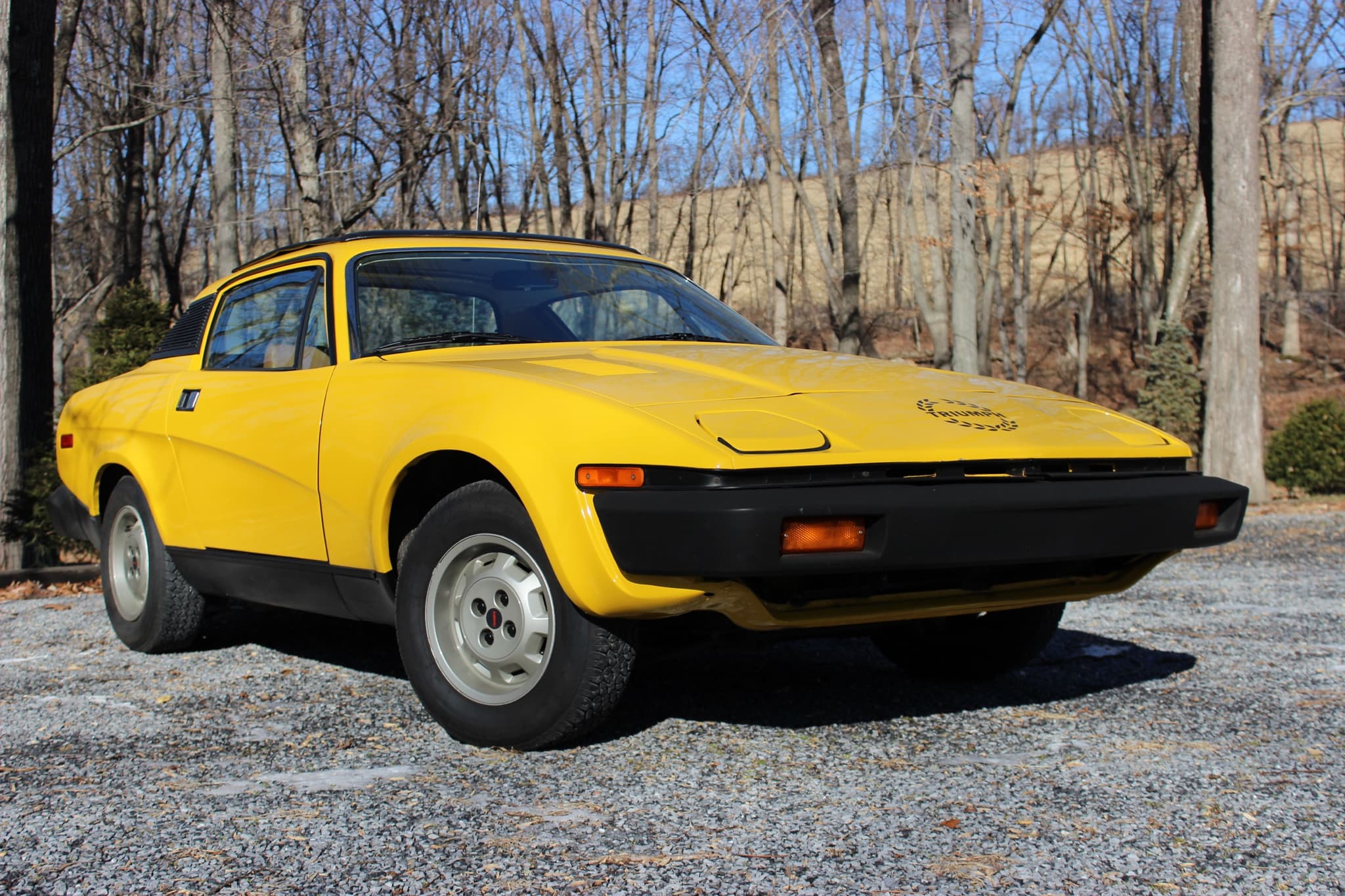
British buyers could have a TR7 from 19 May 1976, the day the embargo ended, but the press could not yet borrow one to test: Leyland claimed to have "insufficient UK cars", Motor Sport reported, so the journalists drove a fleet of them on a run of about 320 km (200 miles) into Wiltshire instead. Clive Richardson came back convinced of one thing:
Whatever else we thought about the car in detail there was no escaping the fact that in the handling and roadholding department this front-engined, rear-wheel-drive two-seater from Leyland is absolutely outstanding.
The rest of his report was harder. The car was supremely comfortable, he wrote, but had "brakes which we found positively inadequate", and too little power to use the handling it had; "until more powerful versions are available the true enthusiast might look elsewhere". The brakes, at least, had an excuse: Motor Sport learned later that the launch cars had been fitted with the wrong pad material. Autocar, in the words AROnline quotes, turned round an old jibe about the TR5, "an engine in search of a chassis", and called the TR7 "a chassis in search of an engine". It was not unkind about the car's spirit: "Performance-wise, the TR7 is no sluggard. It tries hard, a little too obviously, and is great fun in the tighter country road that is its favourite going."source 6source 7source 1
The shape
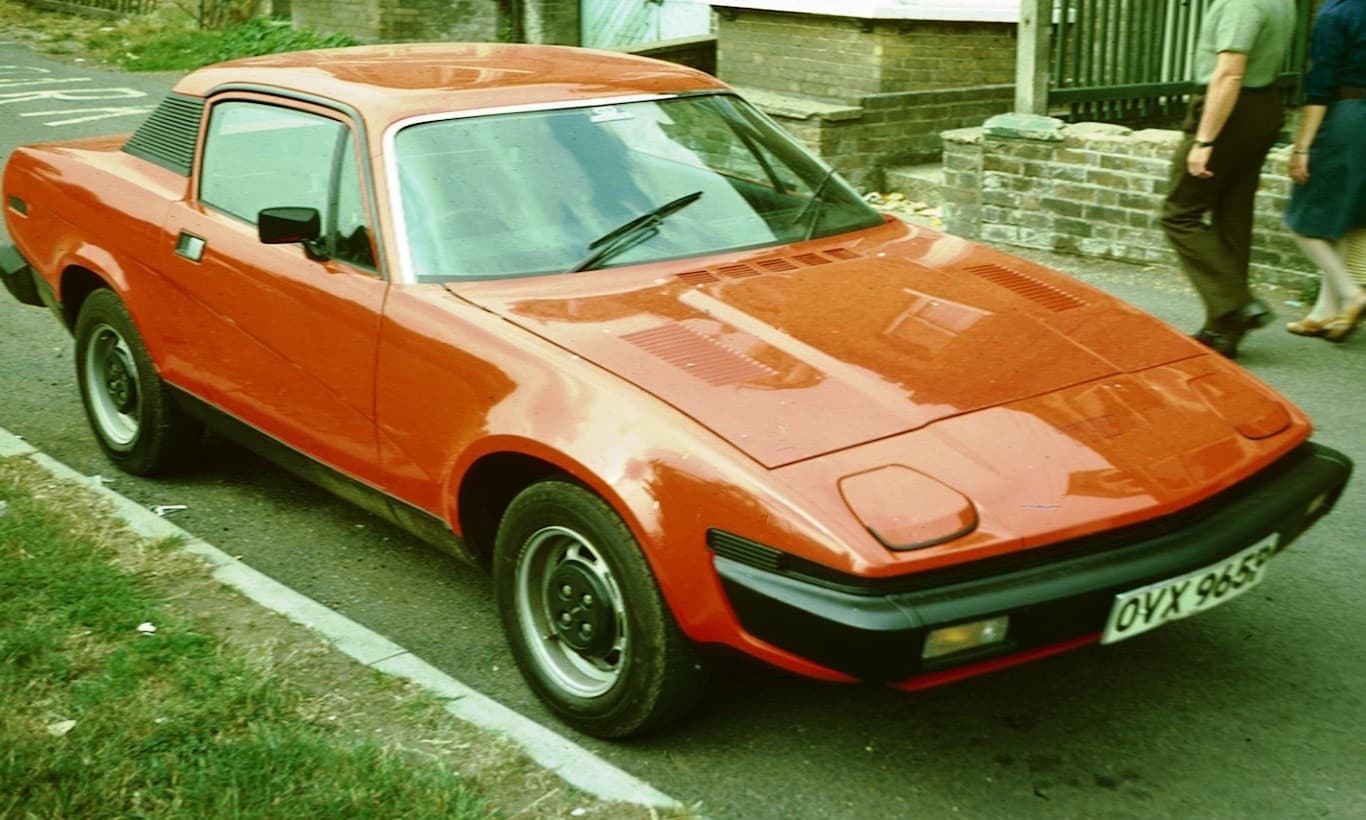
Nothing about the TR7 divided its critics more than the wedge. Leyland's advertising sold it as the shape of the future, and Ate Up With Motor writes that some of BL's own dealers thought it "rather ghastly". Motor Sport's first look found the back of the American car the worst of it:
Unfortunately the rear end looks as though it has been shunted by a London 'bus, largely because of American regulations relating to lights and "5 m.p.h. bumpers".
The story that Giorgetto Giugiaro mocked the line along its flank is told, as the folklore it is, on the TR7 in popular culture.source 5source 2source 1
The Canley car, 1979
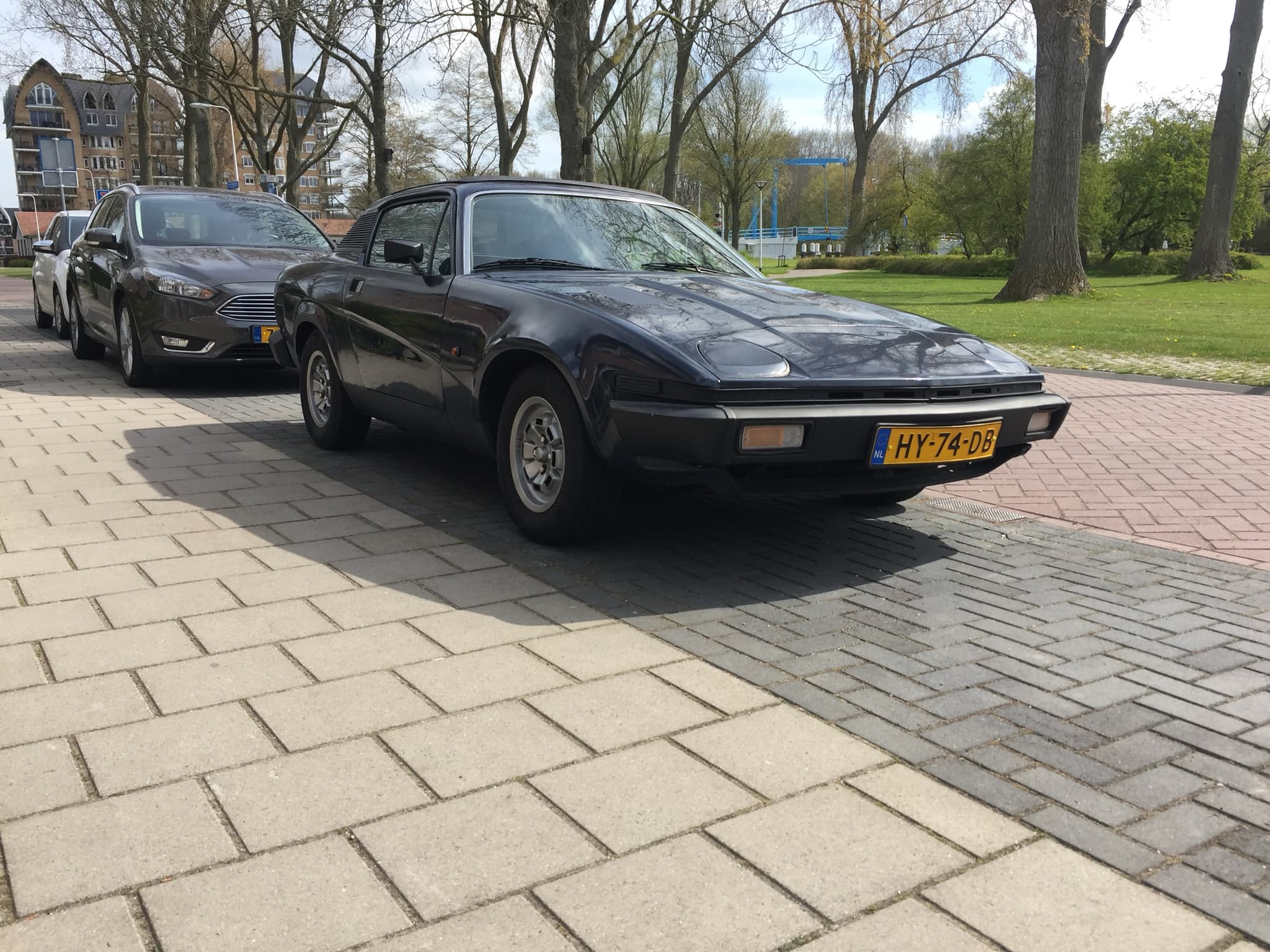
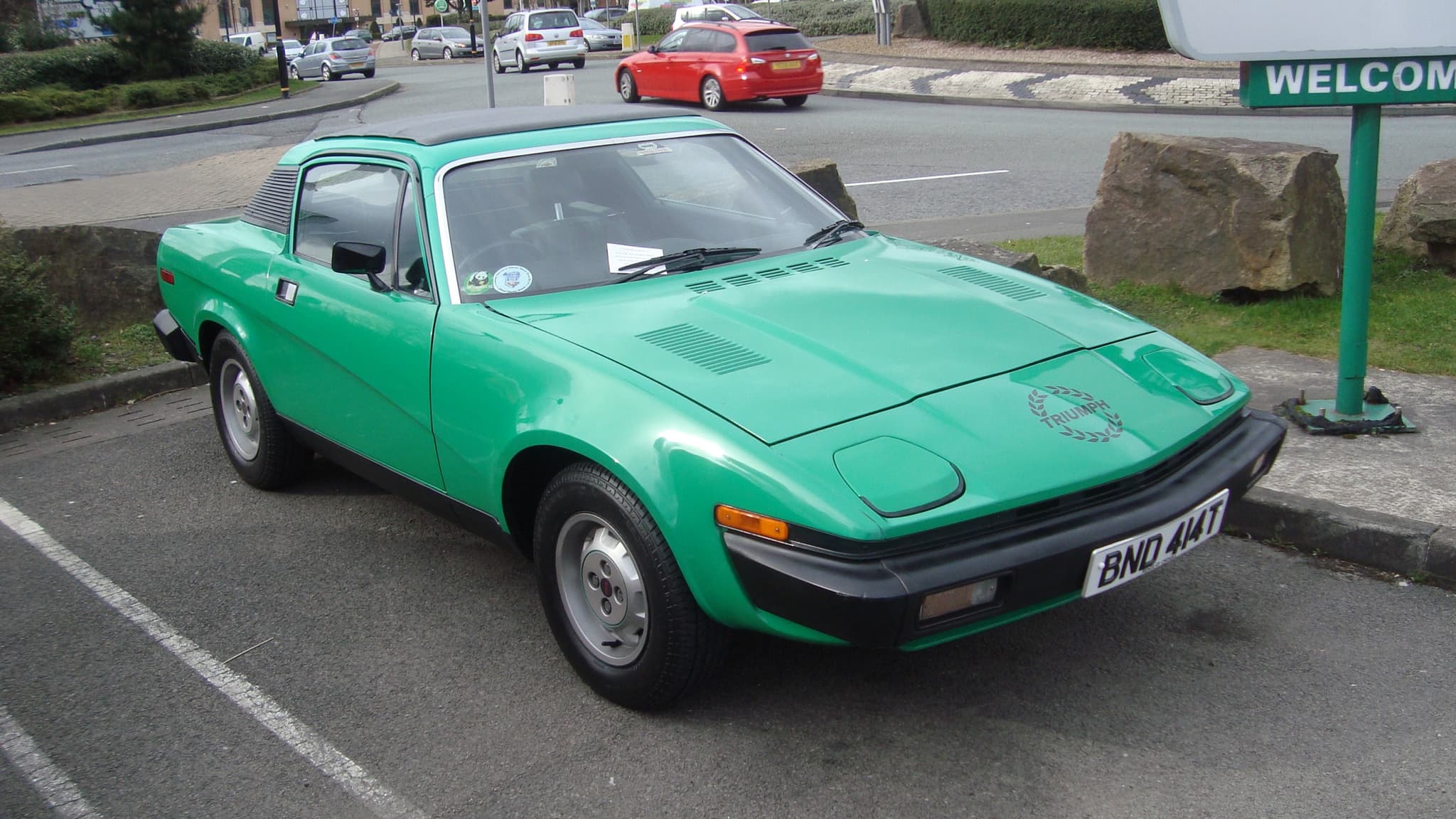
Motor Sport had to wait three years for a TR7 of its own to test, and said so: "One of the few records the Triumph TR7 has set to date is that it has taken longer to obtain an example for a MOTOR SPORT road test than any British vehicle I can recall." The car it finally drove, an early Canley coupé with the five-speed gearbox (transmission), was comfortable and well equipped, and the five-speed was a big improvement. Driven hard, though, the TR7 became "fussily unpleasant", the suspension wallowed, and the car was "neither a saloon car nor a sports car in behaviour", in Richardson's words, "yet it has only two seats in a very attractive and comfortable interior". The magazine's review of the year, in March 1980, called the TR7 "very much a saloon dressed up as a sports car" and said it would rather have an Escort RS2000 or a Golf GTi. The coupé's page gives more of what it found.source 7source 8
The convertible, 1979–80
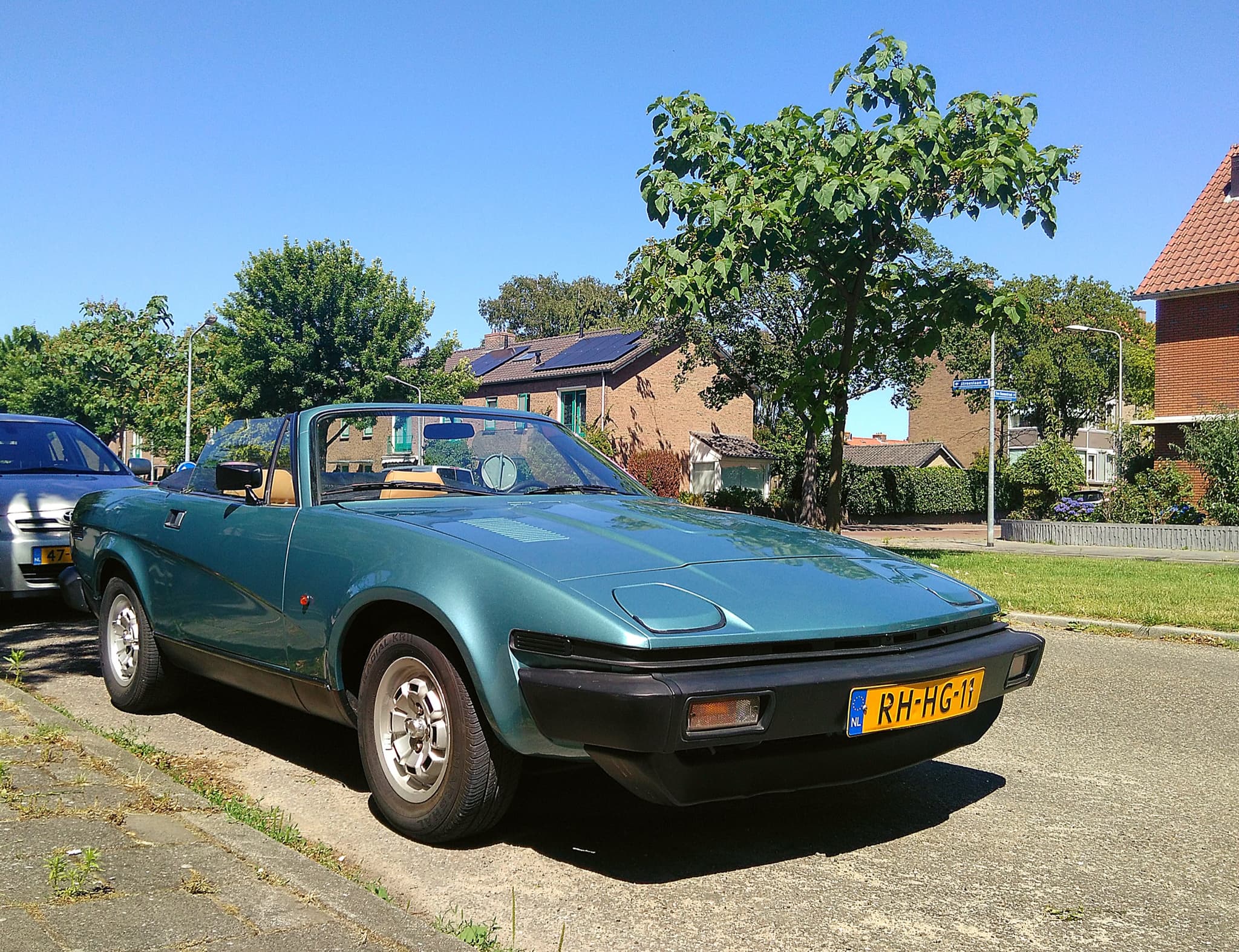
The open car was better received. Road & Track's first drive, in England in 1979, was warm, and Motor Sport, at the press launch at Woburn Abbey late in February 1980, found the open car's handling unchanged from the coupé's, imprecise front end and all, and the closed car's boom reduced. Motor's road test of the drophead that year, as AROnline quotes it, put the case simply:
BL's long-awaited TR7 drop-head represents a significant development over the fixed-head version. Lively performance with plenty of mid-range torque with long legged fifth gear.
What Road & Track wrote is on the convertible's page, with Motor Sport's advice on how best to enjoy one.source 4source 9source 1source 2
The tests found
The table lists the period tests and reports found, and what of each has been read: some in full, others only through a later writer who quotes or cites them.
| Publication | Date | What it was | What has been read |
|---|---|---|---|
| Motor Sport, Clive Richardson | February 1975 | A preview of the American car in London | The whole text |
| Car and Driver; Motor Trend | Early 1975 | American reports | Lines quoted by the importer's newsletter, February–March 1975 |
| Road & Track | April 1975 | An American road test | Cited by Road & Track in 1979; not read |
| Motor Sport, Clive Richardson | June 1976 | The British press launch, a drive into Wiltshire | The whole text |
| Autocar | 1976 | Its report at the British launch | Passages quoted by AROnline |
| CAR, L. J. K. Setright | June 1976 | "TR7: Lousy Icing: Lovely Cake" | Cited by Ate Up With Motor; not read |
| Popular Science | October 1976 | "Small sports cars", a group test | Cited by Ate Up With Motor; not read |
| Hot Car | March 1977 | "Five is alive! Triumph TR7", the five-speed car | Cited by Ate Up With Motor; not read |
| Popular Mechanics | May 1977 | "Automatic TR7" | Cited by Ate Up With Motor; not read |
| Auto Motor und Sport | 14 September 1977 | "Die englische Krankheit" | Cited by Wikipedia; not read |
| Autocar | June 1977 | An Autotest of a British coupé | Its figures, compared in Autocar's TR8 test of 1979 |
| Autocar, Peter Windsor | 1977 | The TR7 against the Fiat X1/9 | A summary by AROnline |
| Motor Sport, Clive Richardson | June 1979 | Road impressions of a Canley coupé | The whole text |
| Road & Track, Thos L. Bryant | 1979 | A first drive of the TR7 Convertible and TR8 in England | The first page, in the TR Drivers Club's reprint |
| Motor Road Tests | 1979 | "Group Test: Two plus twos and a TR" | Cited by Ate Up With Motor; not read |
| Popular Science | July and November 1979 | "Detroit Report"; "Mid-price sports cars" | Not read |
| Road & Track | September 1979 | A test of the American TR7 Convertible | Its acceleration, cited by Road & Track in June 1980 |
| Motor Sport | March 1980 | The annual review of cars tested | The TR7 passage |
| Motor Sport | April 1980 | The TR7 Drophead at its British launch | The whole text |
| Motor | 1980 | Road Test No. 22/80, the TR7 Drophead | Passages quoted by AROnline |
| Road Test | July 1980 | A TR7's fuel consumption over a long test, beside the TR8 | The pages of the TR8 test that give them |
| Motorweek | 30 May 1981 | "Lancia Montecarlo: The Rivals", television | Cited by Wikipedia; not read |
Sources
Every source the site cites is on the sources page.
- Primarymade at the time, by the maker or by people who were there
- Referenceserious later work: clubs, specialists, magazines, books
- Keith Adams, "The Cars: Triumph TR7/TR8 development story", AROnline, updated 8 Feb 2024, the press reaction in America and Britain; the US press "generally impressed", except by the styling; Autocar, 1976: "a chassis in search of an engine"; "Performance-wise, the TR7 is no sluggard …"; the press and the styling; the Giugiaro story; Motor, Road Test No. 22/80: "BL's long-awaited TR7 drop-head …"; Autocar, 1976 and 1977; Motor, 1980. aronline.co.uk/cars/triumph/tr7-tr8/bullet-development-story Reference
- Aaron Severson, "Way of the Wedge: The Triumph TR7 and TR8", Ate Up With Motor, 5 Feb 2012, pp. 1–5, p. 3, the reception; p. 3, "decidedly mixed": the handling, turning circle, room and comfort, air conditioning, brakes, gearing and engine; the dealers' view; p. 3, the advertising; "rather ghastly"; notes on sources: Motor Road Test No. 22/80; notes on sources: CAR, June 1976; Hot Car, March 1977; Popular Mechanics, May 1977; Popular Science, October 1976; Motor Road Tests, 1979. ateupwithmotor.com/model-histories/triumph-tr7-tr8 Reference
- Triumph Sports Owners Association, Triumph Sports Owners Association Newsletter, February–March 1975, Feb–Mar 1975 (vol. 21 no. 2), the American magazines quoted: Car and Driver and Motor Trend. vintagetriumphregister.org/tsoa/TSOAFebMar75.pdf Primary
- Thos L. Bryant, "New from Britain: Triumph TR7 Convertible & TR8", Road & Track (reprinted by the TR Drivers Club), 1979, Road & Track's test of April 1975; the first drive in England; page 1 of the reprint; the April 1975 test. trdrivers.com/articles21/newfrombritain1.html Primary
- Clive Richardson ("C.R."), "The TR7 makes a quiet British bow", Motor Sport, Feb 1975, p. 30, p. 30, the preview; "We agree with Triumph's claim …"; p. 30, "Unfortunately the rear end looks as though …"; p. 30. motorsportmagazine.com/archive/article/february-1975/30/the-tr7-makesa-quiet-british-bow Primary
- Clive Richardson ("C.R."), "Triumph TR7: sports car or two-seater saloon?", Motor Sport, Jun 1976, p. 63, p. 63, the embargo; "insufficient UK cars"; the run into Wiltshire; "Whatever else we thought …"; the brakes; "until more powerful versions are available …"; p. 63. motorsportmagazine.com/archive/article/june-1976/63/triumpuh-tr7 Primary
- Clive Richardson ("C.R."), "The Triumph TR7", Motor Sport, Jun 1979, p. 58, p. 58, the wrong pad material on the launch cars; p. 58, "One of the few records …"; comfort, equipment, the five-speed; "fussily unpleasant"; underdamped; "neither a saloon car nor a sports car"; p. 58. motorsportmagazine.com/archive/article/june-1979/58/the-triumph-tr7 Primary
- Motor Sport, News, editorials and short items on the TR7 (group), Jul 1975 – Aug 1981; Apr 2002, Mar 1980, p. 41, the annual review: "very much a saloon dressed up as a sports car"; the RS2000 and the Golf GTi; Mar 1980, p. 41. motorsportmagazine.com/archive Primary
- "C.R.", "The Triumph TR7 Drophead" ("Sunshine Seven"), Motor Sport, Apr 1980, p. 35, p. 35, the Woburn Abbey launch; handling and boom; p. 35. motorsportmagazine.com/archive/article/april-1980/35/sunshine-seven Primary
- John Miles, "Miles Behind the Wheel: America's TR8", Autocar, 1979 (May, according to triumphtr8.com), the TR7 Autotest of June 1977, compared. triumphtr8.com/tr8-press-articles-and-cuttings Primary
- Road & Track, "Triumph TR8: Good news from the other side" (road test), Jun 1980, pp. 76–79, the TR7 convertible tested in September 1979. triumphtr8.com/tr8-press-articles-and-cuttings Primary
- Walt Woron, "1980 Triumph TR8 Convertible: RT's Selection for 'Best New Sports Car of 1980'", Road Test (US), Jul 1980, pp. 16, 83–86, the TR7's long-term fuel figures. triumphtr8.com/tr8-press-articles-and-cuttings Primary