Triumph TR7 Images
The TR7 in pictures: coupés and convertibles from all three factories, cockpits and trim, a Sprint, the American Spider, rally and racing cars of later years, and the prototypes and the last car kept at Gaydon.
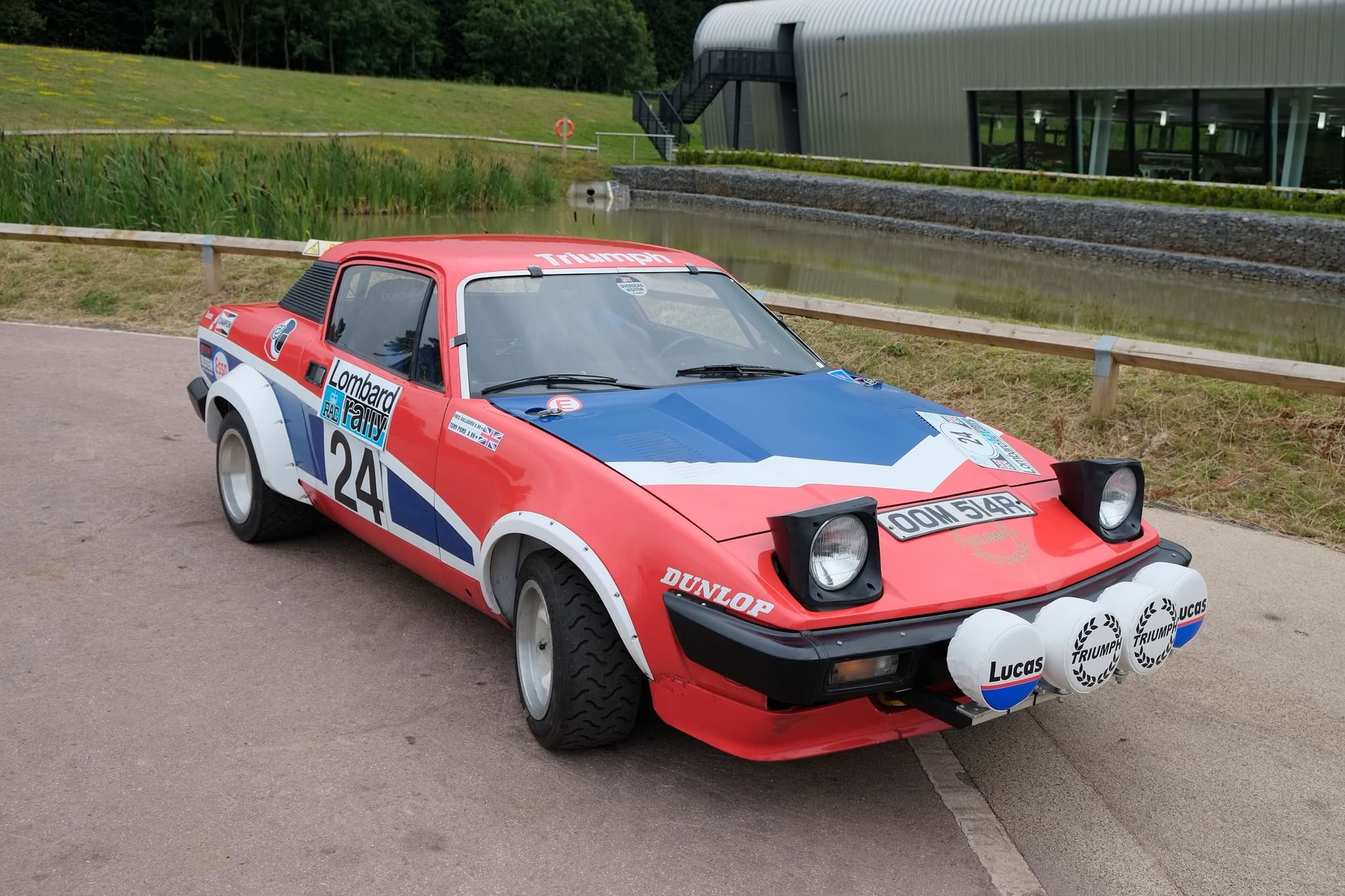
Number 24, with Lombard RAC Rally plates and four lamps on its nose, parked in the grounds of the British Motor Museum, Gaydon, in June 2017: a TR7 in works colours wearing the plate OOM 514R, which two works cars carried.Andrew Basterfield, CC BY-SA 2.0
The TR7's wedge changed little from the first car to the last, so what separates one TR7 from another in a photograph is mostly detail: the badge on the nose, the bonnet (hood), the bumpers. The cars built at Canley from October 1978 had a laurel-wreath decal on the nose, and the last Solihull cars, by Wikipedia's account, a small round badge. The pictures are grouped by what they show, and each opens a larger view. A caption dates the photograph; where it dates a car, the date comes from its registration. A caption also says where a car has later parts.source 1source 2source 3source 4
Coupés
Coupés 4
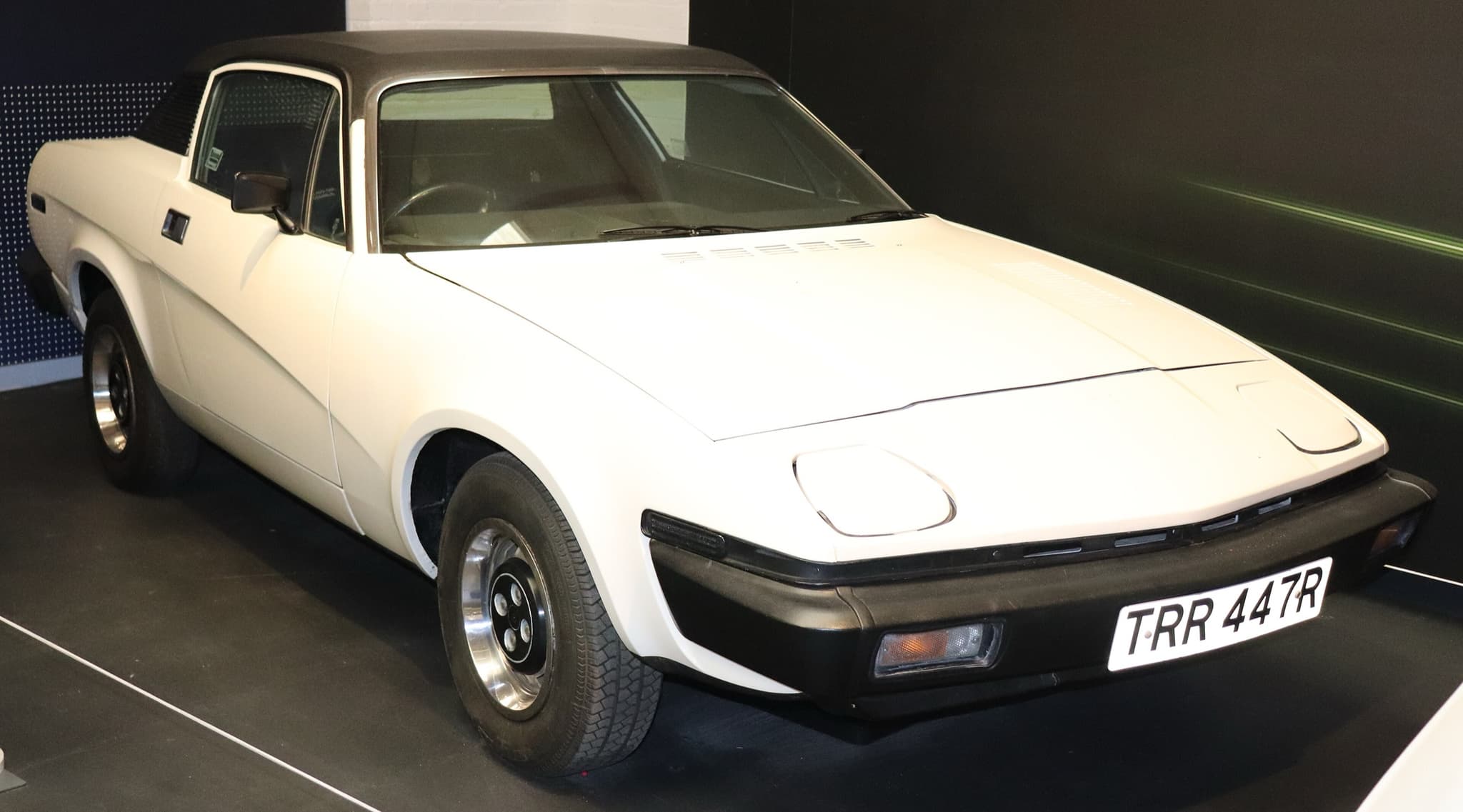
1 Coventry Transport Museum, January 2018: a white coupé with a black vinyl roof and polished wheel trims, registered in 1976–77, on a dark stand.
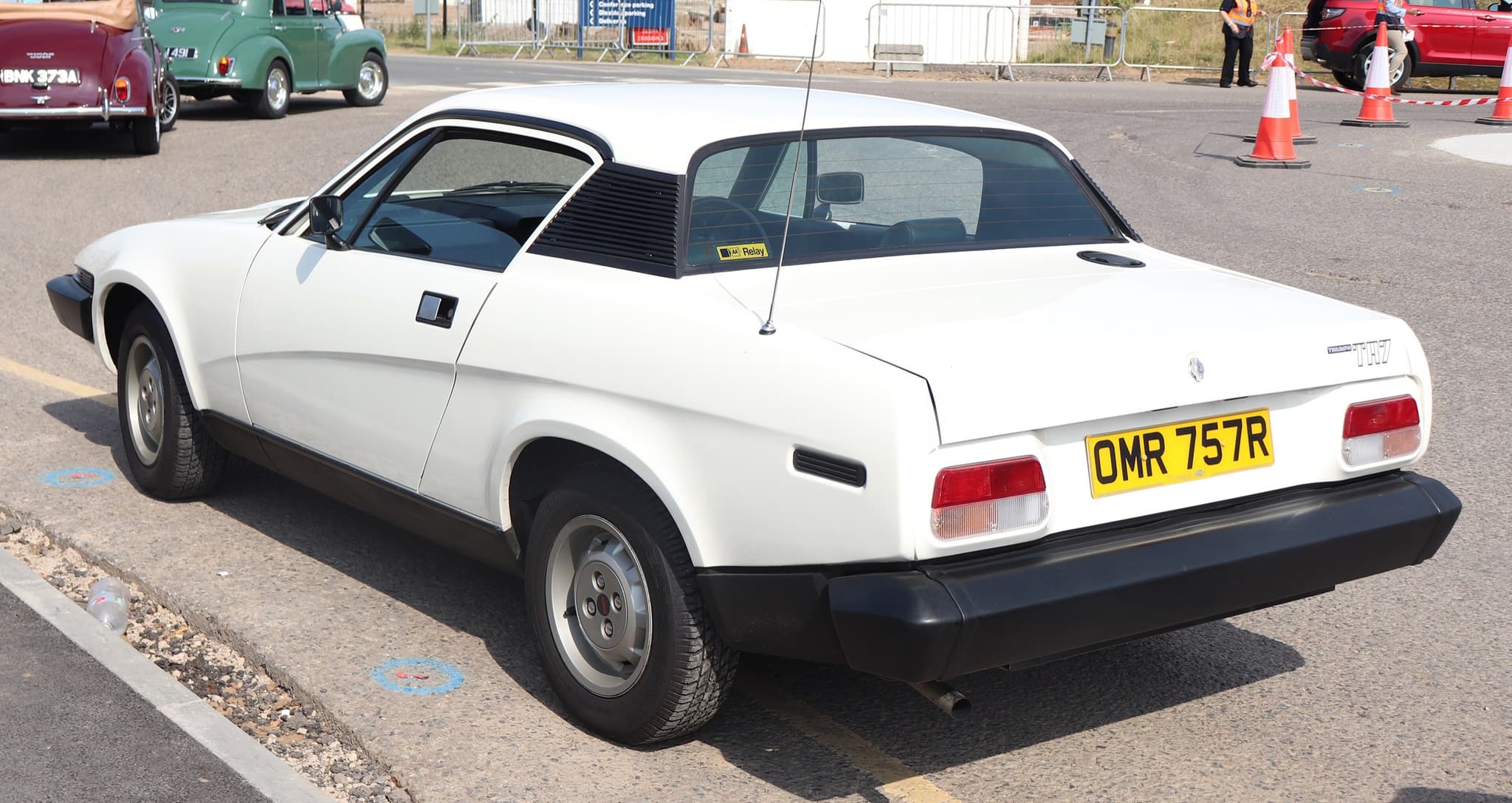
2 British Motor Museum, Gaydon, July 2018: TRIUMPH and TR7 across the tail of a coupé registered in 1976–77, at a show for BMC and Leyland cars.
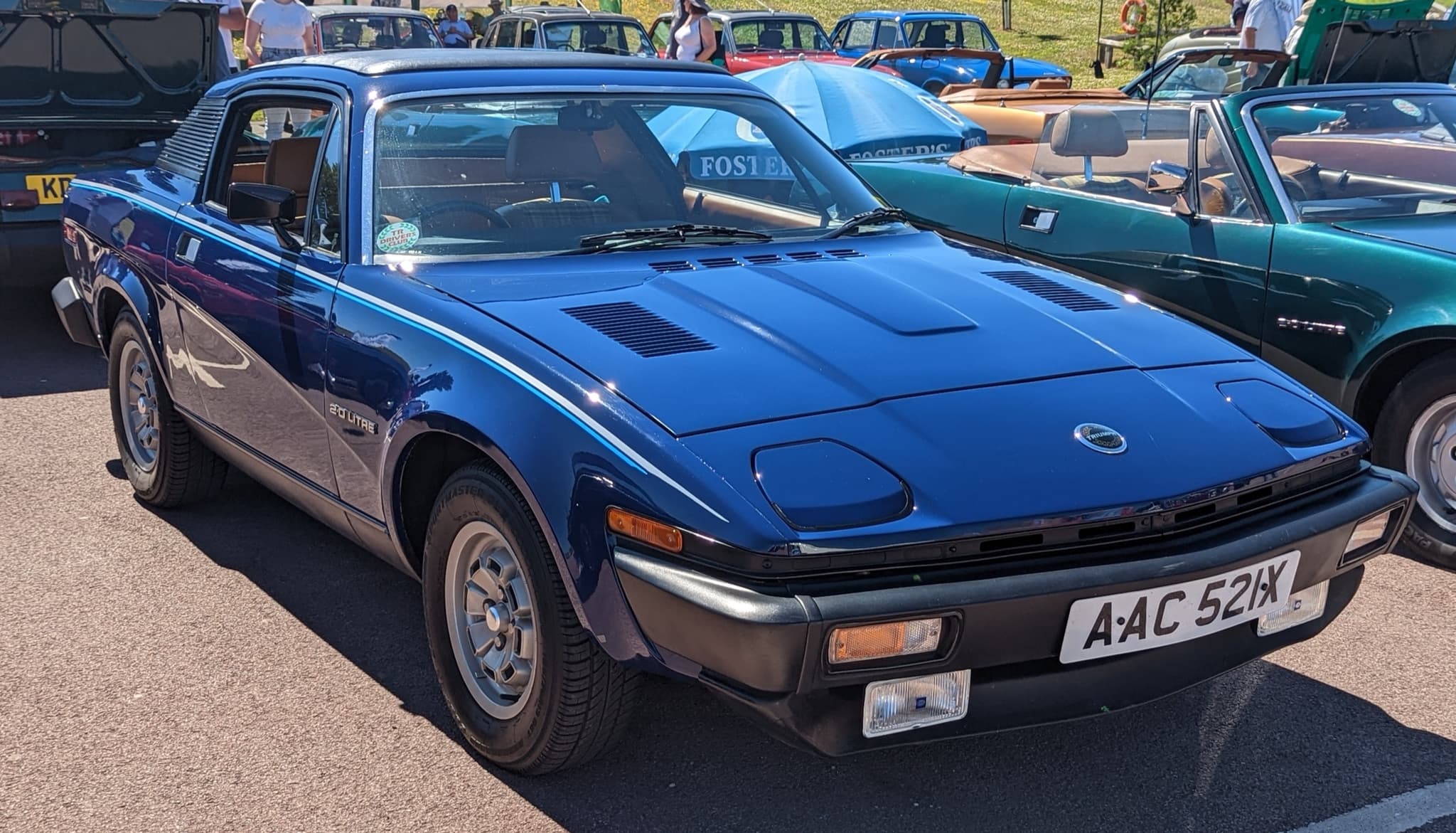
3 A show in England, July 2022: a coupé with the small round nose badge, an engine-size script on the wing and an X-suffix plate of 1981–82, the marks of a Solihull car.
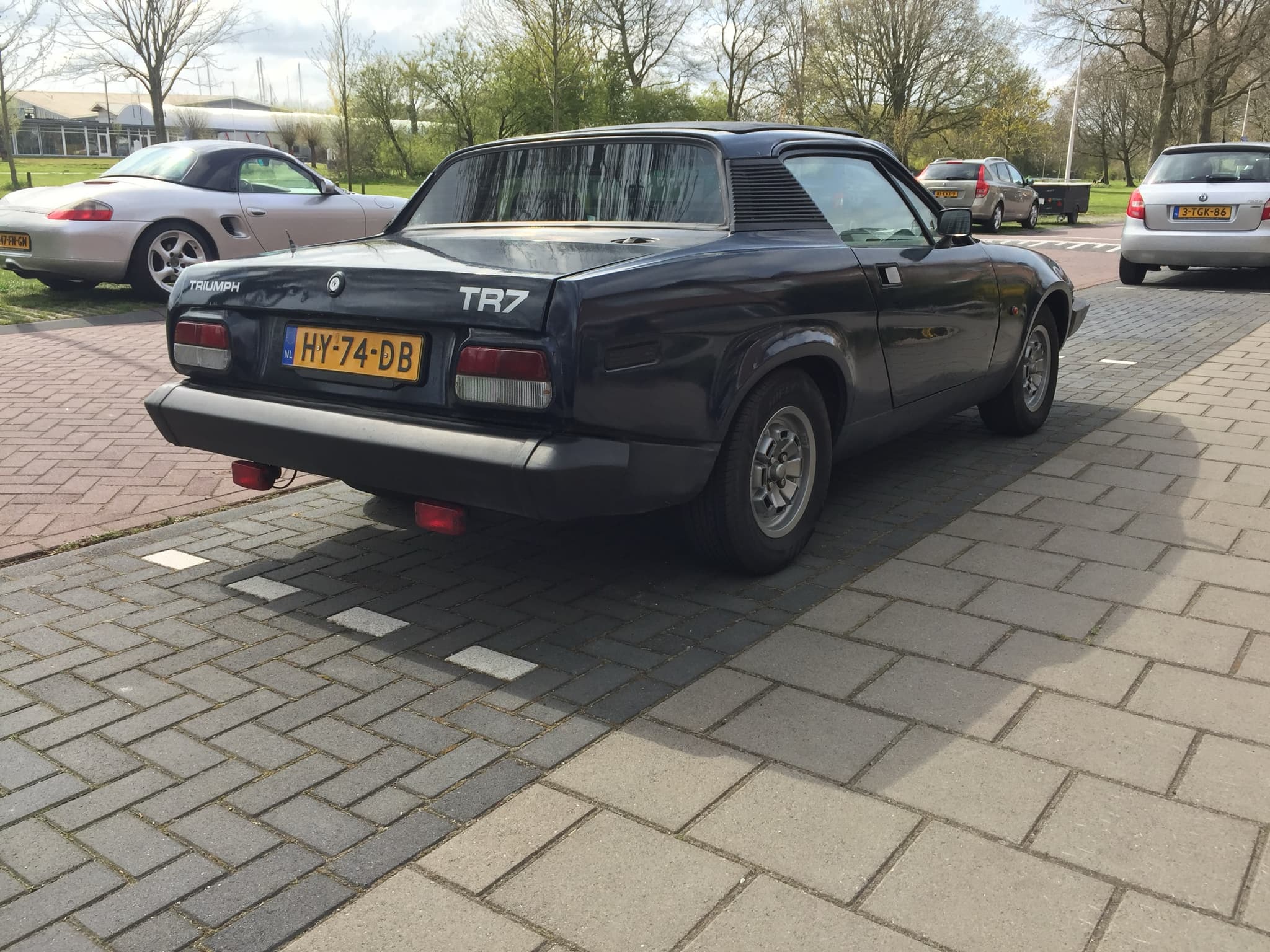
4 Voorschoten, the Netherlands, April 2021: a dark blue coupé from behind, its black rear bumper and the lettering across the tail panel.
Picture credits (4)
- 1 Vauxford, CC BY-SA 4.0
- 2 Vauxford, CC BY-SA 4.0
- 3 Calreyn88, CC BY-SA 4.0
- 4 louisznl, CC BY 2.0
Convertibles
The convertible came later, built from January 1979 for America and sold in Britain from March 1980. The colours in the captions are as the pictures show them, not factory names.source 6source 7
Convertibles 4
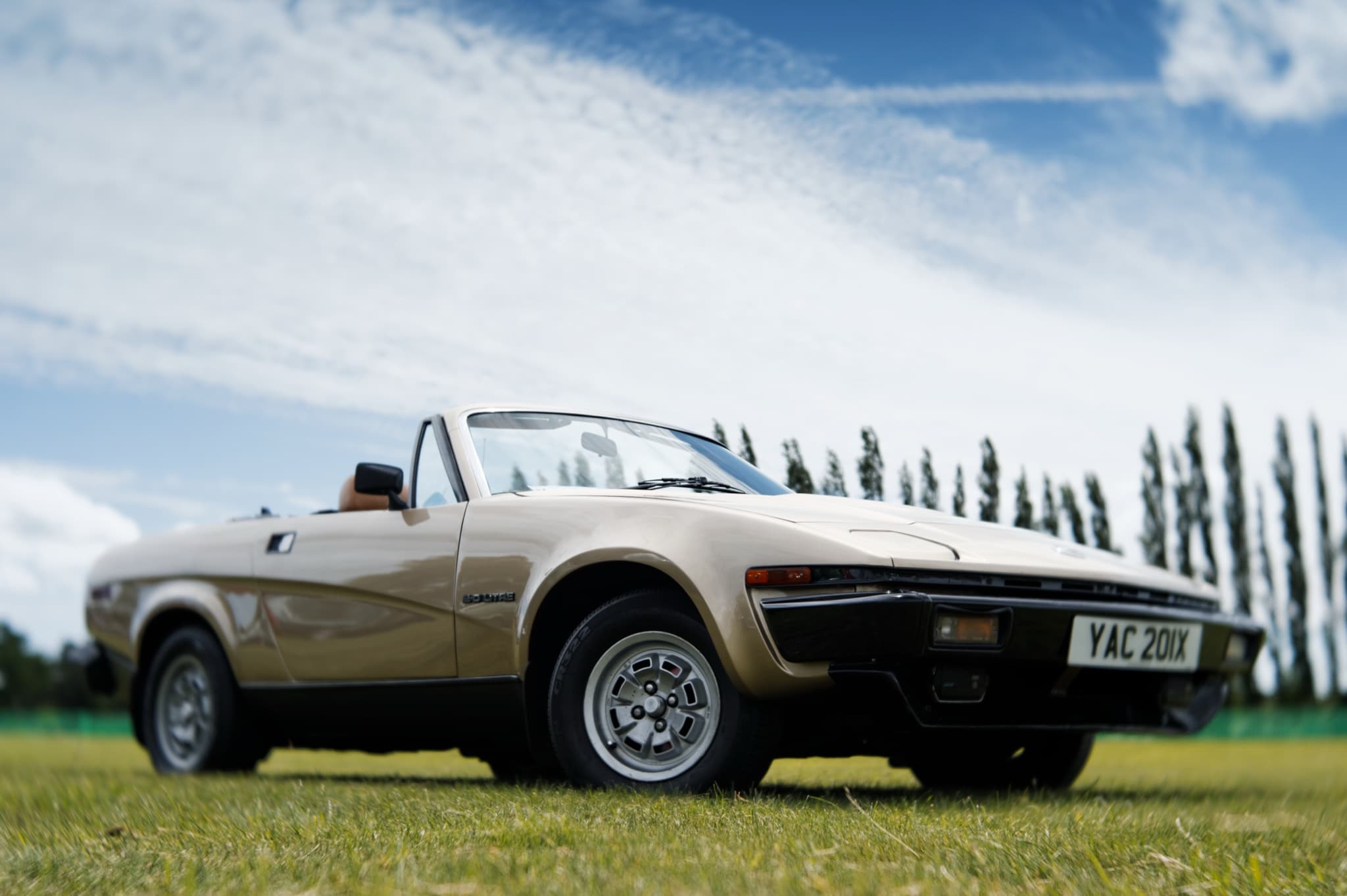
5 Luton Festival of Transport, 2017: a pale gold convertible registered in 1981–82, hood (soft top) down, under a wide sky.
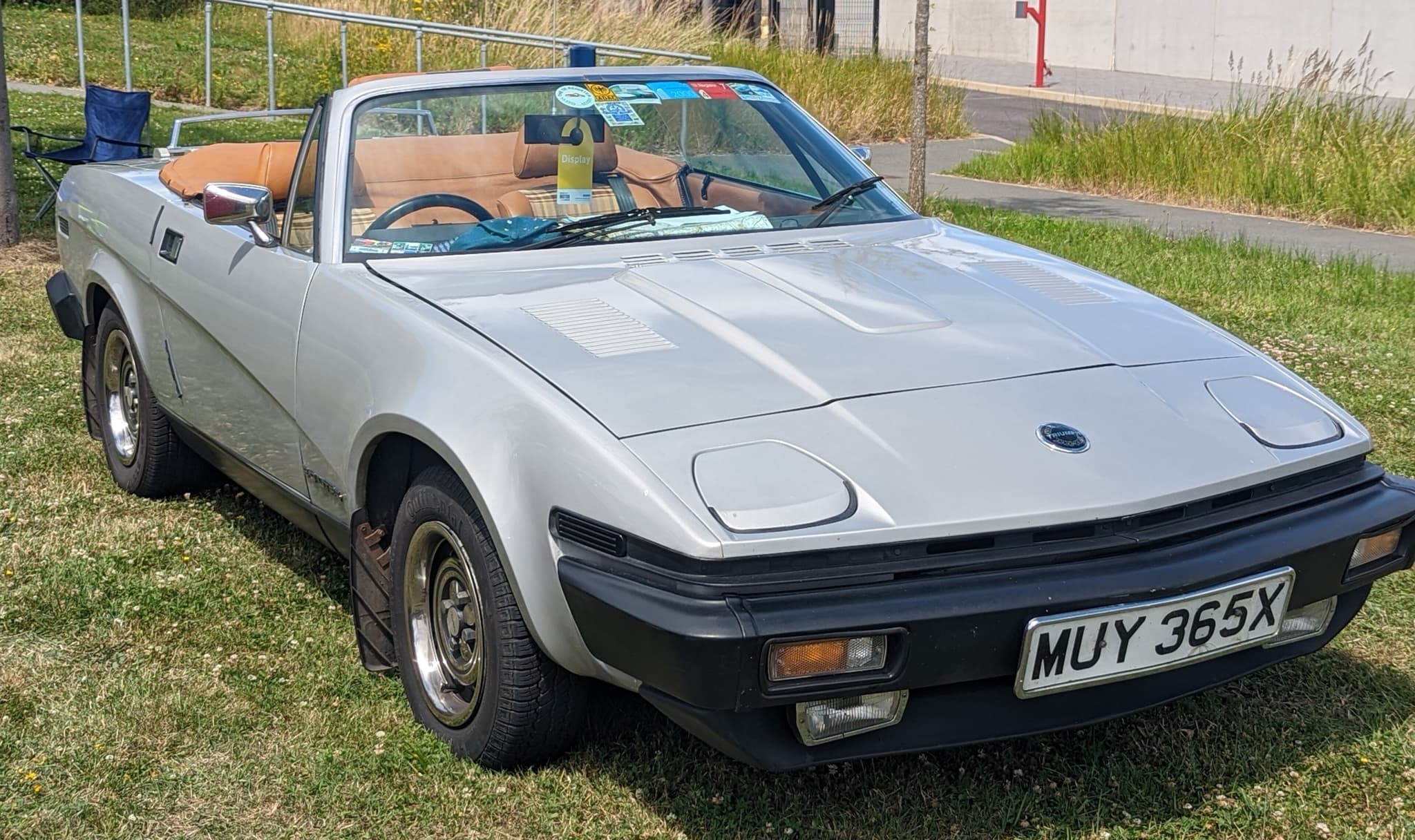
6 A car park show in England, July 2022: a late silver convertible with its hood folded and its round nose badge; its trims and mud flaps perhaps added later.
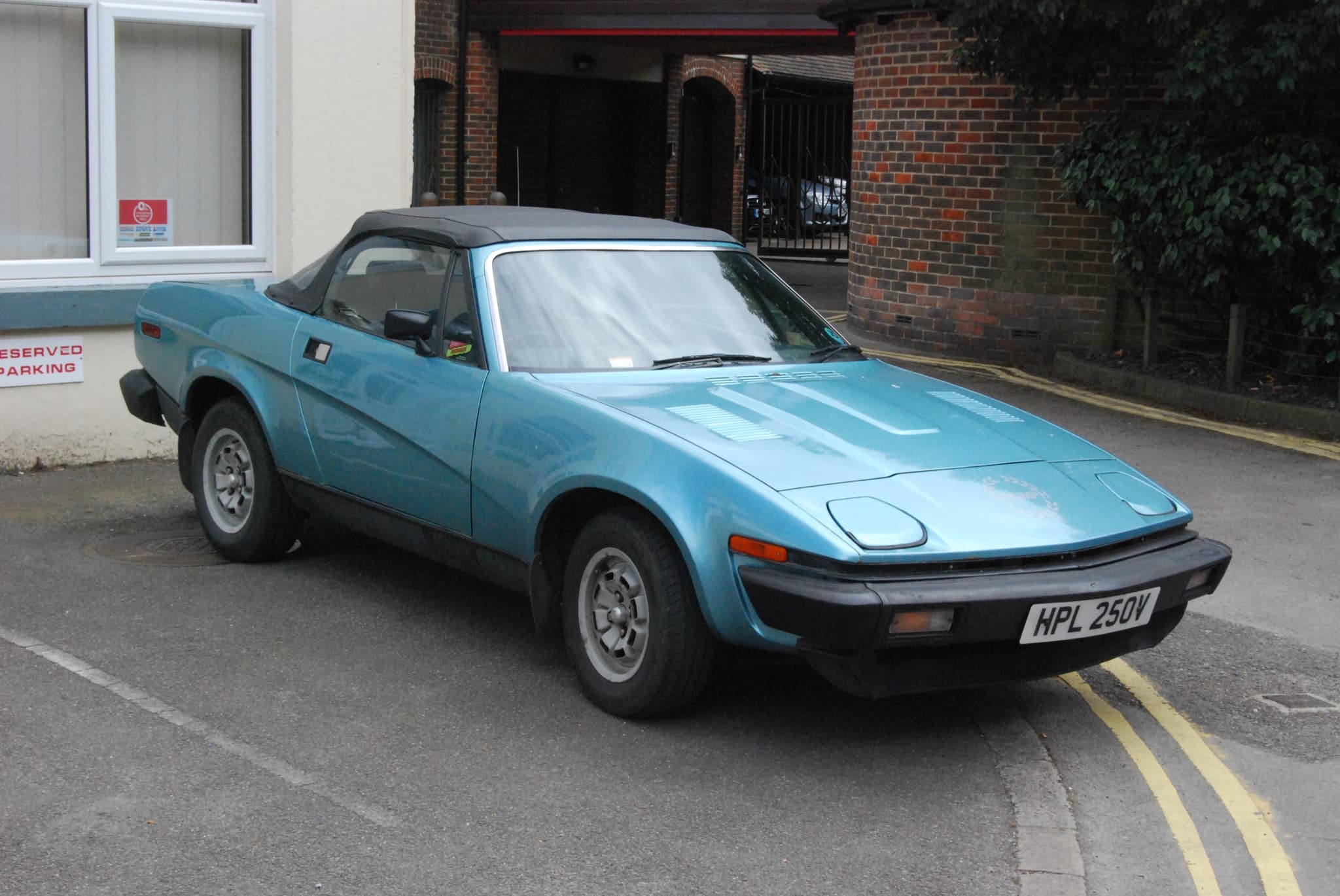
7 England, 2017: a light blue convertible registered in 1979–80, with the laurel-wreath decal and its black hood raised.
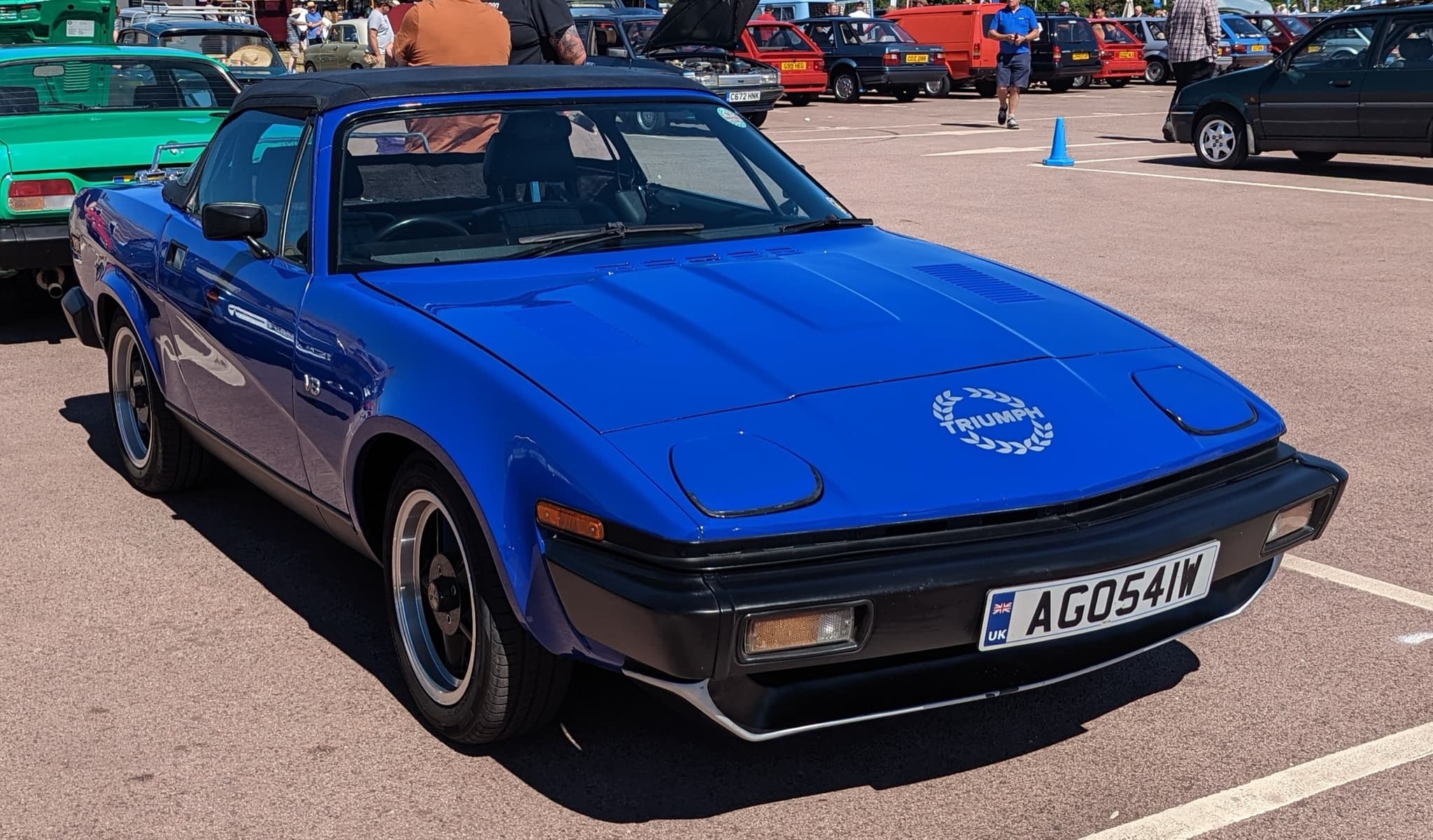
8 A show in England, July 2022: a blue convertible registered in 1980–81, hood up, on wheels and a front lip that are not the factory's.
Picture credits (4)
- 5 pyntofmyld, CC BY 2.0
- 6 Calreyn88, CC BY-SA 4.0
- 7 Along time ago..., CC BY 2.0
- 8 Calreyn88, CC BY-SA 4.0
Interiors
Interiors 3
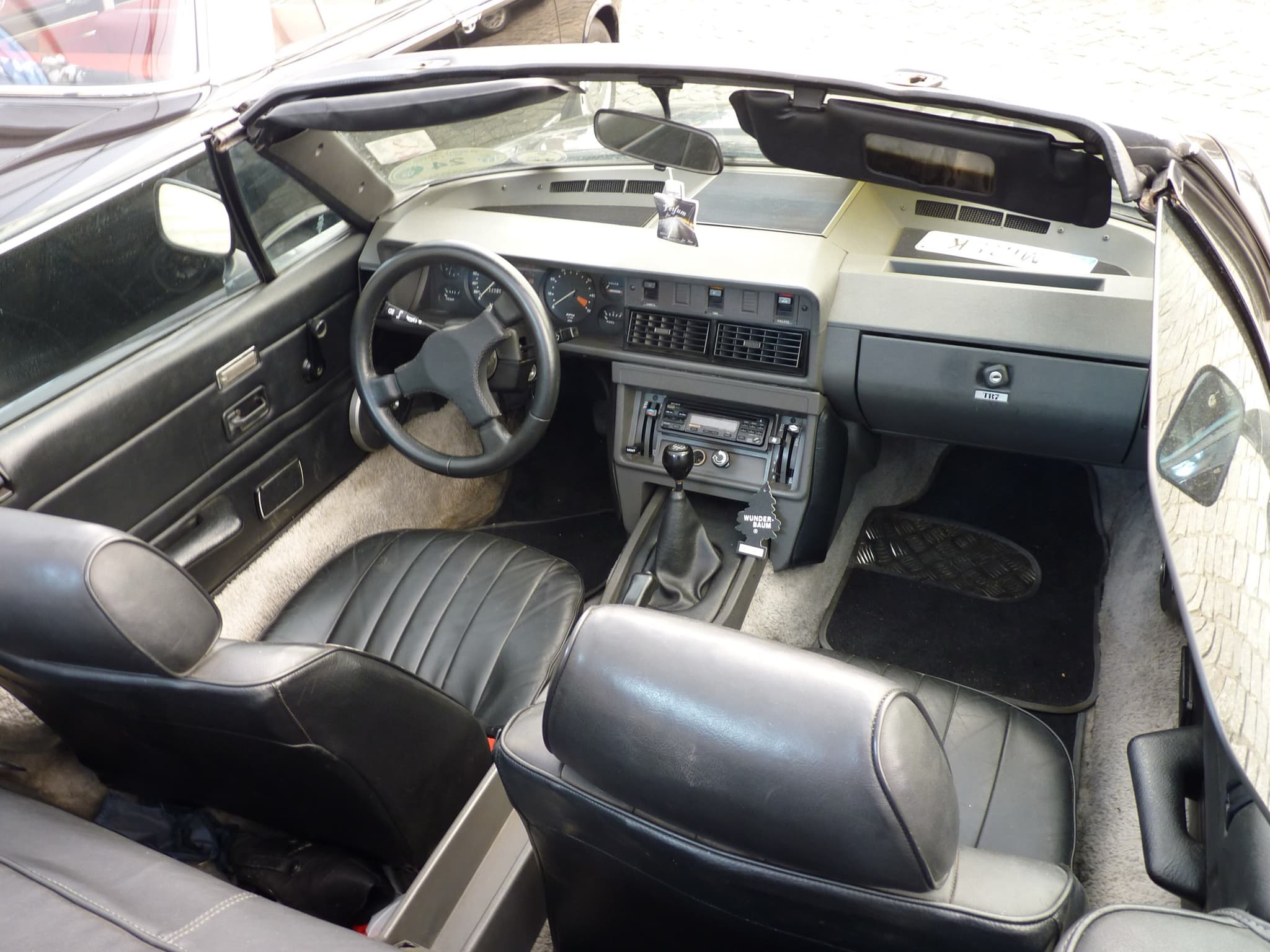
9 Kraków, Poland, September 2014: looking down into a left-hand-drive convertible, TR7 on the glovebox; its radio and steering wheel were added since.
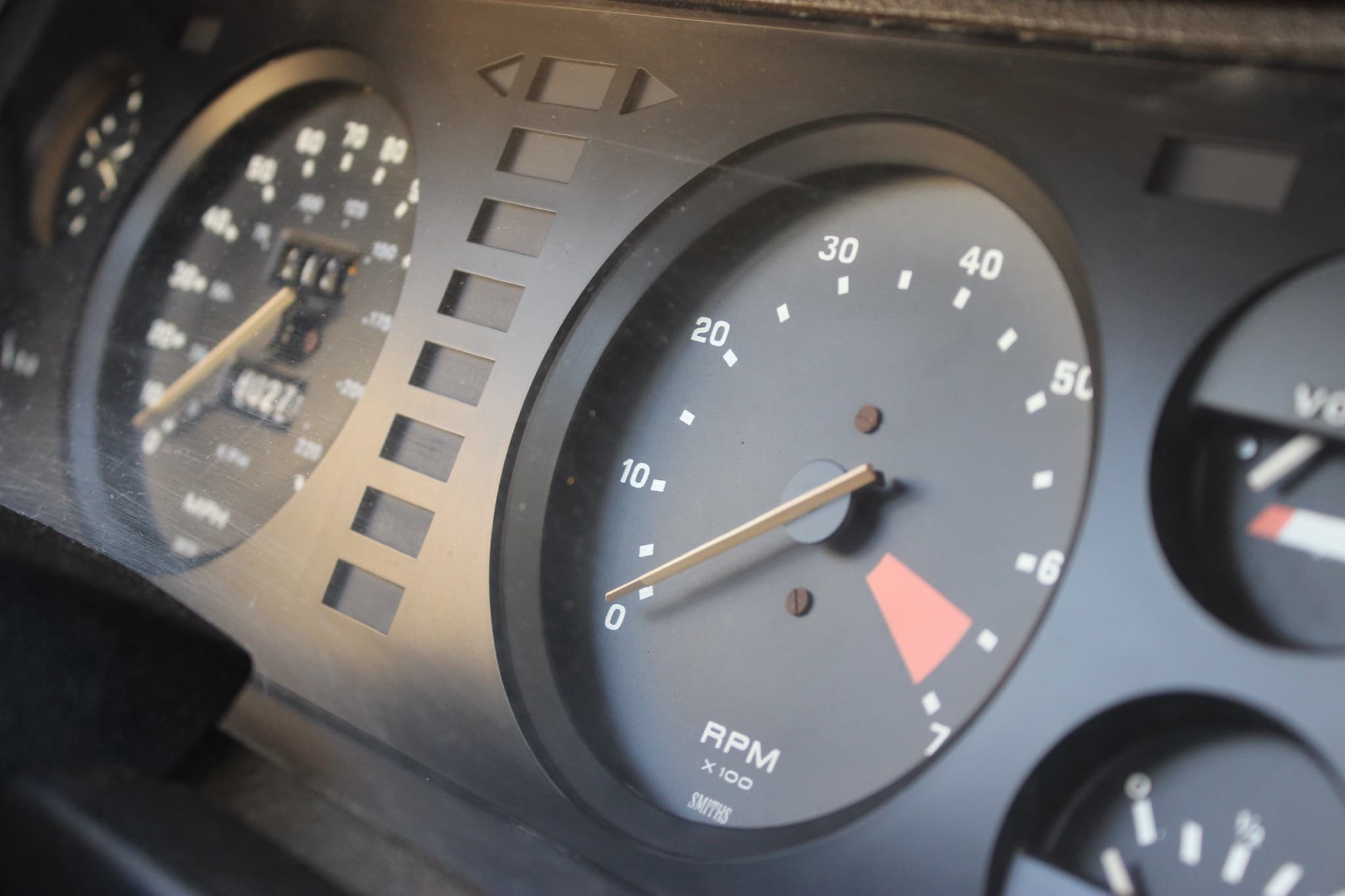
10 United States, 2015: the binnacle's Smiths rev counter, marked to 7,000 rpm.
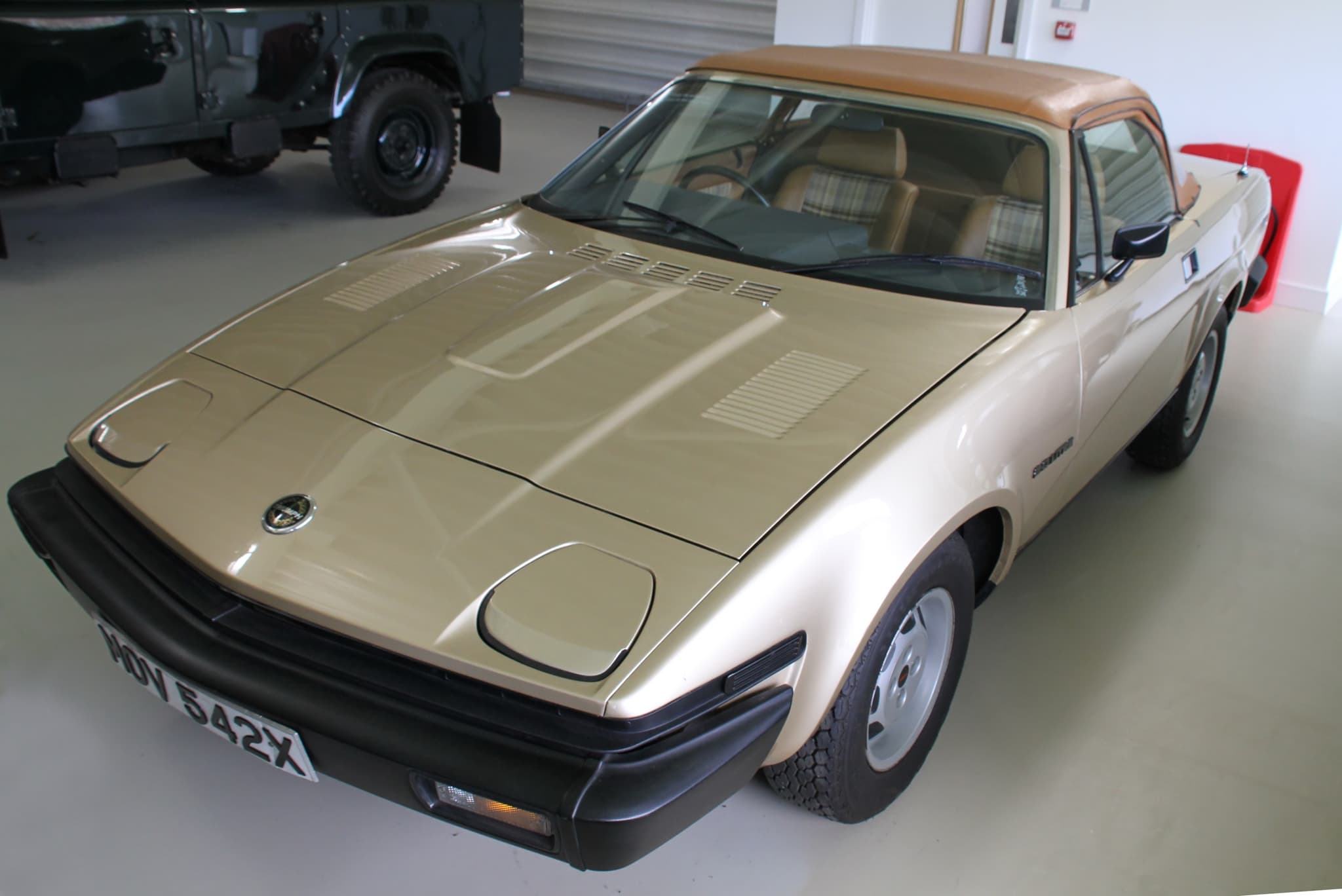
11 British Motor Museum, Gaydon, 2018: tartan (plaid) seat facings seen through the windscreen of the last TR7.
Picture credits (3)
- 9 Dawid783, CC BY-SA 4.0
- 10 Jacob Frey 4A, CC BY 2.0
- 11 Tony Hisgett, CC BY 2.0
The TR7 Sprint
A TR7 Sprint looks like any other coupé, and its badges can be copied. What proves one is its numbers, which identification explains.source 9
Sprint 2
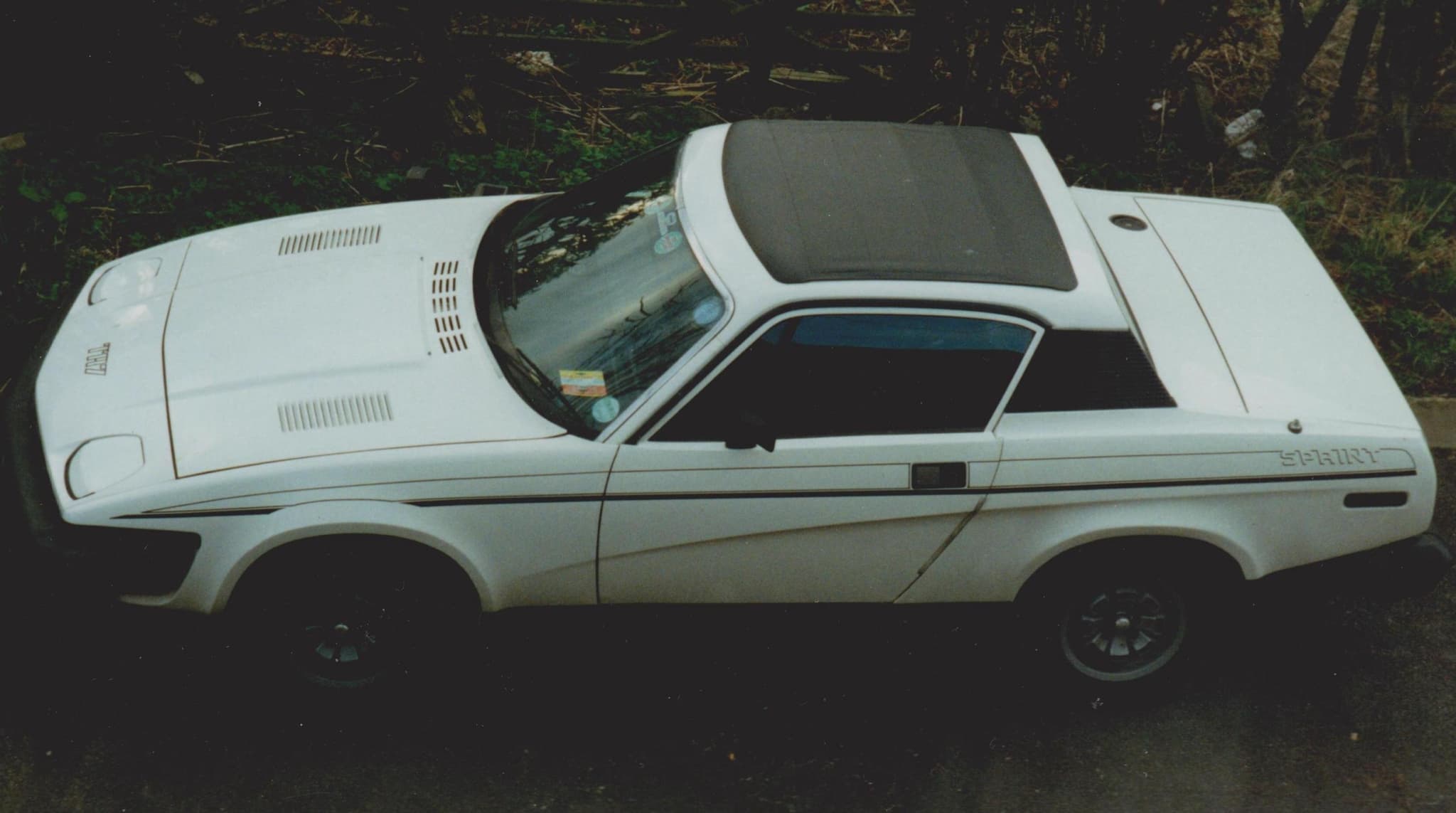
12 England, from a scanned print: a white Sprint looked down on from high above its left side, its roof dark and its alloys black-centred; the SPRINT lettering alone proves nothing.
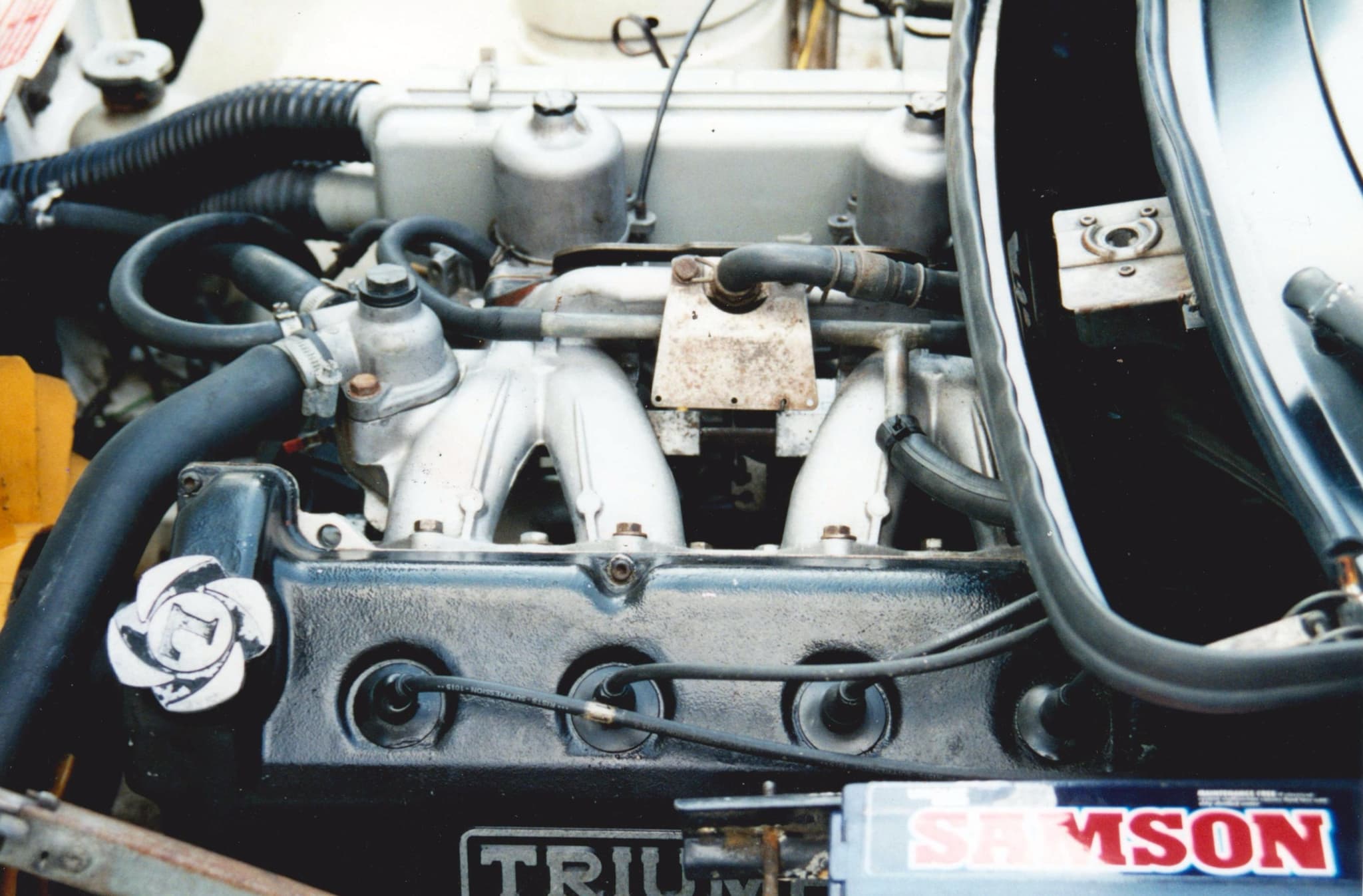
13 From the same photographer's prints: a white car's 16-valve head and its carburettors under the bonnet.
Picture credits (2)
- 12 Graham.Fountain, CC BY-SA 3.0
- 13 Graham.Fountain, CC BY-SA 3.0
Special editions
The Spider of the 1980 model year, an American special edition, is shown in two pictures, and one of them may not show a real one.source 10source 2
Spider 2
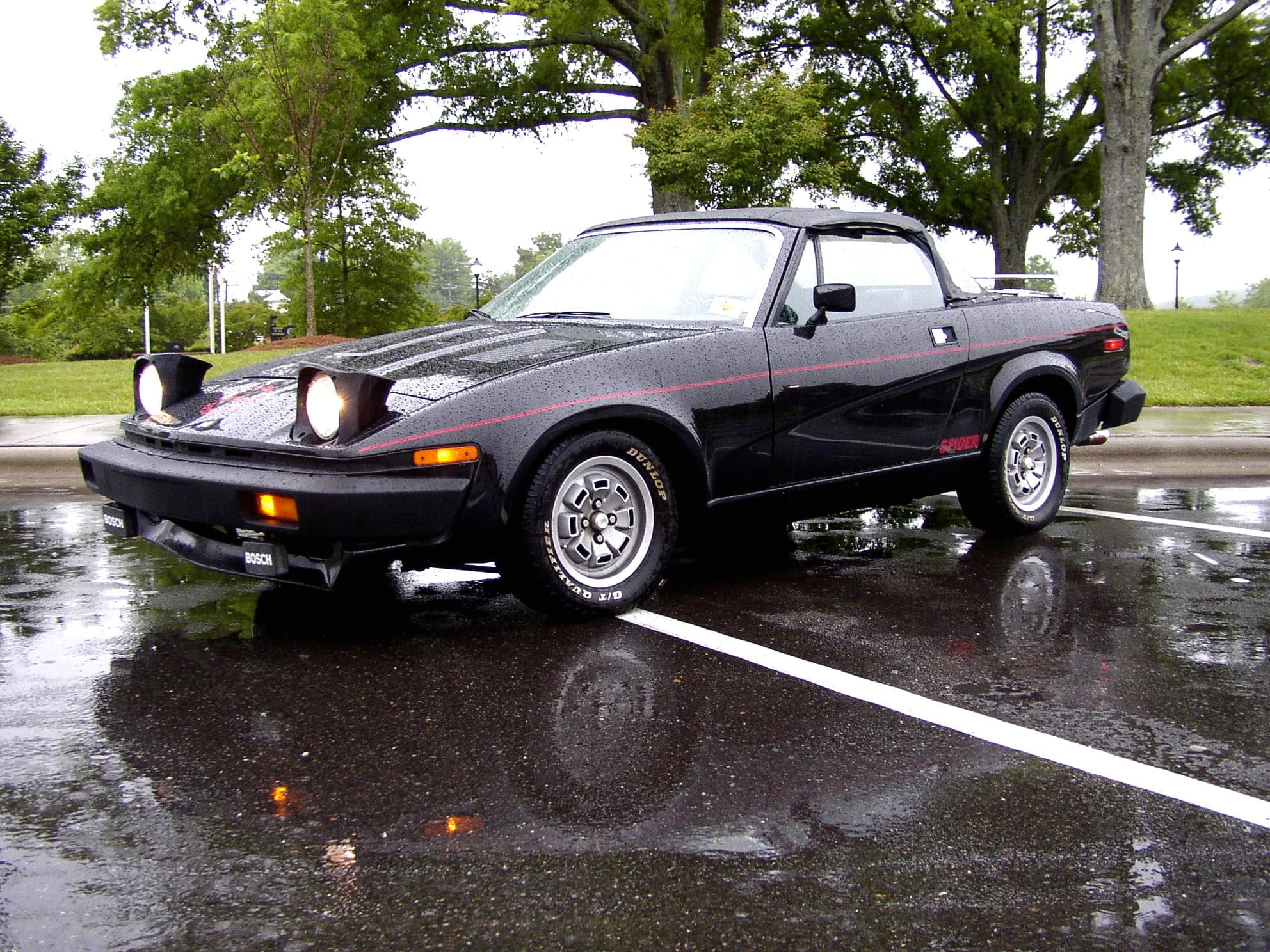
14 United States: a Spider on a wet car park, a placard where its number plate would be.
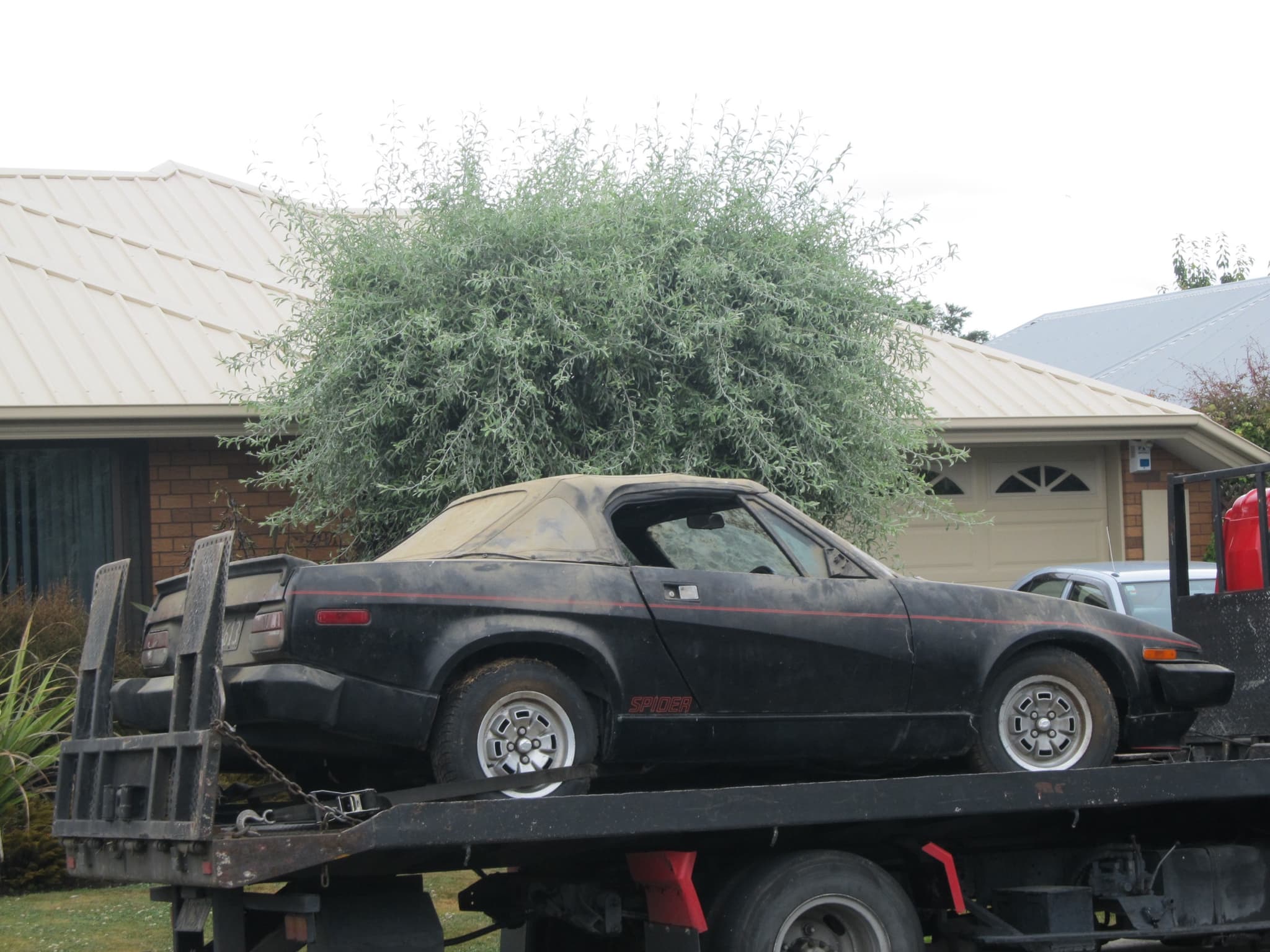
15 Christchurch, New Zealand, December 2012: a TR7 in the Spider's colours, chained to the back of a recovery truck; a car in the livery, not necessarily a factory Spider.
Picture credits (2)
- 14 Stormbear, CC BY-SA 2.5
- 15 Riley, CC BY 2.0
In competition
Only one of these is a car of the works rally team: SJW 548S, its first TR7 V8 with left-hand drive. The others are club and historic cars of later years, some in the works team's colours, and the racing page tells of the TR7 on the circuits in its own time. Many photographs labelled "TR7 3.5" or "TR7 4.6" show V8 conversions, not TR8s or factory cars, so a caption here calls a car a V8 only where its photographer does.source 4source 3source 11
In competition 5
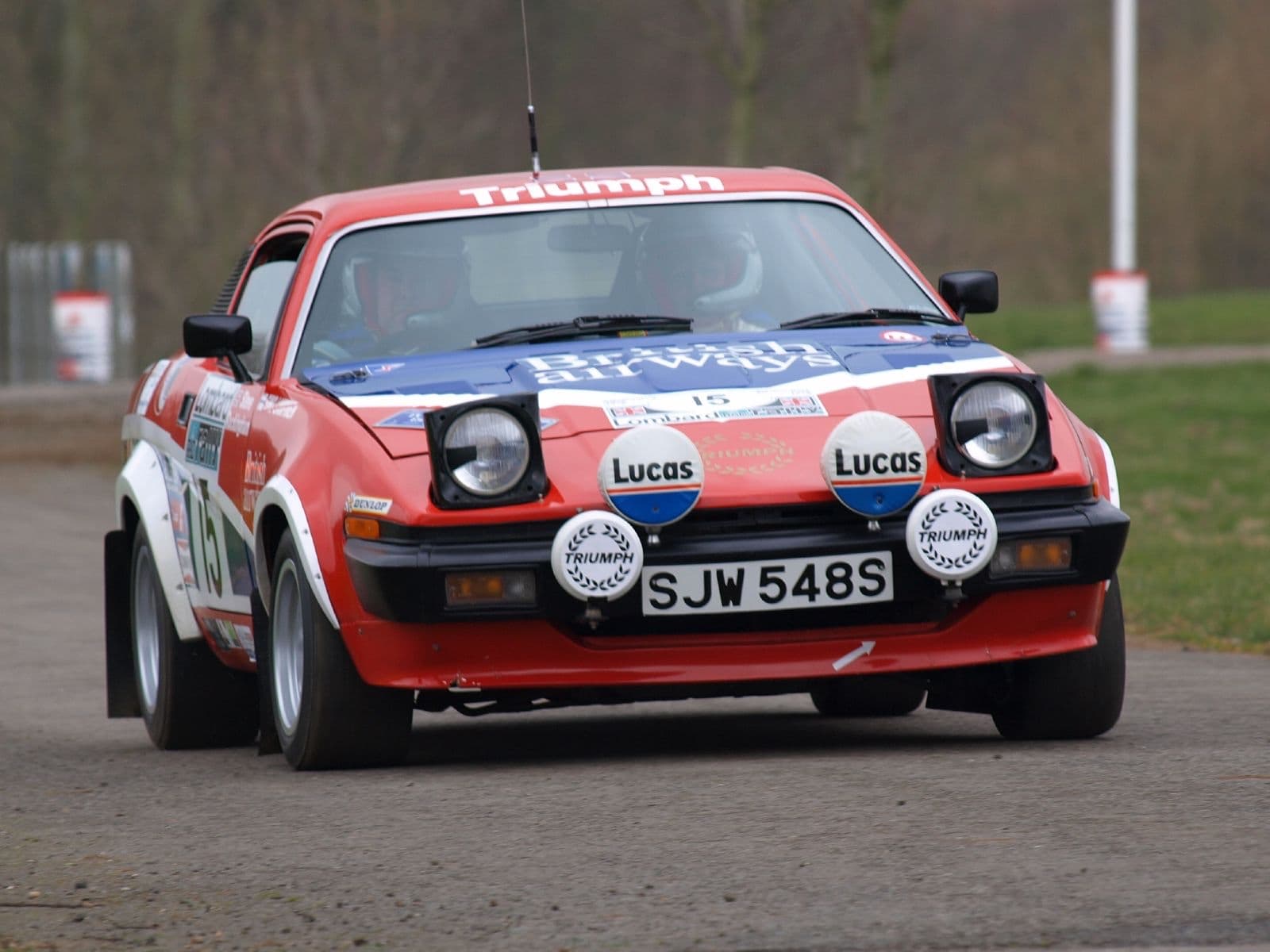
16 Race Retro, Stoneleigh Park, March 2008: SJW 548S, a works car, head-on in its British Airways colours, number 15.
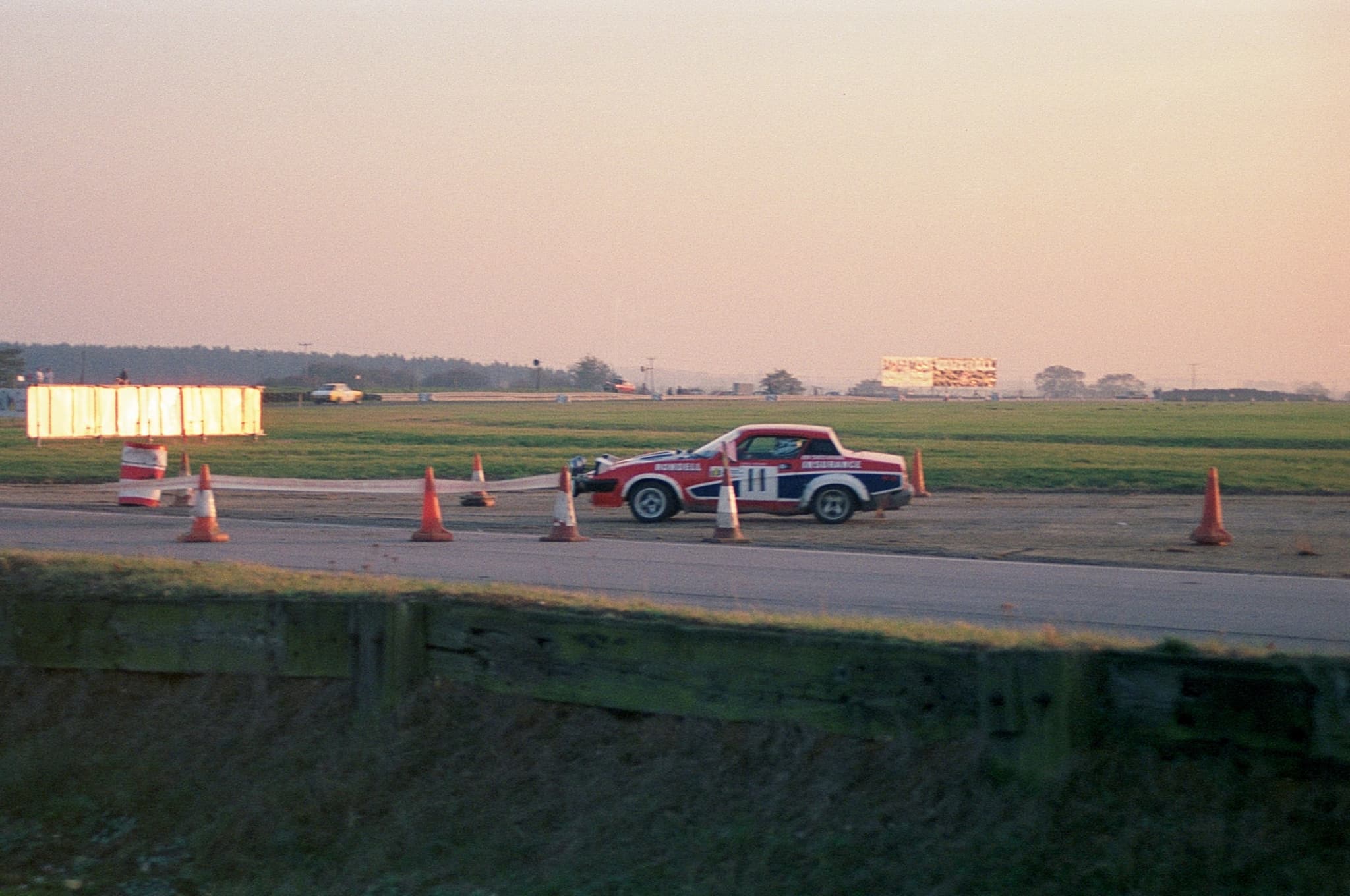
17 Snetterton, Norfolk, in the 1980s by the photographer's account: a red, white and blue TR7-bodied rally car, number 11, rounding the cones in evening light.
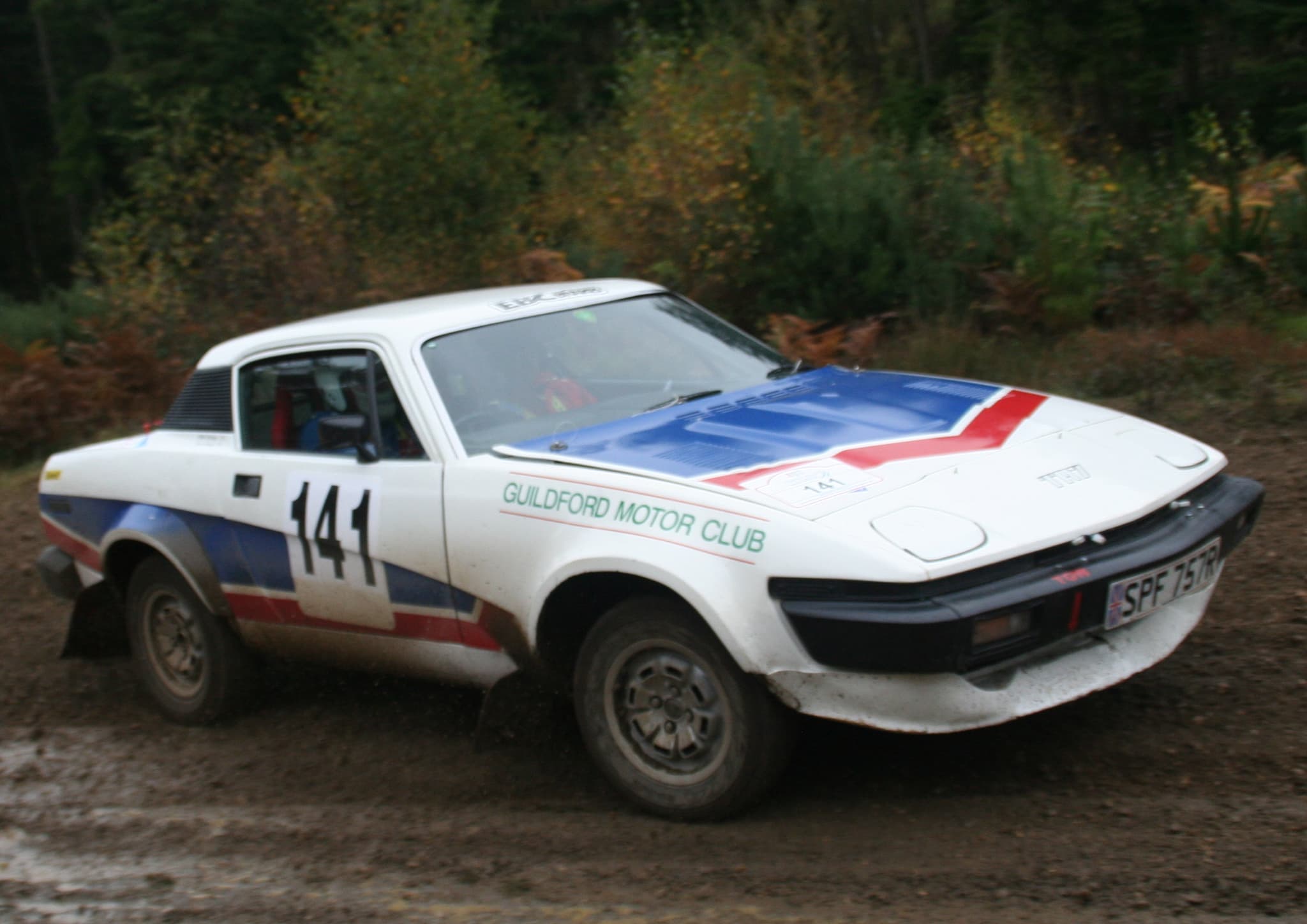
18 Tempest Rally, Berkshire, November 2011: a club TR7, number 141, through a forest bend, its bonnet in works-style colours.
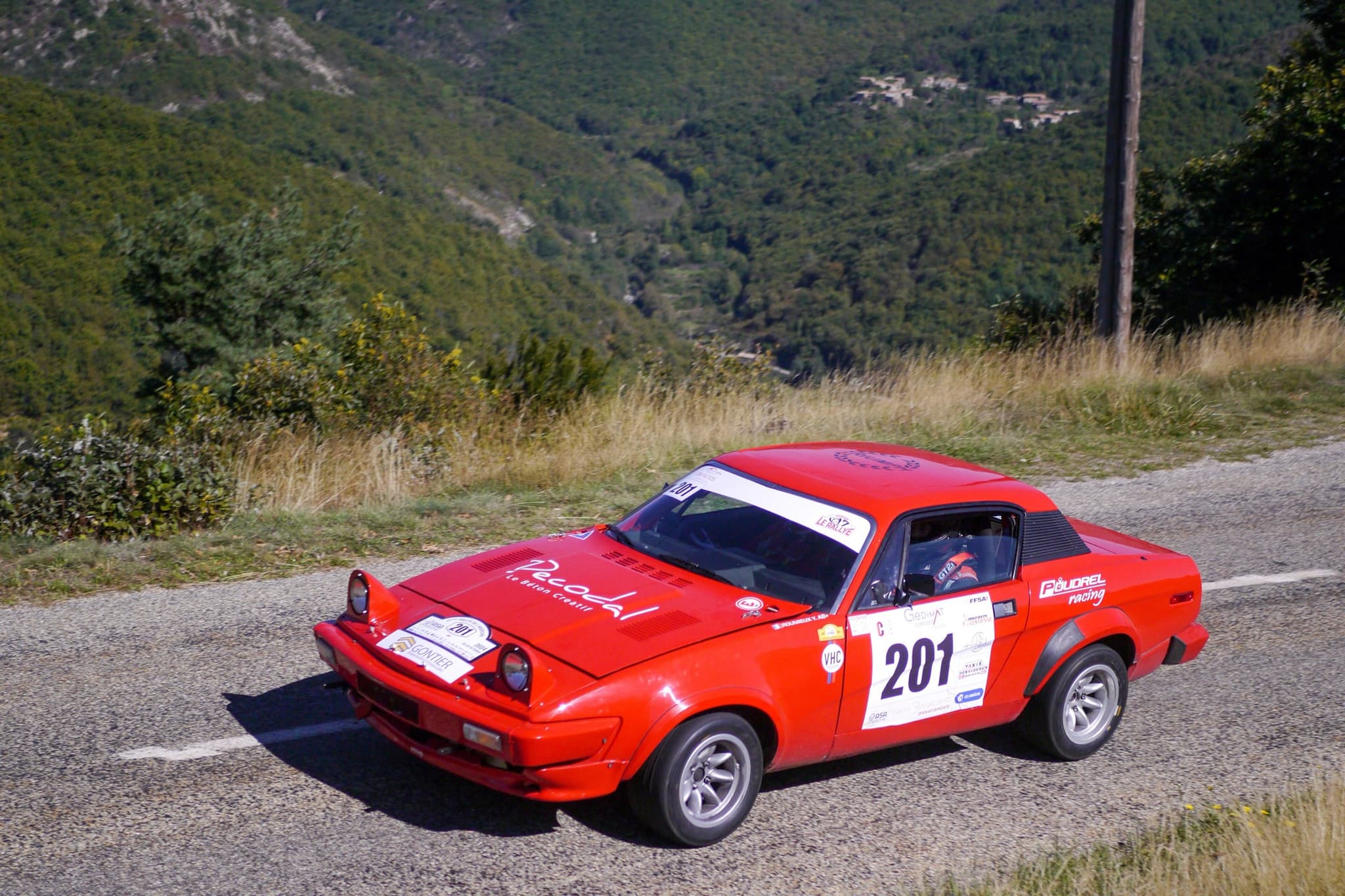
19 Rallye de l'Ardèche, France, October 2024: a red TR7, number 201, a V8 by its photographer's account, in a class for historic cars.
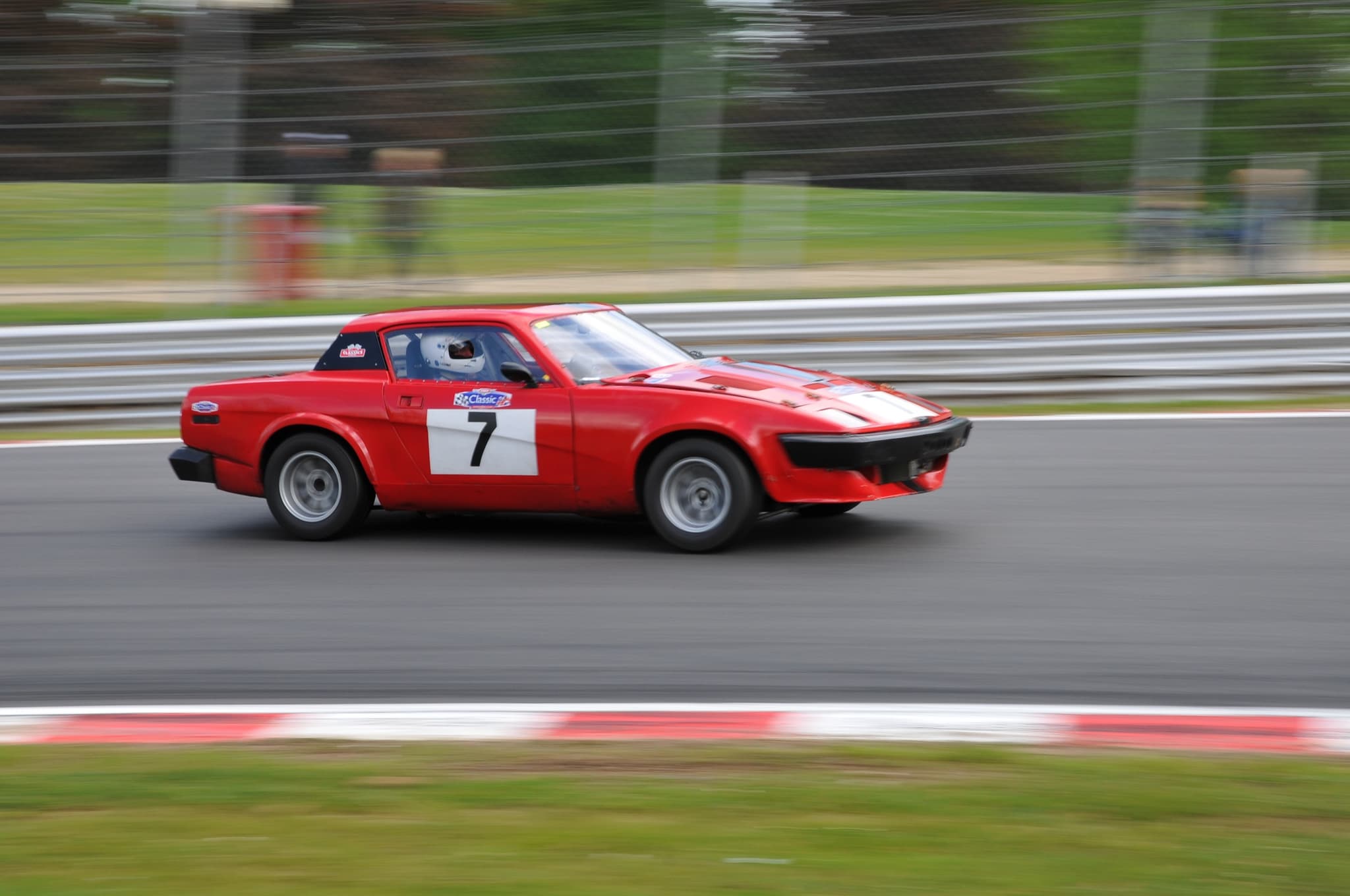
20 Brands Hatch, Kent, May 2011: a modified coupé, number 7, panned at speed in a club race.
Picture credits (5)
- 16 estoril, CC BY 2.0
- 17 Martin Pettitt, CC BY 2.0
- 18 rally bear, CC BY-SA 2.0
- 19 Kakoula10, CC BY-SA 4.0
- 20 Tony Harrison, CC BY-SA 2.0
At Gaydon
The British Motor Museum keeps the prototypes of two TR7s that never reached the showrooms, the Lynx and the Broadside, and the last TR7 of all, which has been in its collection since it was built.source 12
At Gaydon 3
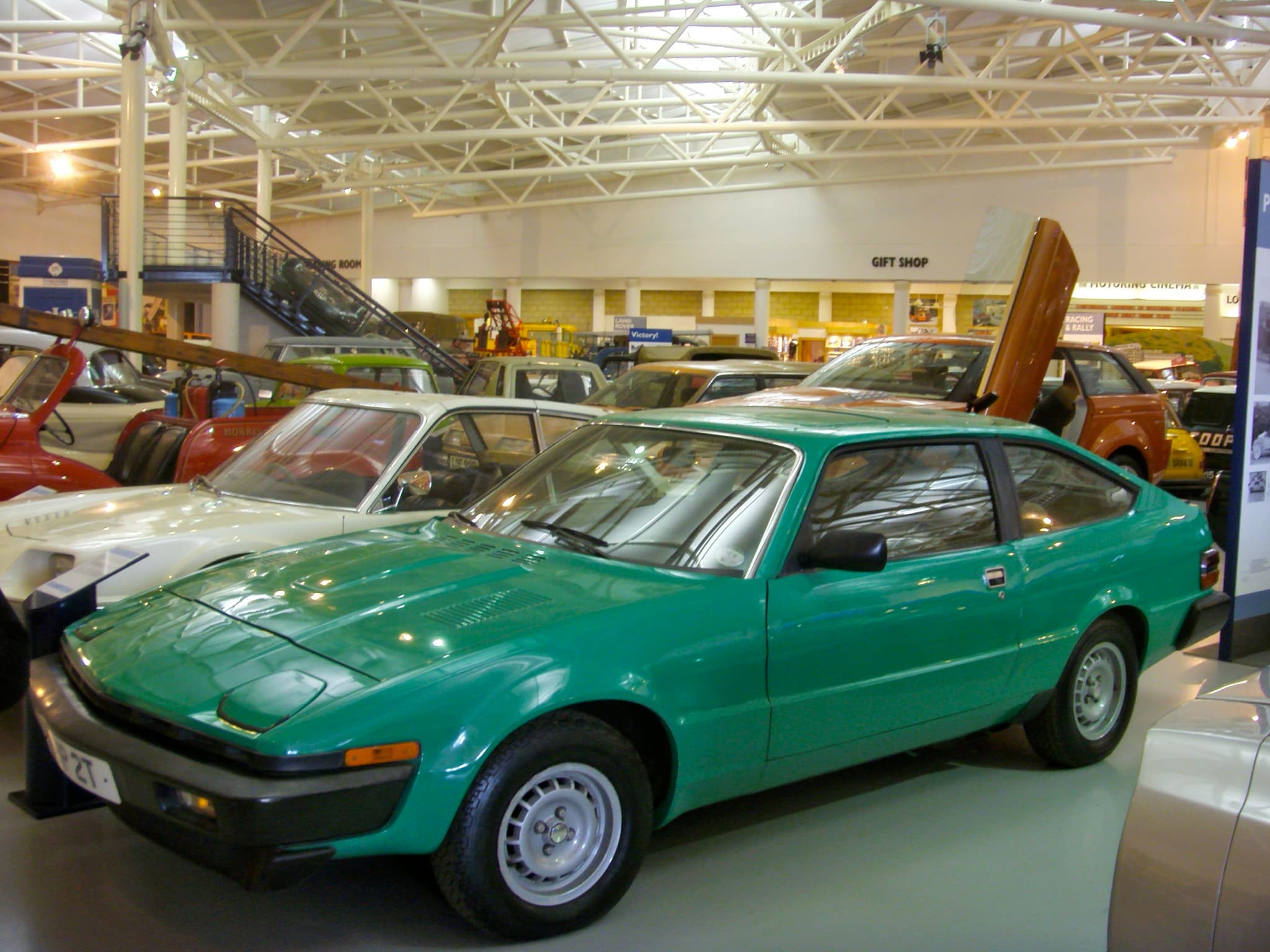
21 Heritage Motor Centre, Gaydon, July 2009: the Lynx prototype, the TR7-based 2+2 hatchback that never went on sale.
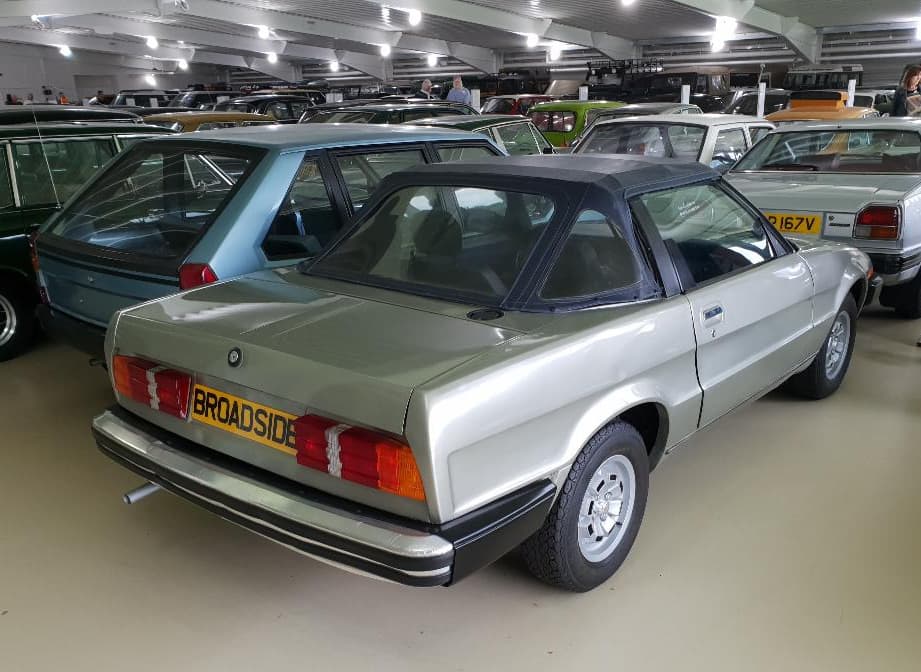
22 British Motor Museum, Gaydon, October 2023: a Broadside prototype from behind, BROADSIDE on its plate.
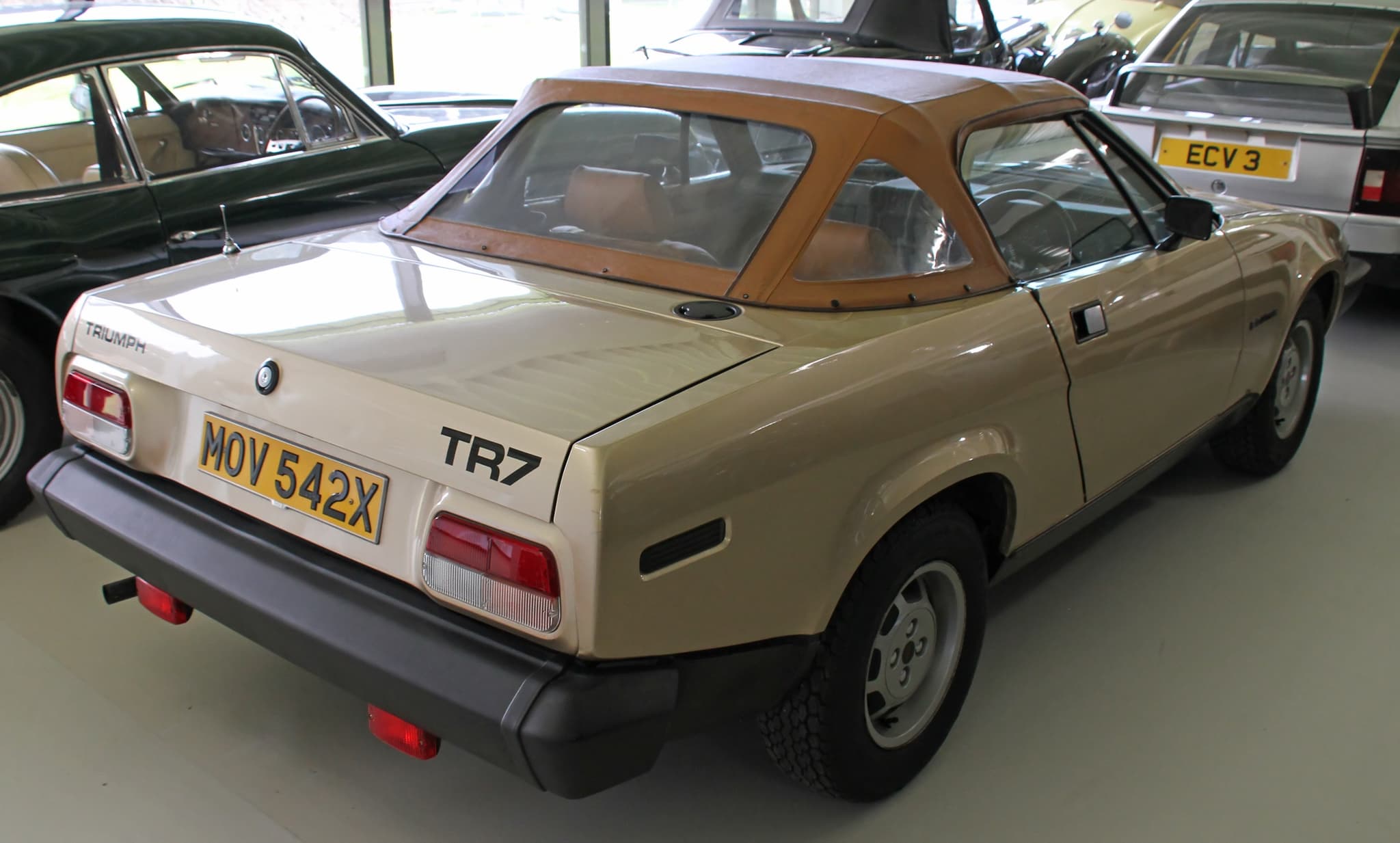
23 British Motor Museum, Gaydon, 2018: the tail of MOV 542X, the last TR7 by chassis number, its hood up.
Picture credits (3)
- 21 Mark Brown, CC BY-SA 2.0
- 22 Andrew Bone, CC BY 2.0
- 23 Tony Hisgett, CC BY 2.0
Sources
Every source the site cites is on the sources page.
- Primarymade at the time, by the maker or by people who were there
- Referenceserious later work: clubs, specialists, magazines, books
- Databaseresults and listings, entry by entry
- Uncheckedencyclopaedias and enthusiast sites: cited beside a good source, named in the sentence, or marked Unchecked
- Clive Richardson ("C.R."), "The Triumph TR7", Motor Sport, Jun 1979, p. 58, p. 58, the Canley badges; p. 58, the Canley changes. motorsportmagazine.com/archive/article/june-1979/58/the-triumph-tr7 Primary
- Wikipedia (EN), "Triumph TR7", 2026, the round nose badge of the Solihull cars, citing Piggott; the Solihull badge, citing Piggott; the trims by factory, citing Piggott; the Spider's stripes and badging, citing Hart. en.wikipedia.org/wiki/Triumph_TR7 Unchecked
- Aaron Severson, "Way of the Wedge: The Triumph TR7 and TR8", Ate Up With Motor, 5 Feb 2012, pp. 1–5, p. 4, the late Solihull car's badge; p. 3, single and double bulges; p. 4, the late badge; p. 5, the V8 conversions among the survivors. ateupwithmotor.com/model-histories/triumph-tr7-tr8 Reference
- Chris Turner (credited by the club), "The Works Triumph TR7 V8 Rally Cars" and the car pages (group), TR Drivers Club, the register: OOM 514R on two cars; car page, SJW 548S. trdrivers.com/articles21/rallyhistory.html Reference
- Keith Adams, "The Cars: Triumph TR7/TR8 development story", AROnline, updated 8 Feb 2024, a bonnet power bulge among the Canley changes. aronline.co.uk/cars/triumph/tr7-tr8/bullet-development-story Reference
- Paul Towle and Rex Holford (update) and Mark Elbers (update), "TR7 & TR8 Identification & Production Data Explained", TR Drivers Club, 1987, updated (© 2016), the three factories; the convertibles built from January 1979. trdrivers.com/tr7_-_tr8_vin_numbers.htm Reference
- "C.R.", "The Triumph TR7 Drophead" ("Sunshine Seven"), Motor Sport, Apr 1980, p. 35, Britain, March 1980. motorsportmagazine.com/archive/article/april-1980/35/sunshine-seven Primary
- Motor Sport, News, editorials and short items on the TR7 (group), Jul 1975 – Aug 1981; Apr 2002, Apr 1977, p. 33, the tartan trim. motorsportmagazine.com/archive Primary
- Graham Fountain, "The TR7 Sprint Story", TR Driver (TR Drivers Club), 1991 no. 2, the Sprints; the ACH numbers. trdrivers.com/articles21/tr7sprintarticle-1991.html Reference
- Michael Hart, "Counting TR7 Spiders: A Day at the Gaydon Archive", Triumph Wedge Owners Association, © 2013, the Spider. triumphwedgeowners.org/spider Reference
- Wikimedia Commons, "Category:Triumph TR7" and its subcategories, the files labelled "TR7 3.5" and "TR7 4.6". commons.wikimedia.org/wiki/Category:Triumph_TR7 Database
- Keith Cox, "Gaydon cars with a TR7 connection", TR Drivers Club, the Lynx, the Broadsides and the last TR7. trdrivers.com/articles21/gaydoncars.html Reference