Triumph TR7 Buyers Guide
The steel body is the TR7's structure, so it comes first; then the faults the owners' clubs list, from the head gasket to the headlamps; then the numbers, because a TR7 is easily dressed as a rarer car.
About the pictureA wrecked TR7 coupé in an American scrapyard in 2015, with rust and crash damage together.
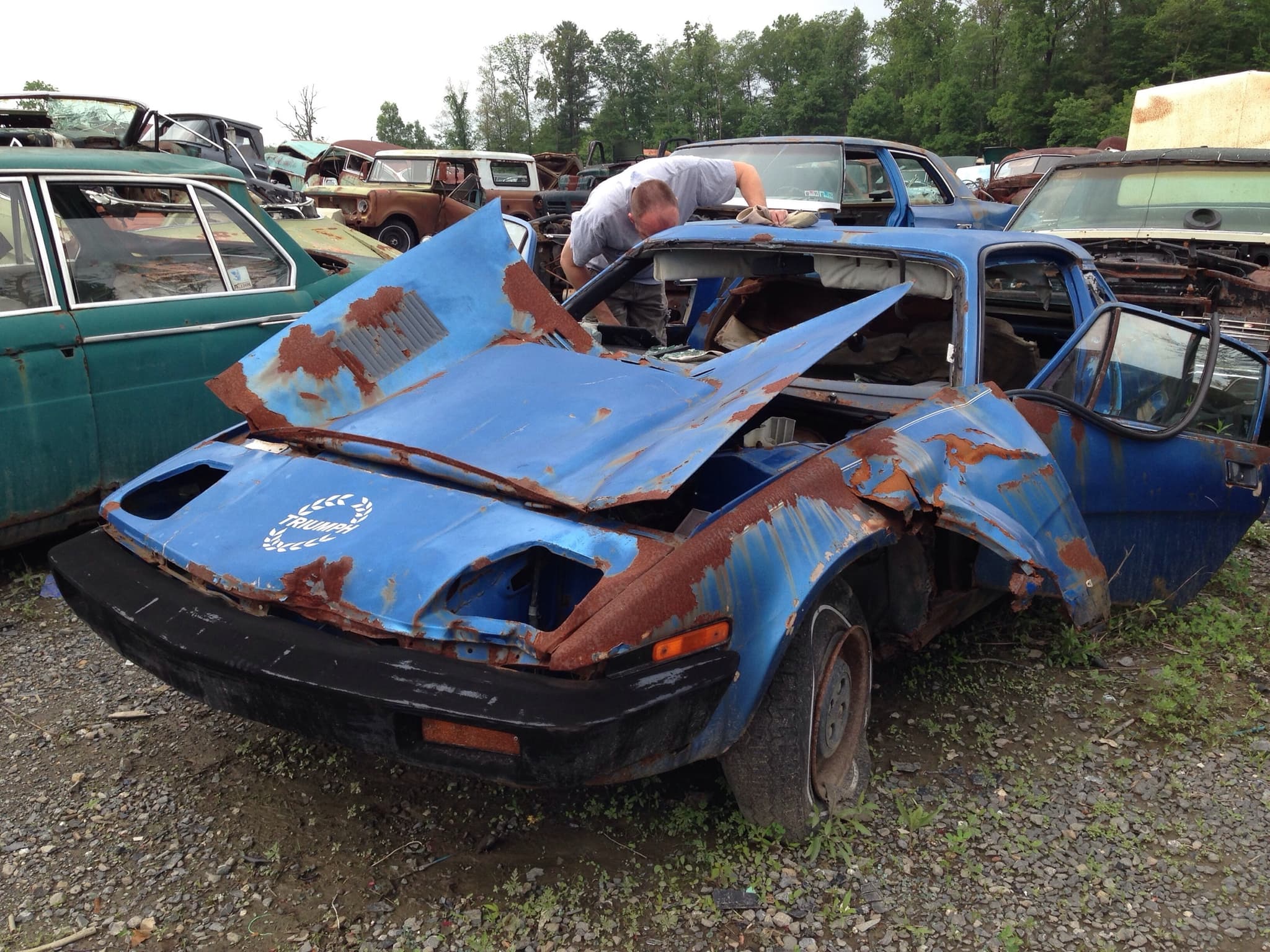
A TR7 for sale today has had more than 40 years to change. Its reputation was made early, as Ate Up With Motor sums up:
Many of the TR7's reliability issues were eventually rectified, but that took about two years and did little to restore lost buyer confidence.
The checks below come mainly from two owners' clubs, the TR Drivers Club, which publishes Simon Godrich's checklist, and the TR Register, with the period road tests.source 1source 2source 3
Body and structure
The TR7 has no separate chassis: its steel body is the structure, so the body comes first. No club or magazine list of the TR7's own rust points was among the sources read; a club or a specialist can show where to look on a particular car. What the sources do say:
The Canley cars, from October 1978, were given an anti-chip coating, Motor Sport reported, and the magazine was frank about the steelwork of its 1979 car: "Some of the detail sheet steel work is pretty abysmal."
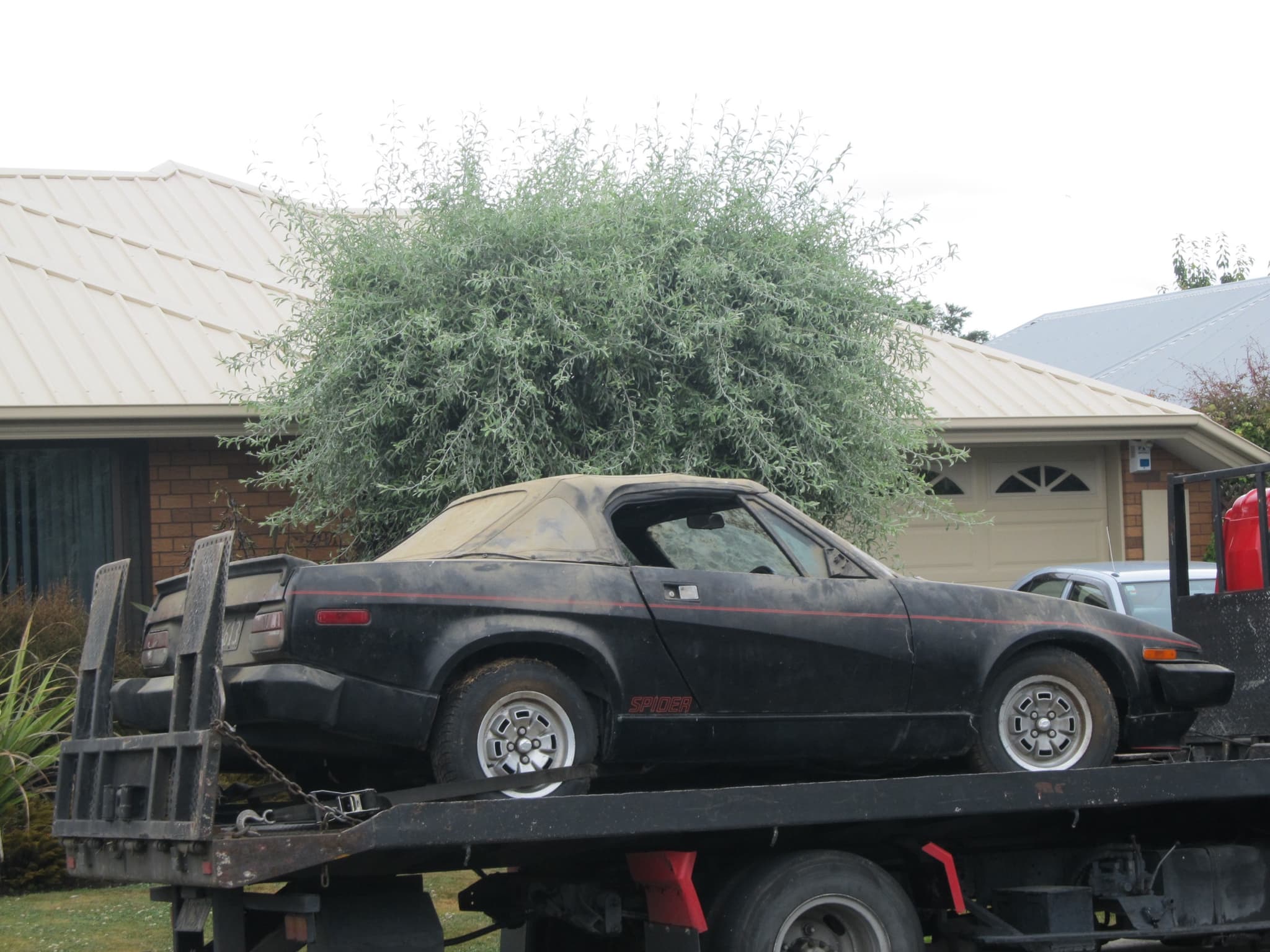
A convertible's stiffness depends on the box section behind the seats and on rear quarter panels extended down to join the sills (rocker panels), which Triumph added when it took the roof away; its front bumper carries tuned weights to damp the shake of an open body.
Large sunroofs, offered as options, took "a serious toll on the rigidity", Ate Up With Motor writes.
Many TRs have come back to Britain from America. Not all of them lived in dry states, the TR Register warns, and their corrosion can be "just as severe" as a home-market car's; every American car was left-hand drive, so a right-hand-drive one has been converted.source 4source 5source 6source 1source 7
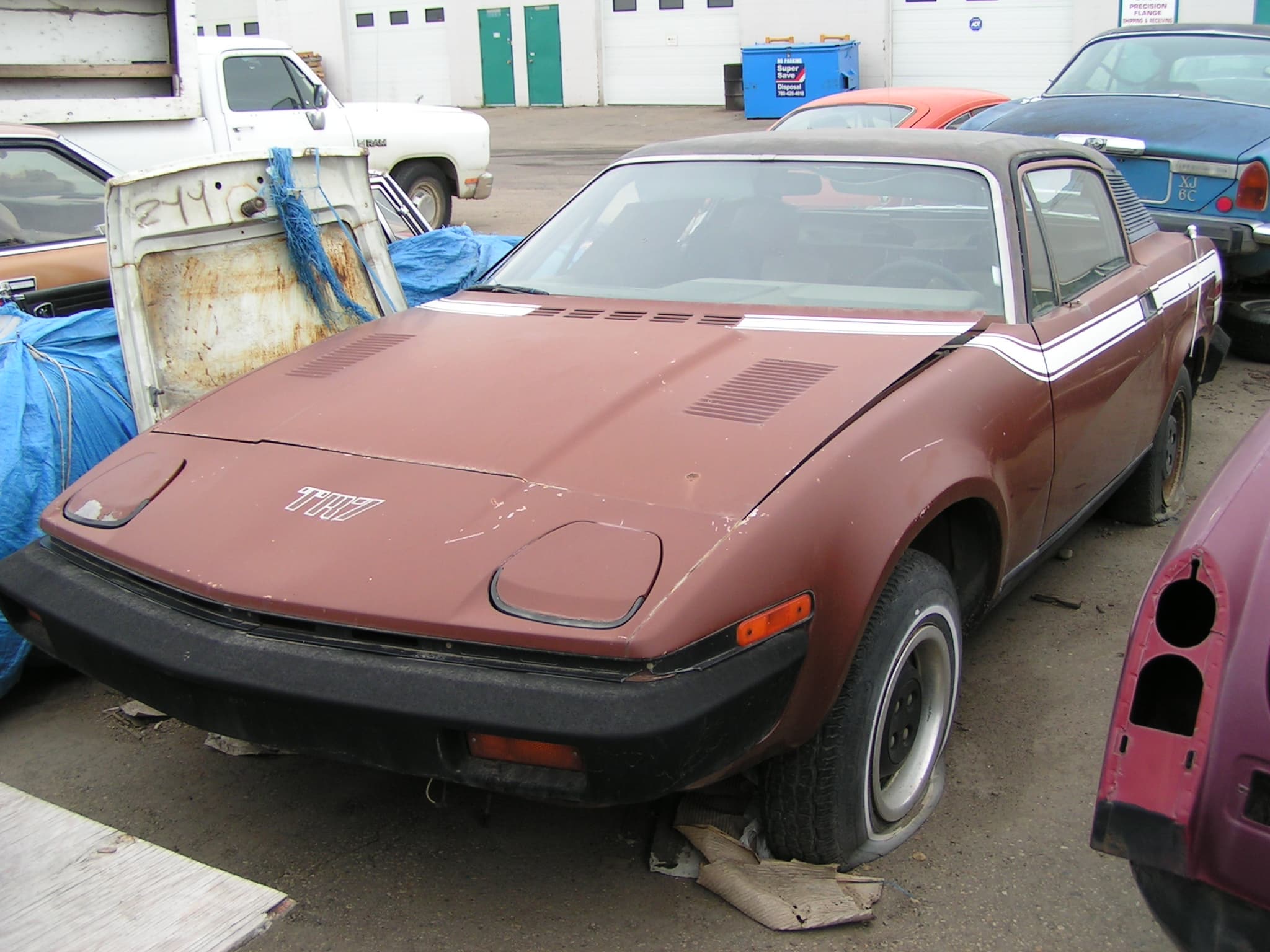
Engine
The engine is sound at heart, and its weaknesses are well known. Godrich puts it in a sentence:
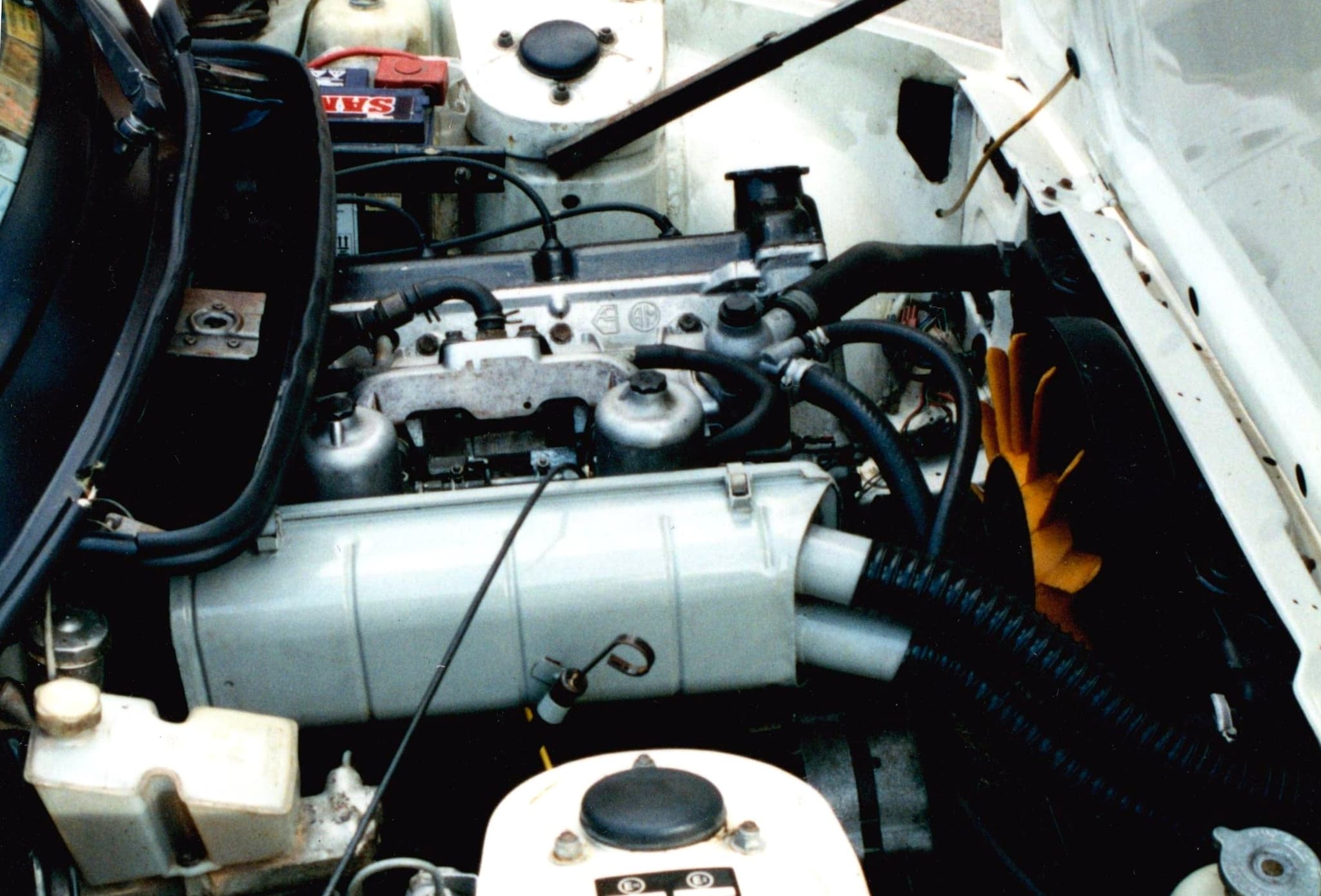
The Dolomite derived two-litre ohc engine is surprisingly robust, but usually harsh when reved.
The aluminium head sits on an iron block, and overheating, which the early cars were known for, can blow the head gasket and warp the head.
| Check | What to look for | Source |
|---|---|---|
| Head gasket | Milky oil on the dipstick or filler cap combined with oil in the coolant; the head bolts' torque | TR Drivers Club; Ate Up With Motor |
| Timing chain | A single-row chain, which can break and wreck the valves, though it gives plenty of warning; cautious owners renew it every 40,000 km (25,000 miles) | TR Drivers Club; Ate Up With Motor |
| Water pump | Coolant running down the right-hand side of the block, under the carburettors | TR Drivers Club |
| Viscous fan coupling | A scream from the front pulleys; it can seize or break up | TR Drivers Club; TR Register |
| Carburettor mountings | Split rubber blocks under the twin SUs, which make the engine run unevenly | TR Drivers Club |
| Cooling | A radiator kept flushed and antifreeze kept in all year | TR Drivers Club |
| Head studs | Angled steel studs that corrode into the aluminium head, making it hard to remove | TR Register |
Gearbox, brakes and suspension
The early cars' four-speed gearbox (transmission) gave way in 1978 to the Rover SD1's five-speed, which Simon Godrich's checklist calls the more robust unit. The five-speed baulks when cold: Triumph changed its recommended oil from a hypoid gear oil to automatic transmission fluid. It also has an internal oil pump, so the TR Register warns against towing a car far on its rear wheels with the propshaft in place.
Brakes were the TR7's weak point from new. Motor Sport complained of them in 1976 and again in 1979, and Godrich is blunt:
Standard front brakes are barely up to everyday use, let alone spirited driving.
At the back, the self-adjusters seize, and a car can fail its MOT test on them. The suspension was soft as standard: look for tired dampers, worn bushes on the rear trailing arms, which cause bump steer, and worn subframe and anti-roll-bar mountings. A wobble in the steering at 80 to 100 km/h (50 to 60 mph) is a common complaint, the TR Register notes, with many possible causes, from the discs and the geometry to a worn rack. The clutch's pivot pin can wear through its fork, and clutches stick after a car has stood.
Electrics and interior
Of the pop-up headlamps, Godrich is blunt:
Assure as day follows night your TR7 will suffer from popup headlamps which don't popup or if they do popup they'll stay up.
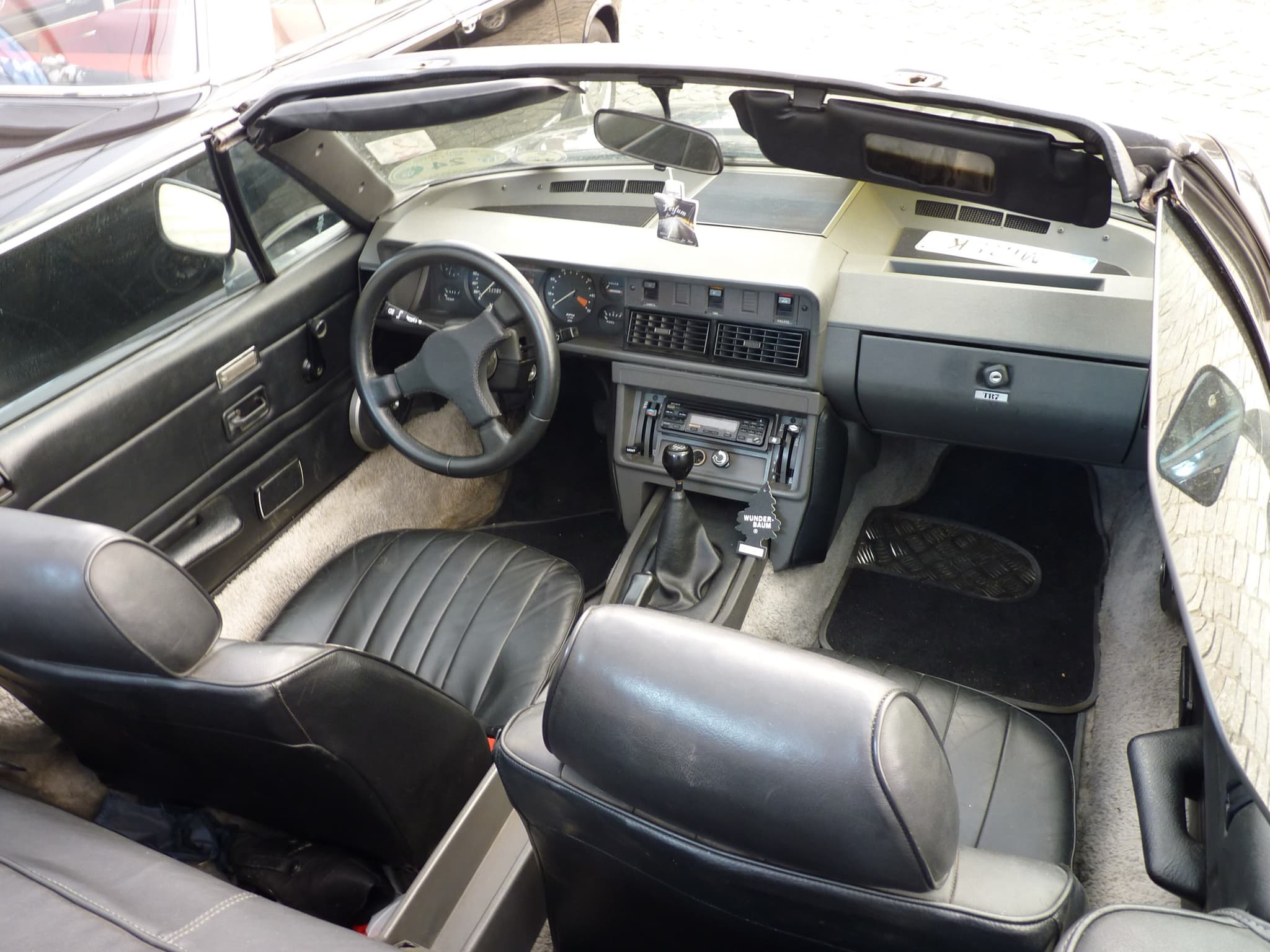
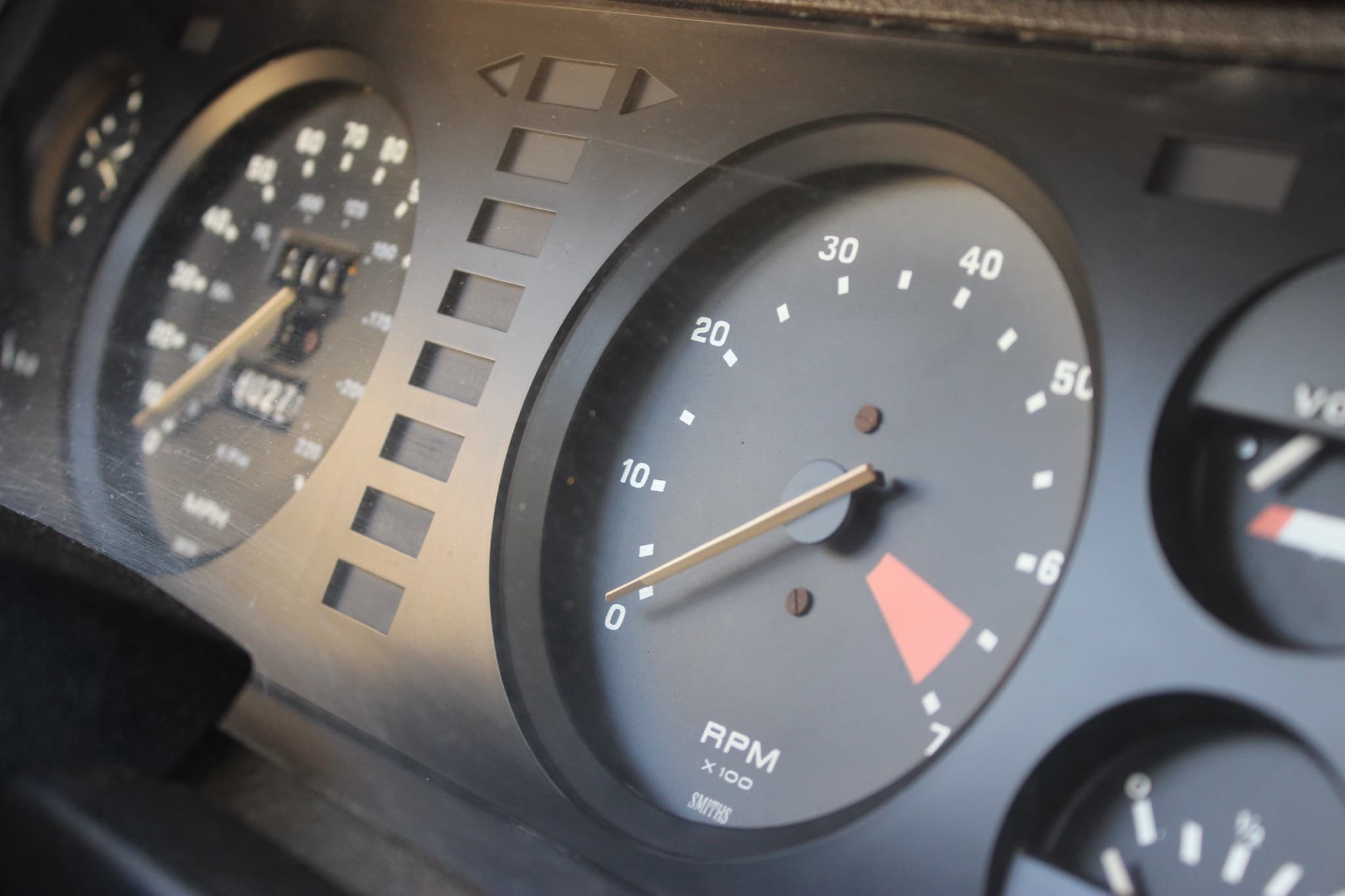
The causes Godrich names are the connections under the front wings (fenders), poor earths and the Pektron control unit. The earths themselves, two at the front of the engine bay, two on each rear lamp cluster and one inside the windscreen (windshield) pillar, cause many electrical faults, and indicators that glow without flashing usually mean a bad earth. The heater matrix leaks into the footwell when its seals perish, and replacing it means taking the dashboard out. The seats were trimmed in black at first, then tartan from March 1977, plaid at Canley and, by Wikipedia's account of Bill Piggott's guide, velour at Solihull; an original interior is worth checking against the year.source 2source 3source 8source 5source 9source 1
Which TR7?
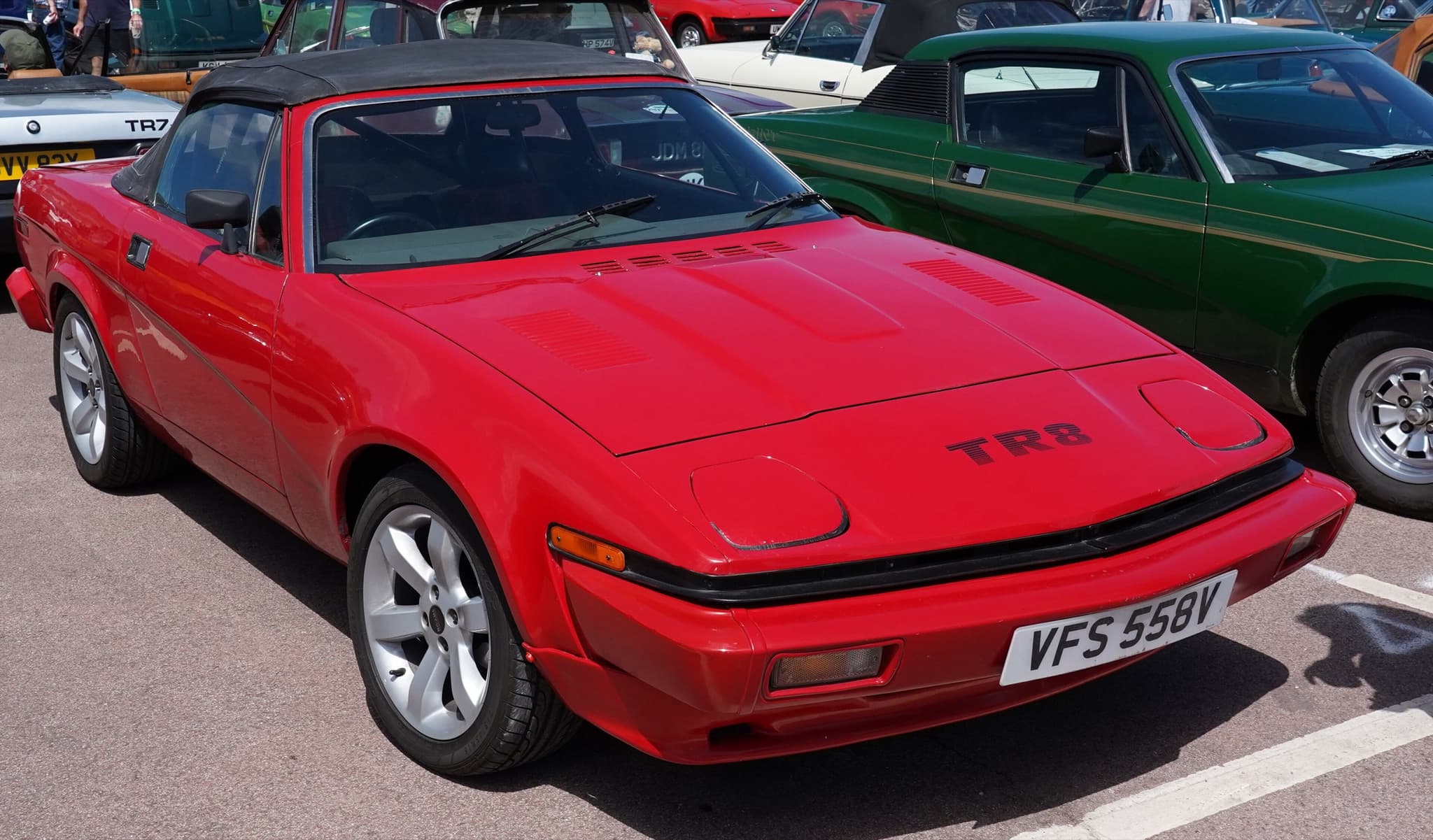
The convertible looked better than the coupé to Road & Track, and Motor Sport found less boom in it; the five-speed cars were better geared and stronger. British and European cars had more power than the American cars, which had a federal engine. Where a car was built can be read from its number, which identification decodes; many writers say the Canley and Solihull cars were better made, but that is an opinion, and where the TR7 was made gives both sides. Judge the car, not the factory.
The rarer cars need their numbers checked. A TR7 Sprint is proved only by its commission and engine numbers, which identification sets out; anything else with a 16-valve head is a conversion, and conversions are many. So are V8s: Ate Up With Motor writes that the survivors include "an abundance of Sprint and V8 conversions". A Spider's livery can be copied with decals, and the "Jubilee" rests on one caption; special editions explains each. A Heritage Certificate from the British Motor Museum gives a car's original specification from the factory's records, and the TR Register advises matching the commission number on the plate to the V5 and asking the club's registrar.
Sources
Every source the site cites is on the sources page.
- Primarymade at the time, by the maker or by people who were there
- Referenceserious later work: clubs, specialists, magazines, books
- Uncheckedencyclopaedias and enthusiast sites: cited beside a good source, named in the sentence, or marked Unchecked
- Aaron Severson, "Way of the Wedge: The Triumph TR7 and TR8", Ate Up With Motor, 5 Feb 2012, pp. 1–5, p. 3, "Many of the TR7's reliability issues …"; p. 2, the sunroofs' "serious toll on the rigidity"; p. 3, the early cars' head gaskets, timing chains and overheating; p. 2, no overdrive; p. 3, the four-speed's weakness; p. 3, the early all-black interiors; p. 3, the five-speed; p. 5, the experts' view of the later cars; "an abundance of Sprint and V8 conversions". ateupwithmotor.com/model-histories/triumph-tr7-tr8 Reference
- Simon Godrich, "TR7 Tribulations" (owner's checklist), TR Drivers Club, the owner's checklist; "The Dolomite derived two-litre ohc engine …"; the head gasket, timing chain, water pump, fan, carburettor mountings, distributor, cooling and engine removal; the four-speed and its axle; the five-speed; the clutch; "Standard front brakes …"; the rear adjusters; the suspension; "Assure as day follows night …"; the Pektron unit; the earths; the heater matrix; the sealed beams. trdrivers.com/articles21/tr7tribulations1.html Reference
- Malcolm Paris (compiler), "Triumph TR7 / TR7 V8 and TR8 Buyers Guide", TR Register, the guide and the owners' questions; FAQ: the viscous fan; the head studs; FAQ: the five-speed's oil and pump; towing; the clutch; the steering wobble; no overdrive; FAQ: indicators that glow. tr-register.co.uk/resources/buyers-guide/triumph-tr7-tr8 Reference
- Clive Richardson ("C.R."), "Triumph TR7: sports car or two-seater saloon?", Motor Sport, Jun 1976, p. 63, p. 63, the monocoque; p. 63, the brakes. motorsportmagazine.com/archive/article/june-1976/63/triumpuh-tr7 Primary
- Clive Richardson ("C.R."), "The Triumph TR7", Motor Sport, Jun 1979, p. 58, p. 58, the anti-chip coating; "Some of the detail sheet steel work is pretty abysmal"; p. 58, the distributor; p. 58, the brakes, the propshaft and the axle bottoming; p. 58, the plaid trim; p. 58, the five-speed car. motorsportmagazine.com/archive/article/june-1979/58/the-triumph-tr7 Primary
- Rover Triumph (reprinted by the TR Drivers Club), "Triumph TR7 Drophead: Structural Engineering and Specifications" (press release), Press release, for release 2 Mar 1980, the drophead's box section and quarter panels; the bumper's tuned weights. trdrivers.com/articles21/tr7dhcengspec1.html Primary
- TR Register, "Buyer Beware: TR6" (2 pp. PDF leaflet), the TR7 paragraph: cars brought back from America; corrosion "just as severe"; the TR7 paragraph: left-hand-drive American cars converted; matching the number to the V5. tr-register.co.uk/storage/Pages/tr6-buyer-beware.pdf Reference
- Motor Sport, News, editorials and short items on the TR7 (group), Jul 1975 – Aug 1981; Apr 2002, Apr 1977, p. 33, the tartan trim. motorsportmagazine.com/archive Primary
- Wikipedia (EN), "Triumph TR7", 2026, the trims by factory, citing Piggott. en.wikipedia.org/wiki/Triumph_TR7 Unchecked
- Thos L. Bryant, "New from Britain: Triumph TR7 Convertible & TR8", Road & Track (reprinted by the TR Drivers Club), 1979, the convertible's looks. trdrivers.com/articles21/newfrombritain1.html Primary
- "C.R.", "The Triumph TR7 Drophead" ("Sunshine Seven"), Motor Sport, Apr 1980, p. 35, p. 35, the convertible's boom. motorsportmagazine.com/archive/article/april-1980/35/sunshine-seven Primary
- Michael Hart, "Counting TR7 Spiders: A Day at the Gaydon Archive", Triumph Wedge Owners Association, © 2013, the Spider's red decals. triumphwedgeowners.org/spider Reference
- Paul Towle and Rex Holford (update) and Mark Elbers (update), "TR7 & TR8 Identification & Production Data Explained", TR Drivers Club, 1987, updated (© 2016), the factory by prefix; ACH; the TR8 prefixes. trdrivers.com/tr7_-_tr8_vin_numbers.htm Reference
- Graham Fountain, "The TR7 Sprint Story", TR Driver (TR Drivers Club), 1991 no. 2, ACH and CH…HE; conversions. trdrivers.com/articles21/tr7sprintarticle-1991.html Reference
- John Clancy, "The TR7 Jubilee – Limited Edition", TR Drivers Club, the evidence for a Jubilee, and the club's conclusion. trdrivers.com/articles21/tr7jubilee1.html Reference
- British Motor Museum (BMIHT), "Heritage Certificates", the build records. britishmotormuseum.co.uk/archive/heritage-certificates Primary