Triumph TR7 Specs
The coupé, the convertible and the Sprint side by side, from British Leyland's own figures of 1980 and the period tests, with the details the comparison does not hold and an explanation of why the power, the weight and the performance each have more than one figure.
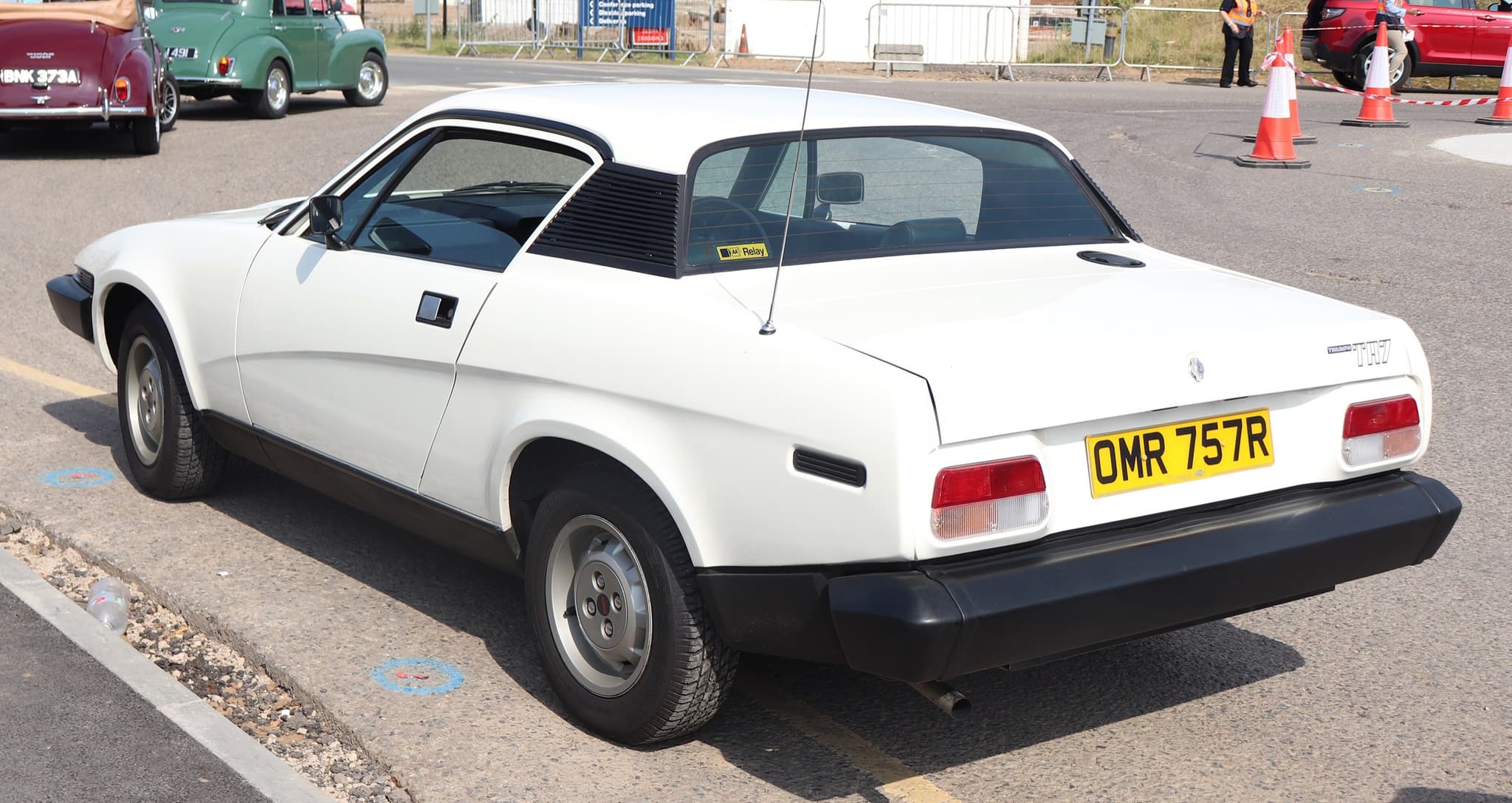
The comparison sets the three TR7s side by side: the coupé, the convertible and the TR7 Sprint. Most of its figures are British Leyland's own, from the specification Rover Triumph issued with the British drophead in March 1980, which gave the fixed-head's weights too; the rest come from the period road tests. It shows the British cars' figures; the American cars differed, and the sections below say how. A small asterisk beside a value opens a note with the other figures in print and their sources, and the details the comparison does not hold are in tables here.source 1source 2source 3source 4
Engine and power
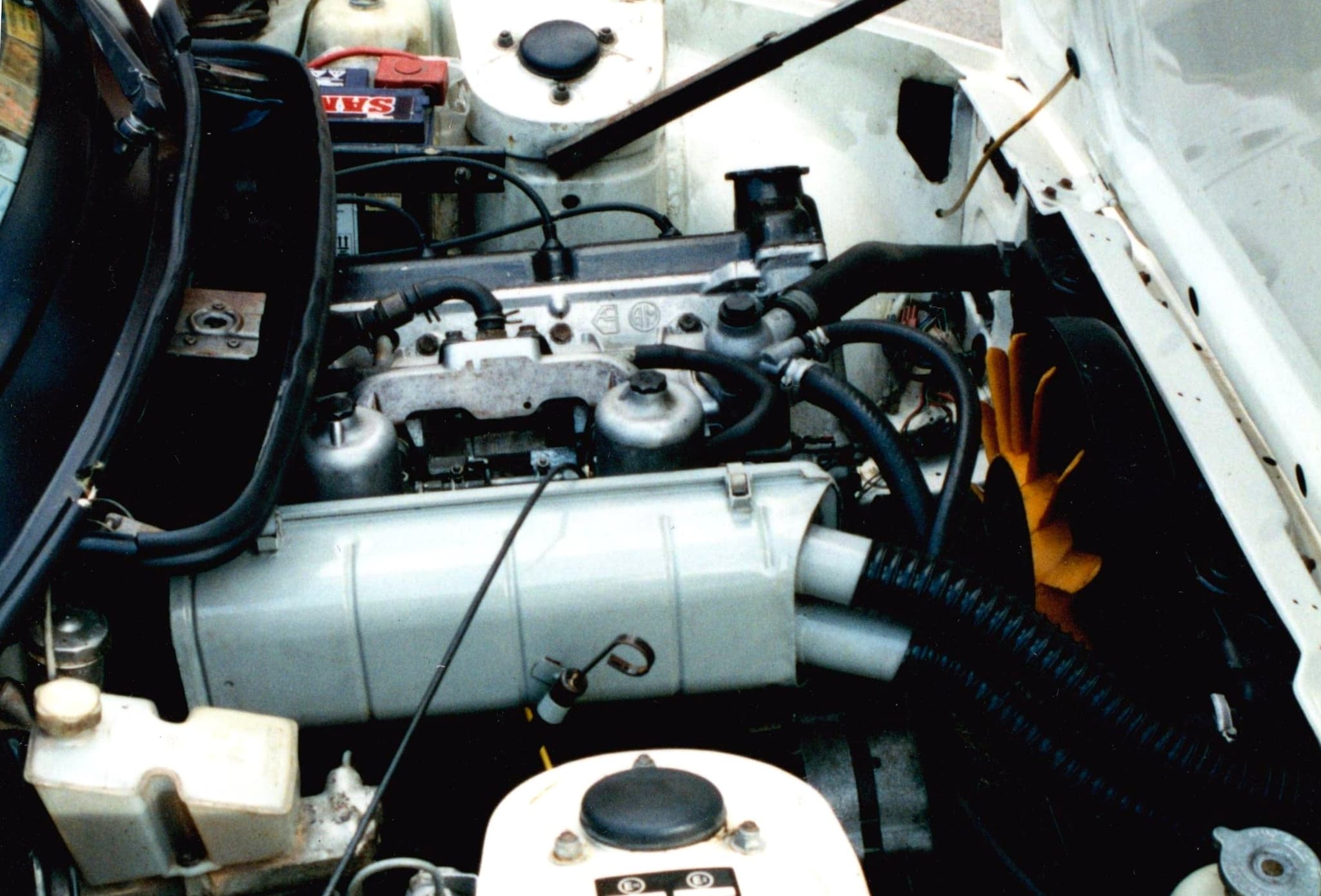
The TR7's engine was Triumph's slant-four, the in-line four of the Dolomite saloon (sedan), leaning to one side under the low bonnet (hood). Motor Sport described where its parts came from:
The in-line, slant-four engine is a variation on the Dolomite theme, using the 1,998 c.c., 90.3 mm. X 78 mm. Dolomite Sprint block topped by the single-overhead camshaft, eight valve cylinder head from the 1,854 c.c. Dolomite.
The block is iron and the head aluminium, Ate Up With Motor notes; the buyers guide says what that means for the head gasket. The British cars had twin SU carburettors, the American cars Zenith-Strombergs or, later, fuel injection, and the American launch car Lucas transistorised ignition.
| Item | Reading | Source |
|---|---|---|
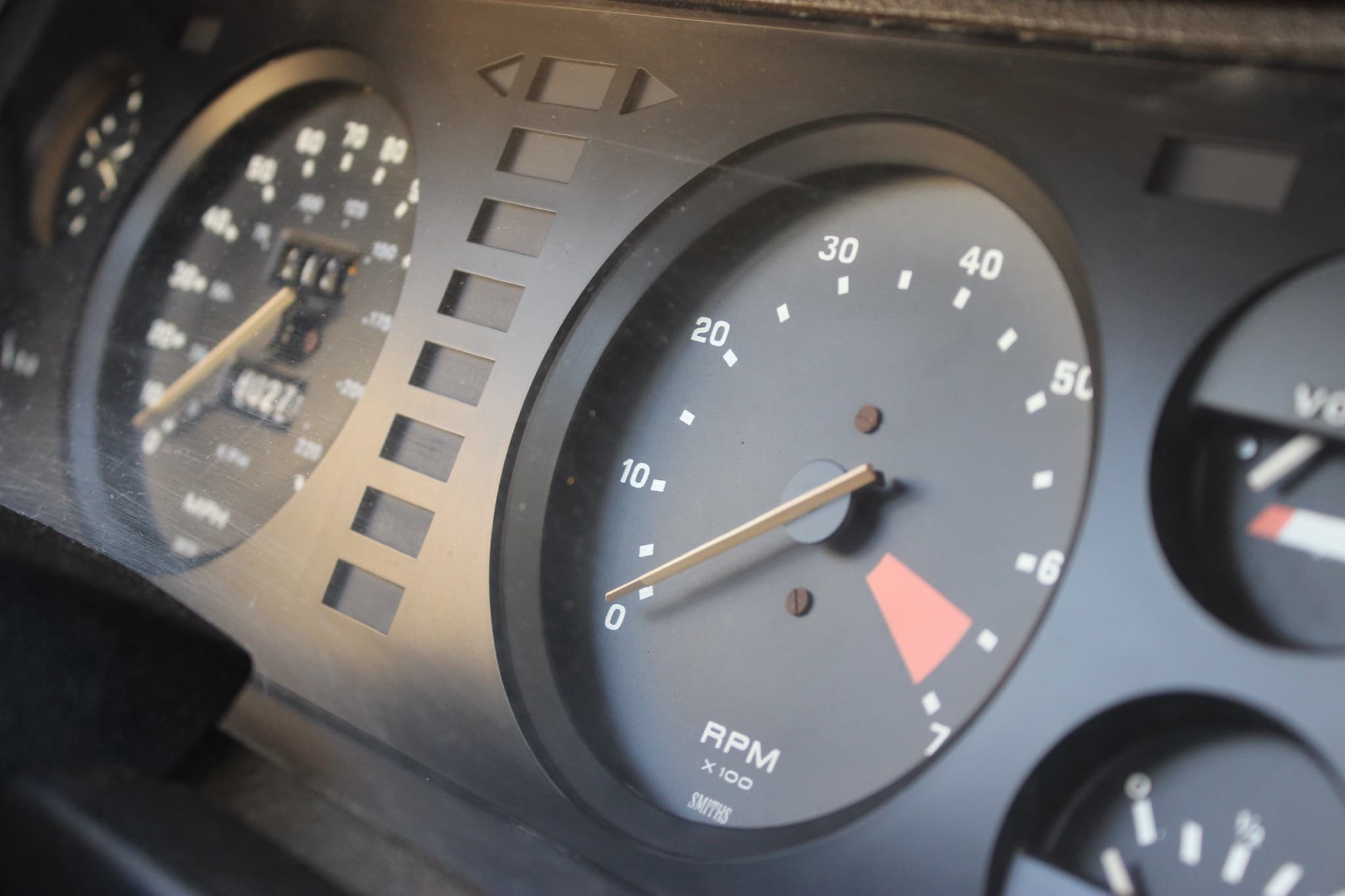
| Red line | 6,500 rpm, marked on the rev counter: the red line in 1979, the "yellow line" in 1976 | Motor Sport, 1976 and 1979 |
| Firing order | 1-3-4-2 | Rover Triumph, 1980 |
| Oil pressure | 3.5 kg/cm² (50 psi), nominal | Rover Triumph, 1980 |
| Engine oil, with filter | About 4.5 litres (8 imperial pints) | Rover Triumph, 1980 |
The TR7's power has several figures because it was rated in different ways for different markets. The British and European cars' figure, which the comparison gives, is a DIN rating. The American launch rating is an SAE net figure for a different tune, the federal engine, with lower compression and other carburettors, and California's was lower still at first, with one carburettor; its power fell again by 1980, and the injected engine of the 1981 model year rated a little higher, Ate Up With Motor records. The North American TR7s page lists the American changes by year.
The two ratings do not compare directly, though Motor Sport set them against each other in 1976, in the sentence the North American TR7s page quotes. The TR Register prints a North American figure a little higher than the launch rating, "approximately", and does not say on what basis it was measured. The Canadian convertible's brochure gives its engine a DIN rating of its own, at a lower compression than the British car's.source 4source 3source 1source 5source 2source 6source 7source 8
Gearboxes and axles
Three gearboxes (transmissions) were fitted. The first TR7s had a four-speed gearbox with the Dolomite's ratios and no overdrive. Rover's SD1 supplied the five-speed and Borg-Warner the Model 65 automatic, both offered from the 1976 model year; in 1978 the five-speed was made standard. Each had its own axle ratio:
| Gearbox | Axle ratio | Other ratios | Source |
|---|---|---|---|
| Four-speed | 3.63:1 | The Dolomite's | Motor Sport, 1975 (the American preview car) |
| Five-speed | In the comparison | In the note by the comparison's Running gear heading | Rover Triumph, 1980; Motor Sport, 1979 |
| Automatic | 3.27:1 | 2.39, 1.45 and 1.00:1, reverse 2.09:1; torque converter 1.91:1 | Rover Triumph, 1980; Motor Sport, 1979 |
Road & Track, testing the TR8 in June 1980, gave the four-cylinder car's axle as 3.45:1, a figure no other source read gives. Motor Sport, in 1979, gave the speeds in the gears at 6,000 rpm with each manual gearbox:source 2source 4source 1source 5source 9
| Gear | Four-speed | Five-speed |
|---|---|---|
| First | 71 km/h (44 mph) | 55 km/h (34 mph) |
| Second | 106 km/h (66 mph) | 87 km/h (54 mph) |
| Third | 150 km/h (93 mph) | 129 km/h (80 mph) |
Chassis, steering and brakes
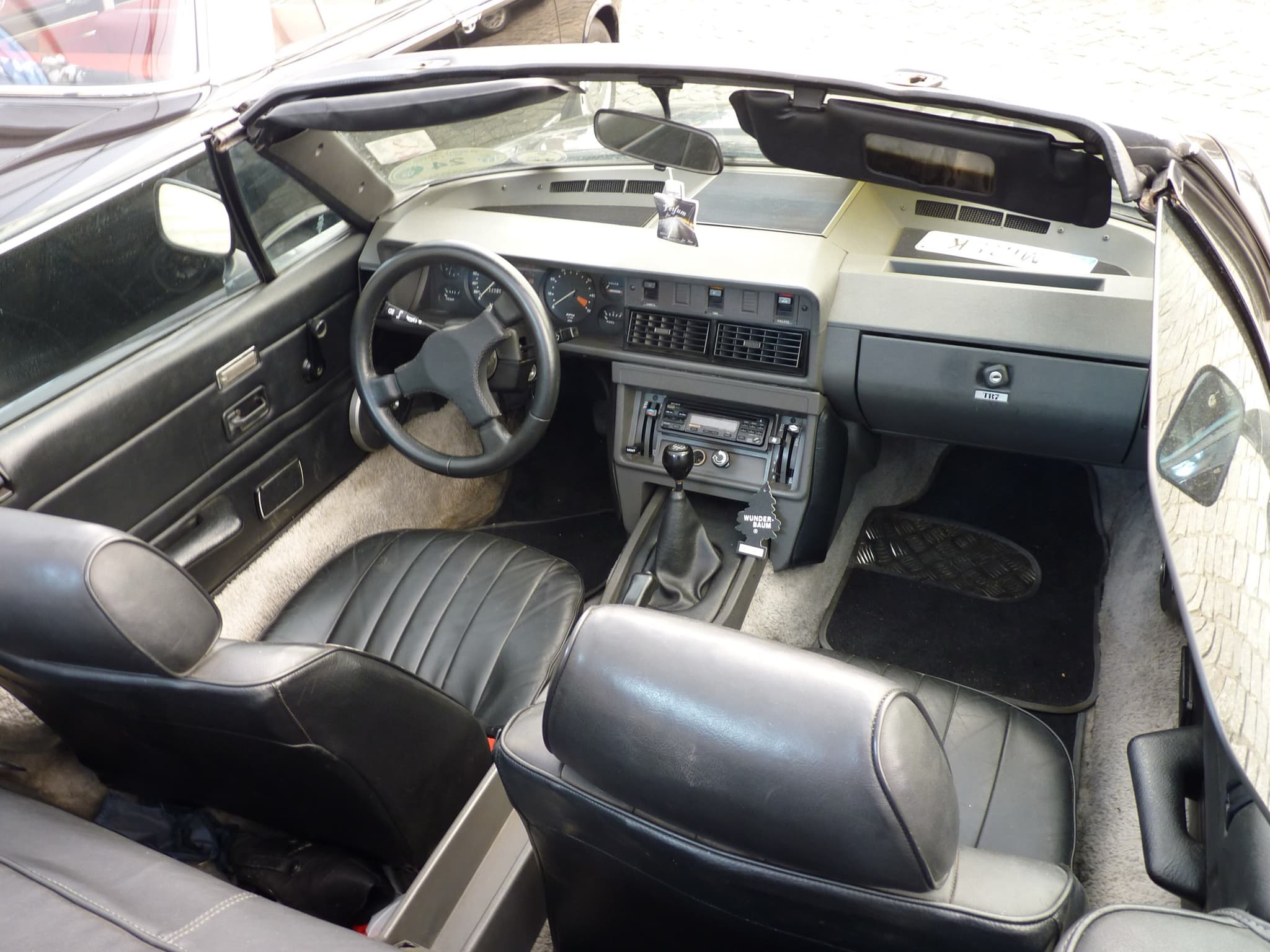
The body was a steel monocoque with a separate front subframe. MacPherson struts with coil springs, lower links and an anti-roll bar carried the front, and a live axle on four links, two trailing arms below and two semi-trailing rods above, with coil springs, telescopic dampers and an anti-roll bar, carried the back; the comparison gives the factory's wording. Steering was by rack and pinion, and the brakes were discs at the front and drums at the back, with a servo and split circuits; the five-speed cars had bigger rear drums.
| Item | Reading | Source |
|---|---|---|
| Turns of the steering wheel, lock to lock | 3⅞, or 3.86 | Rover Triumph, 1980; Motor Sport, 1976 |
| Turning circle | 8.8 m (29 ft); 8.83 m in the Canadian brochure | Rover Triumph, 1980; the Canadian brochure |
| Brake servo | Direct-acting, boost ratio 2.3:1 | Rover Triumph, 1980 |
| Wheel fixing | Four studs on a 95.25 mm (3.75 in) pitch circle, offset ET25, hub-centred | The TR Register's answers to owners |
The front discs have three sizes in print, and no source read explains the difference: the period tests of 1975 and 1979 give one, and Rover Triumph's 1980 figure is a little smaller; the Canadian brochure gives a third. The comparison's note sets them out. Whether early cars had bigger discs than later ones is not known from the sources read. On tyres, BL's figure for the five-speed cars and Ate Up With Motor both have an H speed rating; the car Motor Sport tested in 1979 ran on tyres of the lower S rating.source 1source 3source 2source 4source 8source 7source 5
Dimensions and weights
Their bumpers added 140 mm (5.5 in) to the North American cars, and the comparison's length is the British car's. Motor Sport gave the American preview car of 1975 as 13 ft 8.3 in long, a little shorter than later figures for the American cars; the Canadian brochure gives the length in inches and in centimetres, and the two do not agree, by our arithmetic.
| Item | Reading | Source |
|---|---|---|
| Track, front and rear | 1,409 and 1,404 mm (55.5 and 55.3 in) | Rover Triumph, 1980 |
| Ground clearance | 90 mm (3.5 in) | Rover Triumph, 1980 |
| Boot (trunk), coupé | 292 litres (10.3 cu ft), nominal | Ate Up With Motor |
| Boot, Canadian convertible | 0.29 cubic metres | The Canadian brochure |
The weights in the comparison are Rover Triumph's of 1980, for each body with a manual gearbox and with the automatic; Motor Sport's report of the drophead repeats the release, so it is not a second source. Older figures are of other cars, in other years: Motor Sport called the American preview car of 1975 "exactly one ton" and gave its British car of 1976 a weight in hundredweight, and Ate Up With Motor gives a round figure for every TR7. The comparison's note gives those it holds, each with its basis.source 1source 5source 2source 10source 8
Electrics
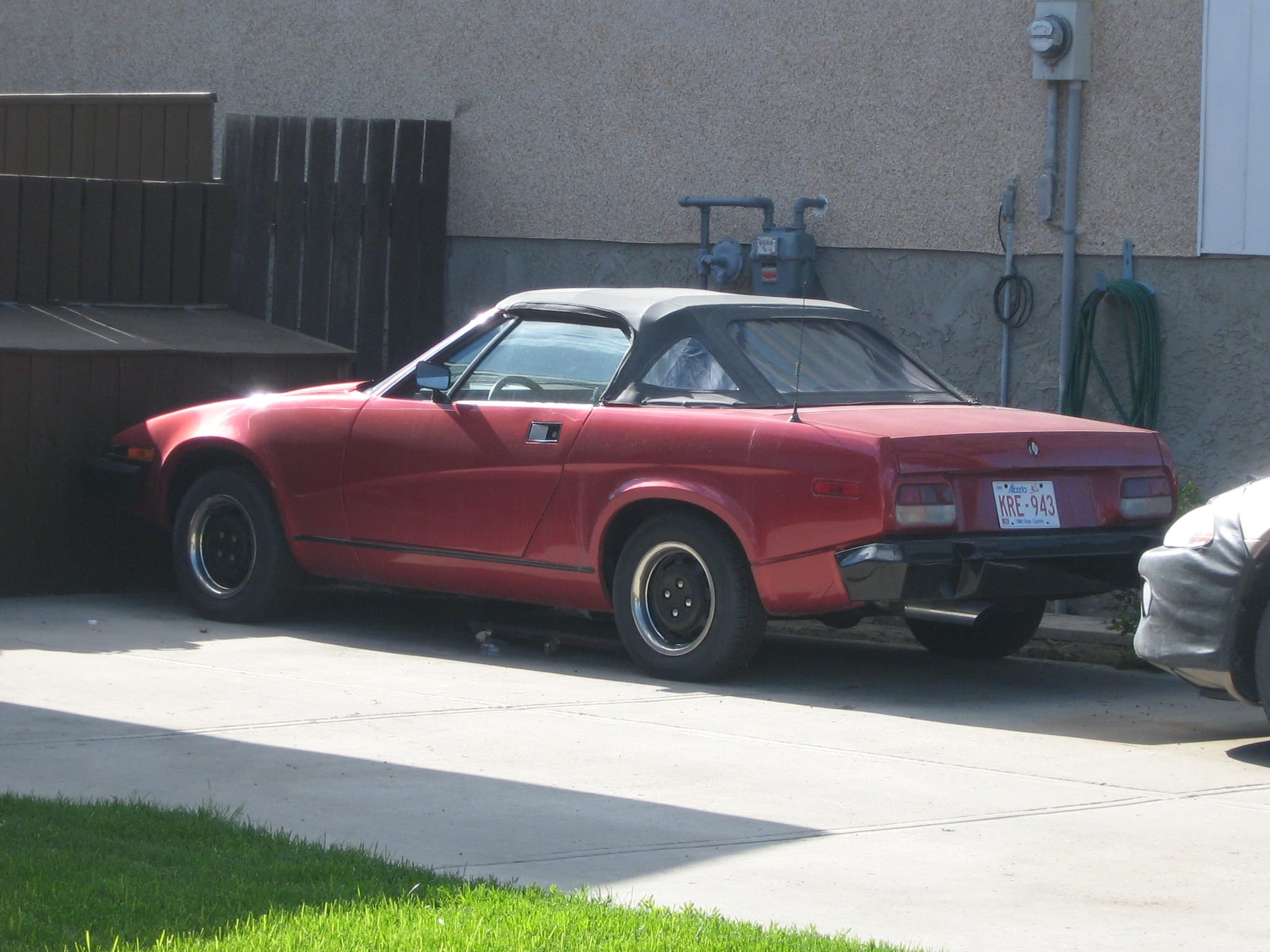
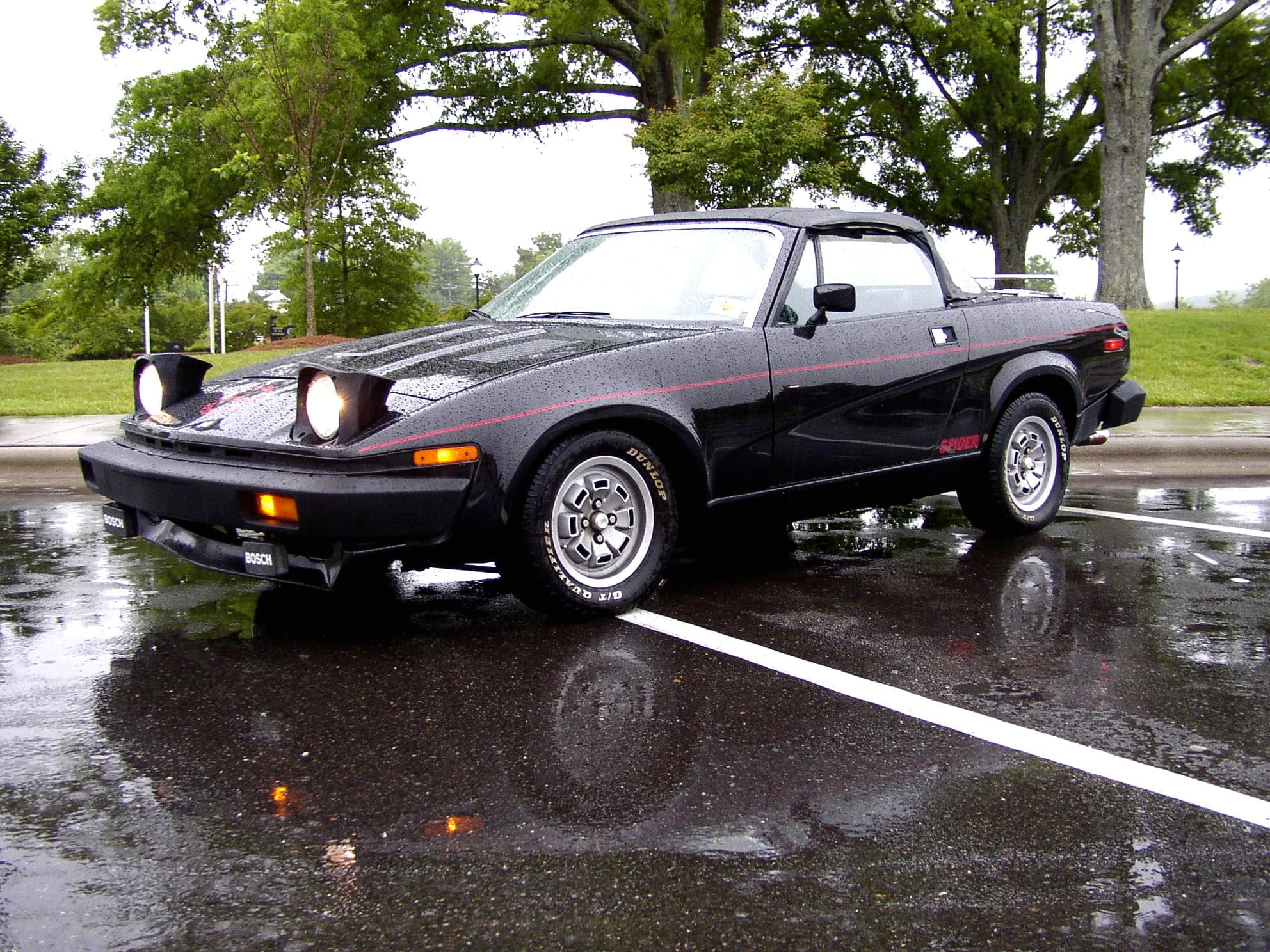
The headlamps are round units in pods that an electric motor raises, a feature of the wedge from the first preview. The rest is a 12-volt system:source 1source 2
| Item | Reading | Source |
|---|---|---|
| System | 12 V, negative earth | Rover Triumph, 1980 |
| Battery | 40 Ah, at the 20-hour rate | Rover Triumph, 1980 |
| Alternator | Lucas 17ACR, 36 A nominal | Rover Triumph, 1980 |
| Headlamps | Retractable, 178 mm (7 in) round units, electric motors | Motor Sport, 1975 |
Performance, claimed and tested
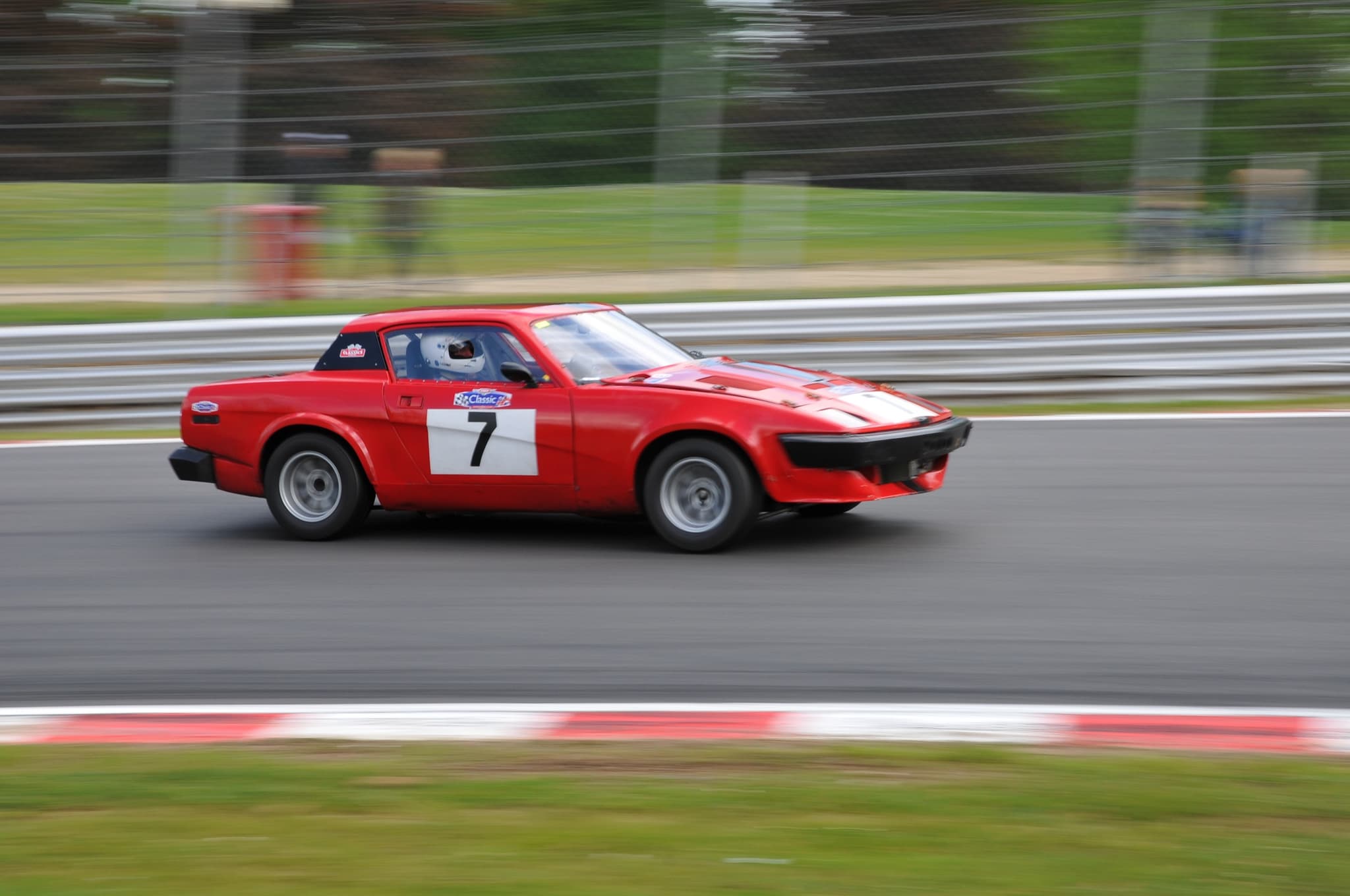
The figures most often quoted for the TR7 are Leyland's own claims, and the tests did not always match them. Motor Sport passed on Leyland's claimed maximum speed in 1976, "though neither of the cars we tried would reach that maximum without help from inclines", and in 1979 it measured its Canley car more slowly than Leyland's claim; the comparison gives both, each labelled. Other tests add figures the comparison does not hold:
| Test | What it measured | Source |
|---|---|---|
| Autocar Autotest, June 1977, a British coupé | 0–100 mph in 32.1 seconds; the standing quarter-mile in 17.0 seconds | As cited in Autocar, 1979 |
| Road & Track, September 1979, an American convertible | 0–60 mph in 11.5 seconds | As cited in Road & Track, June 1980 |
| Road Test, July 1980, an American TR7 | 9.5 litres per 100 km (24.8 US mpg) on average over 4,970 km (3,088 miles) | Road Test, July 1980 |
| Canada's Department of Transport, the convertible | 10.5 litres per 100 km with the five-speed, 9.9 with the automatic | The Canadian brochure |
The Autocar test's date is given as 26 June 1977 in the account that cites it, which was a Sunday, by our arithmetic, so the issue is uncertain. The TR Register also prints a performance table, without saying whose tests it records.source 3source 4source 6source 11source 9source 12source 8source 7
Production
Sources for Production, by version
- Price new
- Coupe: Several figures in print.Clive Richardson ("C.R."), "Triumph TR7: sports car or two-seater saloon?", Motor Sport, Jun 1976, p. 63source 3; Keith Adams, "The Cars: Triumph TR7/TR8 development story", AROnline, updated 8 Feb 2024source 6; Clive Richardson ("C.R."), "The Triumph TR7", Motor Sport, Jun 1979, p. 58source 4
- Convertible: One good source.UK, 1980; £794 more than the MGB. "C.R.", "The Triumph TR7 Drophead" ("Sunshine Seven"), Motor Sport, Apr 1980, p. 35source 10
- Built
- Coupe: Several figures in print.Keith Adams, "The Cars: Triumph TR7/TR8 development story", AROnline, updated 8 Feb 2024source 6; Paul Towle and Rex Holford (update) and Mark Elbers (update), "TR7 & TR8 Identification & Production Data Explained", TR Drivers Club, 1987, updated (© 2016)source 13
- Convertible: Several figures in print.Paul Towle and Rex Holford (update) and Mark Elbers (update), "TR7 & TR8 Identification & Production Data Explained", TR Drivers Club, 1987, updated (© 2016)source 13; Thos L. Bryant, "New from Britain: Triumph TR7 Convertible & TR8", Road & Track (reprinted by the TR Drivers Club), 1979source 14
- TR7 Sprint: Several figures in print.Paul Towle and Rex Holford (update) and Mark Elbers (update), "TR7 & TR8 Identification & Production Data Explained", TR Drivers Club, 1987, updated (© 2016)source 13; Graham Fountain, "The TR7 Sprint Story", TR Driver (TR Drivers Club), 1991 no. 2source 15
- Designers
- TR7 Sprint: One good source.The TR7 coupé, 1976. Clive Richardson ("C.R."), "Triumph TR7: sports car or two-seater saloon?", Motor Sport, Jun 1976, p. 63source 3
- Built at
- Convertible: One good source.Drophead production. Paul Towle and Rex Holford (update) and Mark Elbers (update), "TR7 & TR8 Identification & Production Data Explained", TR Drivers Club, 1987, updated (© 2016)source 13
- TR7 Sprint: Good sources agree.Paul Towle and Rex Holford (update) and Mark Elbers (update), "TR7 & TR8 Identification & Production Data Explained", TR Drivers Club, 1987, updated (© 2016)source 13; Graham Fountain, "The TR7 Sprint Story", TR Driver (TR Drivers Club), 1991 no. 2source 15
| Item | Coupe | Convertible | TR7 Sprint |
|---|---|---|---|
| Price new | £2,999 Price new, Coupe Several figures in print.
| £5,958 | Not in the sources read |
| Built | Sep 1974 – Oct 1981 Built, Coupe Several figures in print.
| from January 1979 (TCT 100001, 1979 model year) Built, Convertible Several figures in print.
| Feb – Oct 1977 Built, TR7 Sprint Several figures in print.
|
| Designers | Not in the sources read | Not in the sources read | Harris Mann (body) |
| Built at | Not in the sources read | Canley (TCT, from January 1979); Solihull (from April 1980) | Speke |
Engine
Sources for Engine, by version
- Engine maker
- Convertible: One good source.The TR7's engine. Aaron Severson, "Way of the Wedge: The Triumph TR7 and TR8", Ate Up With Motor, 5 Feb 2012, pp. 1–5source 5
- TR7 Sprint: One good source.The Dolomite Sprint engine. Aaron Severson, "Way of the Wedge: The Triumph TR7 and TR8", Ate Up With Motor, 5 Feb 2012, pp. 1–5source 5
- Capacity
- Convertible: Good sources agree."1998 cc. (122 cu. in.)". Jaguar Rover Triumph Canada (Burlington, Ontario), Triumph TR7 Convertible (sales brochure), Canada, c. 1979–80source 8; Rover Triumph (reprinted by the TR Drivers Club), "Triumph TR7 Drophead: Structural Engineering and Specifications" (press release), Press release, for release 2 Mar 1980source 1
- TR7 Sprint: One good source.The Dolomite Sprint's 16-valve engine, the TR7 Sprint's (Fountain, AROnline); 122 cu in. Aaron Severson, "Way of the Wedge: The Triumph TR7 and TR8", Ate Up With Motor, 5 Feb 2012, pp. 1–5source 5
- Engine position
- Convertible: One good source.The TR7, 1975. Clive Richardson ("C.R."), "The TR7 makes a quiet British bow", Motor Sport, Feb 1975, p. 30source 2
- TR7 Sprint: One good source.The TR7 coupé, 1976. Clive Richardson ("C.R."), "Triumph TR7: sports car or two-seater saloon?", Motor Sport, Jun 1976, p. 63source 3
- Block
- Convertible: One good source.Triumph's slant four (and V8) as designed. Aaron Severson, "Way of the Wedge: The Triumph TR7 and TR8", Ate Up With Motor, 5 Feb 2012, pp. 1–5source 5
- TR7 Sprint: One good source.Triumph's slant four as designed. Aaron Severson, "Way of the Wedge: The Triumph TR7 and TR8", Ate Up With Motor, 5 Feb 2012, pp. 1–5source 5
- Cylinder head
- Convertible: One good source.Early TR7s: head-gasket failure "with an attendant risk of warping the aluminum head". Aaron Severson, "Way of the Wedge: The Triumph TR7 and TR8", Ate Up With Motor, 5 Feb 2012, pp. 1–5source 5
- Valve gear
- Convertible: One good source.The TR7 engine, 1979 ("in other major respects the TR7 is unchanged"). Clive Richardson ("C.R."), "The Triumph TR7", Motor Sport, Jun 1979, p. 58source 4
- TR7 Sprint: Several figures in print.Graham Fountain, "The TR7 Sprint Story", TR Driver (TR Drivers Club), 1991 no. 2source 15; Keith Adams, "The Cars: Triumph TR7/TR8 development story", AROnline, updated 8 Feb 2024source 6
- Bore × stroke
- Convertible: Several figures in print.Rover Triumph (reprinted by the TR Drivers Club), "Triumph TR7 Drophead: Structural Engineering and Specifications" (press release), Press release, for release 2 Mar 1980source 1; Jaguar Rover Triumph Canada (Burlington, Ontario), Triumph TR7 Convertible (sales brochure), Canada, c. 1979–80source 8
- TR7 Sprint: One good source.Clive Richardson ("C.R."), "The Triumph TR7", Motor Sport, Jun 1979, p. 58source 4
- Compression ratio
- Convertible: Several figures in print.Rover Triumph (reprinted by the TR Drivers Club), "Triumph TR7 Drophead: Structural Engineering and Specifications" (press release), Press release, for release 2 Mar 1980source 1; Jaguar Rover Triumph Canada (Burlington, Ontario), Triumph TR7 Convertible (sales brochure), Canada, c. 1979–80source 8
- Fuel system
- Convertible: One good source.Rover Triumph (reprinted by the TR Drivers Club), "Triumph TR7 Drophead: Structural Engineering and Specifications" (press release), Press release, for release 2 Mar 1980source 1
- Carburettors
- Convertible: One good source.UK. Rover Triumph (reprinted by the TR Drivers Club), "Triumph TR7 Drophead: Structural Engineering and Specifications" (press release), Press release, for release 2 Mar 1980source 1
- Cooling
- Convertible: One good source.The TR7's engine. Simon Godrich, "TR7 Tribulations" (owner's checklist), TR Drivers Clubsource 16
- TR7 Sprint: One good source.The TR7's block. Simon Godrich, "TR7 Tribulations" (owner's checklist), TR Drivers Clubsource 16
- Cylinder layout
- Convertible: Several figures in print.Rover Triumph (reprinted by the TR Drivers Club), "Triumph TR7 Drophead: Structural Engineering and Specifications" (press release), Press release, for release 2 Mar 1980source 1; Jaguar Rover Triumph Canada (Burlington, Ontario), Triumph TR7 Convertible (sales brochure), Canada, c. 1979–80source 8
- TR7 Sprint: One good source.Clive Richardson ("C.R."), "The Triumph TR7", Motor Sport, Jun 1979, p. 58source 4
- Aspiration
- Convertible: One good source.Rover Triumph (reprinted by the TR Drivers Club), "Triumph TR7 Drophead: Structural Engineering and Specifications" (press release), Press release, for release 2 Mar 1980source 1
- Fuel
- Convertible: One good source.Rover Triumph (reprinted by the TR Drivers Club), "Triumph TR7 Drophead: Structural Engineering and Specifications" (press release), Press release, for release 2 Mar 1980source 1
- Cycle
- Convertible: One good source.Rover Triumph (reprinted by the TR Drivers Club), "Triumph TR7 Drophead: Structural Engineering and Specifications" (press release), Press release, for release 2 Mar 1980source 1
- TR7 Sprint: One good source.Graham Fountain, "The TR7 Sprint Story", TR Driver (TR Drivers Club), 1991 no. 2source 15
| Item | Coupe | Convertible | TR7 Sprint |
|---|---|---|---|
| Engine maker | Not in the sources read | Triumph | Triumph |
| Capacity | Not in the sources read | 1998 cc | 1998 cc |
| Engine position | Not in the sources read | Front | Front |
| Block | Not in the sources read | iron | iron |
| Cylinder head | Not in the sources read | Aluminium | Not in the sources read |
| Valve gear | Not in the sources read | single-overhead camshaft, eight valve cylinder head | 16 valves ('called a 4 valve engine by BL') Valve gear, TR7 Sprint Several figures in print.
|
| Bore × stroke | Not in the sources read | 90.3 × 78.0 mm Bore × stroke, Convertible Several figures in print.
| 90.3 x 78 mm |
| Compression ratio | Not in the sources read | 9.25:1 Compression ratio, Convertible Several figures in print.
| Not in the sources read |
| Fuel system | Not in the sources read | Carburettors 2XSU-HS6 side draught tamper proofed | Not in the sources read |
| Carburettors | Not in the sources read | two SU HS6 | Not in the sources read |
| Cooling | Not in the sources read | Water-cooled | Water-cooled |
| Cylinder layout | Not in the sources read | in line, inclined 45° Cylinder layout, Convertible Several figures in print.
| in-line, slant-four |
| Aspiration | Not in the sources read | Naturally Aspirated | Not in the sources read |
| Fuel | Not in the sources read | Petrol | Not in the sources read |
| Cycle | Not in the sources read | Four-stroke | Four-stroke |
Performance
Sources for Performance, by version
- Power
- Coupe: Good sources agree.78 kW at 5,500 rpm (1980 specification, which gives the fixedhead's weights too). Rover Triumph (reprinted by the TR Drivers Club), "Triumph TR7 Drophead: Structural Engineering and Specifications" (press release), Press release, for release 2 Mar 1980source 1; Clive Richardson ("C.R."), "The Triumph TR7", Motor Sport, Jun 1979, p. 58source 4; Aaron Severson, "Way of the Wedge: The Triumph TR7 and TR8", Ate Up With Motor, 5 Feb 2012, pp. 1–5source 5
- Convertible: Several figures in print.Rover Triumph (reprinted by the TR Drivers Club), "Triumph TR7 Drophead: Structural Engineering and Specifications" (press release), Press release, for release 2 Mar 1980source 1; Aaron Severson, "Way of the Wedge: The Triumph TR7 and TR8", Ate Up With Motor, 5 Feb 2012, pp. 1–5source 5; Jaguar Rover Triumph Canada (Burlington, Ontario), Triumph TR7 Convertible (sales brochure), Canada, c. 1979–80source 8
- Torque
- Convertible: One good source.161 Nm at 3,500 rpm; UK. Rover Triumph (reprinted by the TR Drivers Club), "Triumph TR7 Drophead: Structural Engineering and Specifications" (press release), Press release, for release 2 Mar 1980source 1; Jaguar Rover Triumph Canada (Burlington, Ontario), Triumph TR7 Convertible (sales brochure), Canada, c. 1979–80source 8
- Top speed
- Coupe: Good sources agree.Around; Leyland's claim, which neither test car reached without help from inclines; UK. Clive Richardson ("C.R."), "Triumph TR7: sports car or two-seater saloon?", Motor Sport, Jun 1976, p. 63source 3; Keith Adams, "The Cars: Triumph TR7/TR8 development story", AROnline, updated 8 Feb 2024source 6; Clive Richardson ("C.R."), "The Triumph TR7", Motor Sport, Jun 1979, p. 58source 4
- 0–60 mph
- Coupe: Several figures in print.Clive Richardson ("C.R."), "Triumph TR7: sports car or two-seater saloon?", Motor Sport, Jun 1976, p. 63source 3; Keith Adams, "The Cars: Triumph TR7/TR8 development story", AROnline, updated 8 Feb 2024source 6; Clive Richardson ("C.R."), "The Triumph TR7", Motor Sport, Jun 1979, p. 58source 4; Malcolm Paris (compiler), "Triumph TR7 / TR7 V8 and TR8 Buyers Guide", TR Registersource 7
| Item | Coupe | Convertible | TR7 Sprint |
|---|---|---|---|
| Power | 105 bhp | 105 bhp Power, Convertible Several figures in print.
| Not in the sources read |
| Torque | Not in the sources read | 119 lb ft | Not in the sources read |
| Top speed | 110 mph | Not in the sources read | Not in the sources read |
| 0–60 mph | 9.4 s 0–60 mph, Coupe Several figures in print.
| Not in the sources read | Not in the sources read |
Running gear
Sources for Running gear, by version
- Steering
- Convertible: Several figures in print.Rover Triumph (reprinted by the TR Drivers Club), "Triumph TR7 Drophead: Structural Engineering and Specifications" (press release), Press release, for release 2 Mar 1980source 1; Jaguar Rover Triumph Canada (Burlington, Ontario), Triumph TR7 Convertible (sales brochure), Canada, c. 1979–80source 8
- TR7 Sprint: One good source.The TR7 coupé, 1979. Clive Richardson ("C.R."), "The Triumph TR7", Motor Sport, Jun 1979, p. 58source 4
- Gearbox
- Convertible: Several figures in print.Rover Triumph (reprinted by the TR Drivers Club), "Triumph TR7 Drophead: Structural Engineering and Specifications" (press release), Press release, for release 2 Mar 1980source 1; Jaguar Rover Triumph Canada (Burlington, Ontario), Triumph TR7 Convertible (sales brochure), Canada, c. 1979–80source 8
- Gears
- Convertible: One good source.Five-speed manual: 3.32, 2.09, 1.40, 1.00, 0.83. Rover Triumph (reprinted by the TR Drivers Club), "Triumph TR7 Drophead: Structural Engineering and Specifications" (press release), Press release, for release 2 Mar 1980source 1
- Layout
- Convertible: One good source.Rover Triumph (reprinted by the TR Drivers Club), "Triumph TR7 Drophead: Structural Engineering and Specifications" (press release), Press release, for release 2 Mar 1980source 1
- TR7 Sprint: One good source.The TR7 coupé, 1976. Clive Richardson ("C.R."), "Triumph TR7: sports car or two-seater saloon?", Motor Sport, Jun 1976, p. 63source 3
- Front brakes
- Coupe: Good sources disagree.Clive Richardson ("C.R."), "The Triumph TR7", Motor Sport, Jun 1979, p. 58source 4; Rover Triumph (reprinted by the TR Drivers Club), "Triumph TR7 Drophead: Structural Engineering and Specifications" (press release), Press release, for release 2 Mar 1980source 1
- Convertible: Several figures in print.Rover Triumph (reprinted by the TR Drivers Club), "Triumph TR7 Drophead: Structural Engineering and Specifications" (press release), Press release, for release 2 Mar 1980source 1; Jaguar Rover Triumph Canada (Burlington, Ontario), Triumph TR7 Convertible (sales brochure), Canada, c. 1979–80source 8
- Rear brakes
- Coupe: Several figures in print.Clive Richardson ("C.R."), "The Triumph TR7", Motor Sport, Jun 1979, p. 58source 4; Rover Triumph (reprinted by the TR Drivers Club), "Triumph TR7 Drophead: Structural Engineering and Specifications" (press release), Press release, for release 2 Mar 1980source 1; Clive Richardson ("C.R."), "The TR7 makes a quiet British bow", Motor Sport, Feb 1975, p. 30source 2
- Convertible: Several figures in print.Rover Triumph (reprinted by the TR Drivers Club), "Triumph TR7 Drophead: Structural Engineering and Specifications" (press release), Press release, for release 2 Mar 1980source 1; Jaguar Rover Triumph Canada (Burlington, Ontario), Triumph TR7 Convertible (sales brochure), Canada, c. 1979–80source 8
- Front suspension
- Convertible: Several figures in print.Rover Triumph (reprinted by the TR Drivers Club), "Triumph TR7 Drophead: Structural Engineering and Specifications" (press release), Press release, for release 2 Mar 1980source 1; Jaguar Rover Triumph Canada (Burlington, Ontario), Triumph TR7 Convertible (sales brochure), Canada, c. 1979–80source 8
- TR7 Sprint: One good source.The TR7 coupé, 1979. Clive Richardson ("C.R."), "The Triumph TR7", Motor Sport, Jun 1979, p. 58source 4
- Rear suspension
- Convertible: One good source.Rover Triumph (reprinted by the TR Drivers Club), "Triumph TR7 Drophead: Structural Engineering and Specifications" (press release), Press release, for release 2 Mar 1980source 1
- TR7 Sprint: One good source.The TR7 coupé, 1976. Clive Richardson ("C.R."), "Triumph TR7: sports car or two-seater saloon?", Motor Sport, Jun 1976, p. 63source 3
- Tyres
- Coupe: Several figures in print.Rover Triumph (reprinted by the TR Drivers Club), "Triumph TR7 Drophead: Structural Engineering and Specifications" (press release), Press release, for release 2 Mar 1980source 1; Clive Richardson ("C.R."), "Triumph TR7: sports car or two-seater saloon?", Motor Sport, Jun 1976, p. 63source 3; Aaron Severson, "Way of the Wedge: The Triumph TR7 and TR8", Ate Up With Motor, 5 Feb 2012, pp. 1–5source 5; Clive Richardson ("C.R."), "The Triumph TR7", Motor Sport, Jun 1979, p. 58source 4
- Convertible: Several figures in print.Rover Triumph (reprinted by the TR Drivers Club), "Triumph TR7 Drophead: Structural Engineering and Specifications" (press release), Press release, for release 2 Mar 1980source 1; Aaron Severson, "Way of the Wedge: The Triumph TR7 and TR8", Ate Up With Motor, 5 Feb 2012, pp. 1–5source 5; Jaguar Rover Triumph Canada (Burlington, Ontario), Triumph TR7 Convertible (sales brochure), Canada, c. 1979–80source 8
- Wheels
- Convertible: One good source.Rover Triumph (reprinted by the TR Drivers Club), "Triumph TR7 Drophead: Structural Engineering and Specifications" (press release), Press release, for release 2 Mar 1980source 1
- Final drive
- Convertible: One good source.Manual. Rover Triumph (reprinted by the TR Drivers Club), "Triumph TR7 Drophead: Structural Engineering and Specifications" (press release), Press release, for release 2 Mar 1980source 1
- TR7 Sprint: One good source.The TR7 coupé, 1976. Clive Richardson ("C.R."), "Triumph TR7: sports car or two-seater saloon?", Motor Sport, Jun 1976, p. 63source 3
- Clutch
- Convertible: Several figures in print.Rover Triumph (reprinted by the TR Drivers Club), "Triumph TR7 Drophead: Structural Engineering and Specifications" (press release), Press release, for release 2 Mar 1980source 1; Jaguar Rover Triumph Canada (Burlington, Ontario), Triumph TR7 Convertible (sales brochure), Canada, c. 1979–80source 8
- Starter
- Convertible: One good source.Rover Triumph (reprinted by the TR Drivers Club), "Triumph TR7 Drophead: Structural Engineering and Specifications" (press release), Press release, for release 2 Mar 1980source 1
| Item | Coupe | Convertible | TR7 Sprint |
|---|---|---|---|
| Steering | Not in the sources read | manual, rack and pinion Steering, Convertible Several figures in print.
| rack and pinion |
| Gearbox | Not in the sources read | manual, five forward ratios; automatic optional Gearbox, Convertible Several figures in print.
| Not in the sources read |
| Gears | Not in the sources read | 5 | Not in the sources read |
| Layout | Not in the sources read | RWD | RWD |
| Front brakes | 9¾ in discs Front brakes, Coupe Good sources disagree.
| 241 mm × 9.5 mm discs Front brakes, Convertible Several figures in print.
| Not in the sources read |
| Rear brakes | 8 × 1½ in drums; 9 × 1¾ in with the five-speed Rear brakes, Coupe Several figures in print.
| 229 mm (manual), 204 mm (automatic) Rear brakes, Convertible Several figures in print.
| Not in the sources read |
| Front suspension | Not in the sources read | Independent, comprising telescopic struts and co-axle coil springs, transverse bottom links and an anti-roll bar Front suspension, Convertible Several figures in print.
| MacPherson struts, coil springs, anti-roll bar |
| Rear suspension | Not in the sources read | live axle, lower trailing arms, upper semi-trailing radius rods, coil springs, telescopic dampers, anti-roll bar | a four-link located live rear axle sprung by coils and aided by telescopic dampers and an anti-roll bar |
| Tyres | 185/70 HR 13 (manual), 175/70 SR 13 (automatic) Tyres, Coupe Several figures in print.
| 185/70 HR 13 (manual), 175/70 SR 13 (automatic) Tyres, Convertible Several figures in print.
| Not in the sources read |
| Wheels | Not in the sources read | Pressed steel, 13 in dia. with 5½ J safety ledge rims | Not in the sources read |
| Final drive | Not in the sources read | Shaft | Shaft |
| Clutch | Not in the sources read | 216 mm dia. (8½ in) single dry plate, diaphragm spring clutch Clutch, Convertible Several figures in print.
| Not in the sources read |
| Starter | Not in the sources read | Electric | Not in the sources read |
Body and chassis
Sources for Body and chassis, by version
- Body material
- Convertible: One good source.Canada. Jaguar Rover Triumph Canada (Burlington, Ontario), Triumph TR7 Convertible (sales brochure), Canada, c. 1979–80source 8
- TR7 Sprint: One good source.The TR7 coupé, 1979. Clive Richardson ("C.R."), "The Triumph TR7", Motor Sport, Jun 1979, p. 58source 4
- Doors
- Convertible: One good source.Canada. Jaguar Rover Triumph Canada (Burlington, Ontario), Triumph TR7 Convertible (sales brochure), Canada, c. 1979–80source 8
- TR7 Sprint: One good source.The drophead kept the coupé's doors. Rover Triumph (reprinted by the TR Drivers Club), "Triumph TR7 Drophead: Structural Engineering and Specifications" (press release), Press release, for release 2 Mar 1980source 1
- Seats
- Convertible: One good source.Canada. Jaguar Rover Triumph Canada (Burlington, Ontario), Triumph TR7 Convertible (sales brochure), Canada, c. 1979–80source 8
- TR7 Sprint: One good source.The TR7 coupé, 1976. Clive Richardson ("C.R."), "Triumph TR7: sports car or two-seater saloon?", Motor Sport, Jun 1976, p. 63source 3
- Chassis material
- Convertible: One good source.Canada. Jaguar Rover Triumph Canada (Burlington, Ontario), Triumph TR7 Convertible (sales brochure), Canada, c. 1979–80source 8
- TR7 Sprint: One good source.The TR7 coupé, 1976, 1979. Clive Richardson ("C.R."), "Triumph TR7: sports car or two-seater saloon?", Motor Sport, Jun 1976, p. 63source 3
- Chassis
- Convertible: One good source.Rover Triumph (reprinted by the TR Drivers Club), "Triumph TR7 Drophead: Structural Engineering and Specifications" (press release), Press release, for release 2 Mar 1980source 1
- TR7 Sprint: One good source.The TR7 coupé, 1976. Clive Richardson ("C.R."), "Triumph TR7: sports car or two-seater saloon?", Motor Sport, Jun 1976, p. 63source 3
| Item | Coupe | Convertible | TR7 Sprint |
|---|---|---|---|
| Body material | Not in the sources read | Steel panelled body with separate front sub-frame | Steel |
| Doors | Not in the sources read | 2 | 2 |
| Seats | Not in the sources read | 2 | 2 |
| Chassis material | Not in the sources read | Steel | Steel |
| Chassis | Not in the sources read | Monocoque | Monocoque |
Dimensions and weight
Sources for Dimensions and weight, by version
- Length
- Coupe: Good sources agree.Outside North America; 1980 specification. Rover Triumph (reprinted by the TR Drivers Club), "Triumph TR7 Drophead: Structural Engineering and Specifications" (press release), Press release, for release 2 Mar 1980source 1; Aaron Severson, "Way of the Wedge: The Triumph TR7 and TR8", Ate Up With Motor, 5 Feb 2012, pp. 1–5source 5
- Convertible: Several figures in print.Rover Triumph (reprinted by the TR Drivers Club), "Triumph TR7 Drophead: Structural Engineering and Specifications" (press release), Press release, for release 2 Mar 1980source 1; Jaguar Rover Triumph Canada (Burlington, Ontario), Triumph TR7 Convertible (sales brochure), Canada, c. 1979–80source 8
- TR7 Sprint: One good source.Aaron Severson, "Way of the Wedge: The Triumph TR7 and TR8", Ate Up With Motor, 5 Feb 2012, pp. 1–5source 5
- Width
- Coupe: Several figures in print.Rover Triumph (reprinted by the TR Drivers Club), "Triumph TR7 Drophead: Structural Engineering and Specifications" (press release), Press release, for release 2 Mar 1980source 1; Clive Richardson ("C.R."), "The TR7 makes a quiet British bow", Motor Sport, Feb 1975, p. 30source 2
- Convertible: One good source.Rover Triumph (reprinted by the TR Drivers Club), "Triumph TR7 Drophead: Structural Engineering and Specifications" (press release), Press release, for release 2 Mar 1980source 1
- TR7 Sprint: One good source.The TR7 coupé, 1975. Clive Richardson ("C.R."), "The TR7 makes a quiet British bow", Motor Sport, Feb 1975, p. 30source 2
- Height
- Convertible: One good source.Hood up. Rover Triumph (reprinted by the TR Drivers Club), "Triumph TR7 Drophead: Structural Engineering and Specifications" (press release), Press release, for release 2 Mar 1980source 1
- Kerb weight
- Coupe: Several figures in print.Rover Triumph (reprinted by the TR Drivers Club), "Triumph TR7 Drophead: Structural Engineering and Specifications" (press release), Press release, for release 2 Mar 1980source 1; Clive Richardson ("C.R."), "Triumph TR7: sports car or two-seater saloon?", Motor Sport, Jun 1976, p. 63source 3; Aaron Severson, "Way of the Wedge: The Triumph TR7 and TR8", Ate Up With Motor, 5 Feb 2012, pp. 1–5source 5
- Convertible: Several figures in print.Rover Triumph (reprinted by the TR Drivers Club), "Triumph TR7 Drophead: Structural Engineering and Specifications" (press release), Press release, for release 2 Mar 1980source 1; "C.R.", "The Triumph TR7 Drophead" ("Sunshine Seven"), Motor Sport, Apr 1980, p. 35source 10
- Wheelbase
- Coupe: Good sources agree.Rover Triumph (reprinted by the TR Drivers Club), "Triumph TR7 Drophead: Structural Engineering and Specifications" (press release), Press release, for release 2 Mar 1980source 1; Aaron Severson, "Way of the Wedge: The Triumph TR7 and TR8", Ate Up With Motor, 5 Feb 2012, pp. 1–5source 5
- Convertible: One good source.Rover Triumph (reprinted by the TR Drivers Club), "Triumph TR7 Drophead: Structural Engineering and Specifications" (press release), Press release, for release 2 Mar 1980source 1
- TR7 Sprint: One good source.Aaron Severson, "Way of the Wedge: The Triumph TR7 and TR8", Ate Up With Motor, 5 Feb 2012, pp. 1–5source 5
- Fuel tank
- Coupe: Good sources agree.Clive Richardson ("C.R."), "The Triumph TR7", Motor Sport, Jun 1979, p. 58source 4; Clive Richardson ("C.R."), "The TR7 makes a quiet British bow", Motor Sport, Feb 1975, p. 30source 2
- Convertible: One good source.Canada. Jaguar Rover Triumph Canada (Burlington, Ontario), Triumph TR7 Convertible (sales brochure), Canada, c. 1979–80source 8
- TR7 Sprint: One good source.The TR7 coupé, 1979. Clive Richardson ("C.R."), "The Triumph TR7", Motor Sport, Jun 1979, p. 58source 4
| Item | Coupe | Convertible | TR7 Sprint |
|---|---|---|---|
| Length | 4065 mm | 4065 mm Length, Convertible Several figures in print.
| 160 in |
| Width | 1681 mm Width, Coupe Several figures in print.
| 1681 mm | 5 ft 6.2 in |
| Height | Not in the sources read | 1257 mm | Not in the sources read |
| Kerb weight | 1070 kg Kerb weight, Coupe Several figures in print.
| 1066 kg Kerb weight, Convertible Several figures in print.
| Not in the sources read |
| Wheelbase | 2160 mm | 2160 mm | 85 in |
| Fuel tank | 12 gal | 54.5 L | 12 gal |
Sources
Every source the site cites is on the sources page.
- Primarymade at the time, by the maker or by people who were there
- Referenceserious later work: clubs, specialists, magazines, books
- Rover Triumph (reprinted by the TR Drivers Club), "Triumph TR7 Drophead: Structural Engineering and Specifications" (press release), Press release, for release 2 Mar 1980, the drophead's specification, with the fixed-head's weights, March 1980; engine: firing order, oil pressure, sump capacity; engine: power and torque, DIN; transmission: the automatic's ratios and torque converter; the axles; suspension, steering, brakes and wheels: turns lock to lock, turning circle, servo, the 1980 discs; dimensions: tracks, ground clearance; weights of both bodies, manual and automatic; electrical: system, battery, alternator; specification, engine; specification, fuel system; specification, steering; specification, transmission; specification, brakes; specification, suspension; specification, wheels and tyres; specification, wheels; specification, electrical; release text; specification, dimensions; specification, weights. trdrivers.com/articles21/tr7dhcengspec1.html Primary
- Clive Richardson ("C.R."), "The TR7 makes a quiet British bow", Motor Sport, Feb 1975, p. 30, p. 30, the American preview car; p. 30, Lucas transistorised ignition on the American car; p. 30, the Dolomite's gearbox and ratios; the 3.63:1 axle; p. 30, the discs and the split brakes; p. 30, "13 ft. 8.3 in."; "exactly one ton"; p. 30, the retractable headlamps; Feb 1975 p. 30, layout paragraph; Feb 1975 p. 30; Feb 1975 p. 30, dimensions paragraph; Feb 1975 p. 30, space paragraph. motorsportmagazine.com/archive/article/february-1975/30/the-tr7-makesa-quiet-british-bow Primary
- Clive Richardson ("C.R."), "Triumph TR7: sports car or two-seater saloon?", Motor Sport, Jun 1976, p. 63, p. 63, the British launch car; p. 63, the rev counter's red line; p. 63, the British rating set against the American; p. 63, turns lock to lock; p. 63, Leyland's claims; "though neither of the cars we tried would reach that maximum without help from inclines"; Jun 1976 p. 63; Jun 1976 p. 63, styling paragraph; Jun 1976 p. 63, opening paragraph; Jun 1976 p. 63, suspension paragraph; Jun 1976 p. 63, engine paragraph. motorsportmagazine.com/archive/article/june-1976/63/triumpuh-tr7 Primary
- Clive Richardson ("C.R."), "The Triumph TR7", Motor Sport, Jun 1979, p. 58, p. 58, the Canley car; p. 58, "The in-line, slant-four engine is a variation on the Dolomite theme …"; the red line; p. 58, the five-speed and automatic axles; speeds in the gears at 6,000 rpm; p. 58, the discs; the test car's tyres; p. 58, the 1979 measurements; Jun 1979 p. 58, last paragraph; Jun 1979 p. 58, engine paragraph; Jun 1979 p. 58; Jun 1979 p. 58, handling paragraph; Jun 1979 p. 58, suspension paragraph; Jun 1979 p. 58, appearance paragraph; Jun 1979 p. 58, interior paragraph. motorsportmagazine.com/archive/article/june-1979/58/the-triumph-tr7 Primary
- Aaron Severson, "Way of the Wedge: The Triumph TR7 and TR8", Ate Up With Motor, 5 Feb 2012, pp. 1–5, p. 2, sidebar: the iron block and aluminium head; p. 2, caption: the federal and California ratings at launch, the 1980 and 1981 figures; p. 3, the five-speed and automatic options, standard in 1978; p. 2, "wider H-rated tires"; p. 2, the American car's extra length; the weight; p. 3, the boot; p. 2; p. 2, sidebar; p. 2 (engine sidebar); p. 3; p. 2 caption. ateupwithmotor.com/model-histories/triumph-tr7-tr8 Reference
- Keith Adams, "The Cars: Triumph TR7/TR8 development story", AROnline, updated 8 Feb 2024, the American ratings; Leyland's claims; text; timeline. aronline.co.uk/cars/triumph/tr7-tr8/bullet-development-story Reference
- Malcolm Paris (compiler), "Triumph TR7 / TR7 V8 and TR8 Buyers Guide", TR Register, "approximately" the North American figure, no rating given; FAQ: the wheel fixing; performance table. tr-register.co.uk/resources/buyers-guide/triumph-tr7-tr8 Reference
- Jaguar Rover Triumph Canada (Burlington, Ontario), Triumph TR7 Convertible (sales brochure), Canada, c. 1979–80, engine: the Canadian car's compression and DIN rating; the Canadian figures: discs, turning circle; the length in centimetres and inches; the boot; Department of Transport consumption; specifications, engine; specifications, steering; specifications, transmission; specifications, brakes; brochure text; specifications, suspension; specifications, wheels; specifications, body style; specifications, dimensions; specifications, capacities. archive.org/details/triumph-tr7-convertible-car-brochure Primary
- Road & Track, "Triumph TR8: Good news from the other side" (road test), Jun 1980, pp. 76–79, the four-cylinder car's 3.45:1 axle; the TR7 convertible tested in September 1979. triumphtr8.com/tr8-press-articles-and-cuttings Primary
- "C.R.", "The Triumph TR7 Drophead" ("Sunshine Seven"), Motor Sport, Apr 1980, p. 35, p. 35, the drophead's weight as reported; Apr 1980 p. 35, para. 2; Apr 1980 p. 35. motorsportmagazine.com/archive/article/april-1980/35/sunshine-seven Primary
- John Miles, "Miles Behind the Wheel: America's TR8", Autocar, 1979 (May, according to triumphtr8.com), the comparison with Autocar's TR7 Autotest of June 1977. triumphtr8.com/tr8-press-articles-and-cuttings Primary
- Walt Woron, "1980 Triumph TR8 Convertible: RT's Selection for 'Best New Sports Car of 1980'", Road Test (US), Jul 1980, pp. 16, 83–86, a TR7's fuel consumption over 3,088 miles. triumphtr8.com/tr8-press-articles-and-cuttings Primary
- Paul Towle and Rex Holford (update) and Mark Elbers (update), "TR7 & TR8 Identification & Production Data Explained", TR Drivers Club, 1987, updated (© 2016), table b, 1981; TCT prefix entry; Solihull number series; ACH prefix entry; TCT prefix entry; Solihull number series. trdrivers.com/tr7_-_tr8_vin_numbers.htm Reference
- Thos L. Bryant, "New from Britain: Triumph TR7 Convertible & TR8", Road & Track (reprinted by the TR Drivers Club), 1979, page 1, para. 2. trdrivers.com/articles21/newfrombritain1.html Primary
- Graham Fountain, "The TR7 Sprint Story", TR Driver (TR Drivers Club), 1991 no. 2, text; para. 1. trdrivers.com/articles21/tr7sprintarticle-1991.html Reference
- Simon Godrich, "TR7 Tribulations" (owner's checklist), TR Drivers Club, items 3 (cylinder head), 4 (cooling), 5 (water pump); items 4 (cooling), 5 (water pump). trdrivers.com/articles21/tr7tribulations1.html Reference