Triumph TR7 VIN Decoder
A TR7's numbers say what its badges cannot: which factory built it, for which market, with which gearbox, and whether a Sprint is genuine; with the production totals and what each one counts.

The Speke cars and the first Canley cars carry a commission number, and the cars built from October 1979 a VIN. On British cars the number is on a plate on a front suspension turret; on American and other export cars it is on the inside edge of the driver's door. Most of what follows comes from the TR Drivers Club's guide to the numbers, which reproduces British Leyland's records, and on an older car the V5 registration document shows the commission number in its "VIN" box; the TR Register advises checking a car's number with the model's club registrar.
The production figures below count in different ways. The two highest are British Leyland's and include the TR8; the TR Register's total counts the TR7 alone and matches BL's calendar-year table without its TR8 rows; and a slightly lower figure, which AROnline prints and Wikipedia credits to the German Oldtimer Katalog, has no stated basis. The history explains the counting.source 1source 2source 3source 4
Speke commission numbers, 1975–78
At Speke, Liverpool, the prefix's first letter is A, for the factory, and its second is C, for the TR7 and TR8; the third gives the market or the model. The number follows, and a suffix may follow that.
| Prefix | What it is | Numbers | Built |
|---|---|---|---|
| ACL | Coupé for North America, 1975 model year | ACL 1 to 7248 | January to September 1975 |
| ACL | Coupé for North America, 1976 model year | ACL 10001 to 34099 (or 33775) | September 1975 to October 1976 |
| ACG | Coupé for Britain, Europe and Australia | ACG 1 to 4688 (about 50 built), 10001 to 23406, 25001 to 27053 | June 1975 to May 1978 |
| ACW | Coupé for North America, 1977 and 1978 model years | ACW 1 to 17115; 30001 to 33051; 40001 to 44328 | September 1976 to May 1978 |
| ACH | The TR7 Sprint, 16-valve | ACH 1 to 700, not all used | February to October 1977 |
| ACN | Pre-production V8 coupé | ACN 1 to 1166, not all used | February to October 1977 |
| ACT | Pre-production convertible for North America | ACT 1 to 110, not all used | April and May 1978 |
The suffixes on these numbers, and on Canley's, add detail:
| Suffix | Meaning |
|---|---|
| U | North America |
| L | Left-hand drive, other markets |
| M | Canada |
| F | Five-speed gearbox (transmission) |
| A | Automatic |
| C | Emission control |
The home-market ACG numbers began in June 1975, almost a year before British buyers could have a TR7. The first series, numbered from June 1975 to October 1976, was small: about 50 cars, the club's guide says, and the TR Drivers Club records an early competition car among them, built on 3 July 1975. The club's guide also gives a total of possible cars for each prefix, but its figures do not all follow from its own ranges, by our arithmetic.source 1source 5
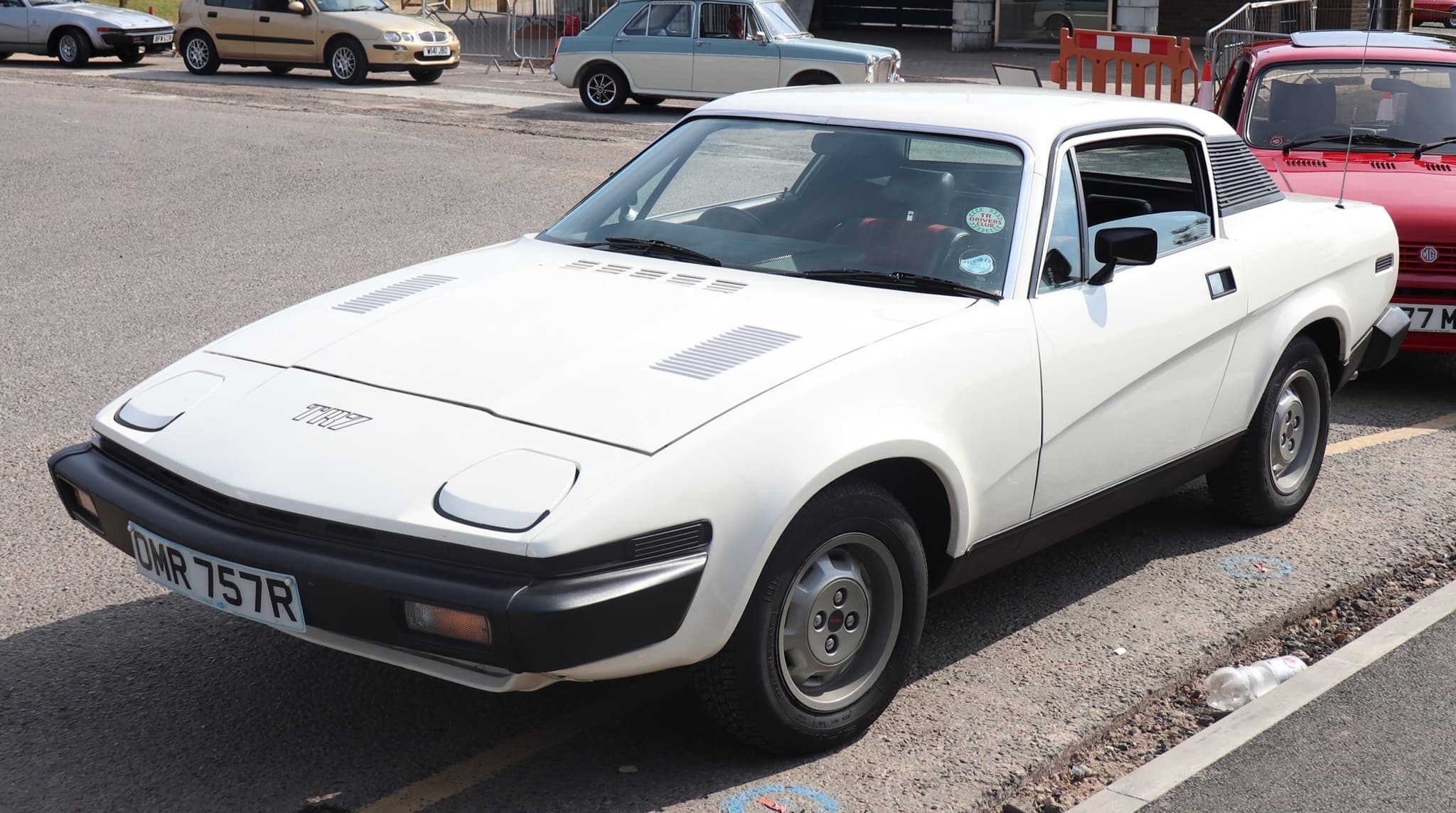
Canley commission numbers, 1978–79
At Canley, in Coventry, the first letter became T and the numbers ran from 100001.
| Prefix | What it is | Numbers | Built |
|---|---|---|---|
| TCG | Coupé for Britain, Europe and Australia | 100001 to 114122 | October 1978 to October 1979 |
| TCW | Coupé for North America | 100001 to 115604 | October 1978 to October 1979 |
| TCT | Convertible for North America | 100001 to 105825 (1979 model year); 110001 to 115897 (1980 model year) | January to June 1979; June to October 1979 |
| TCN | TR8 coupé for North America | 150001 to 150198; 160001 to 160142 | Most numbers probably unused |
| TCV | TR8 convertible for North America | Some from 200001 | 1979 model year |
The Canley models seem to have shared one series of numbers, or the series had large gaps, the club notes, so the ranges say little about how many cars were built.source 1
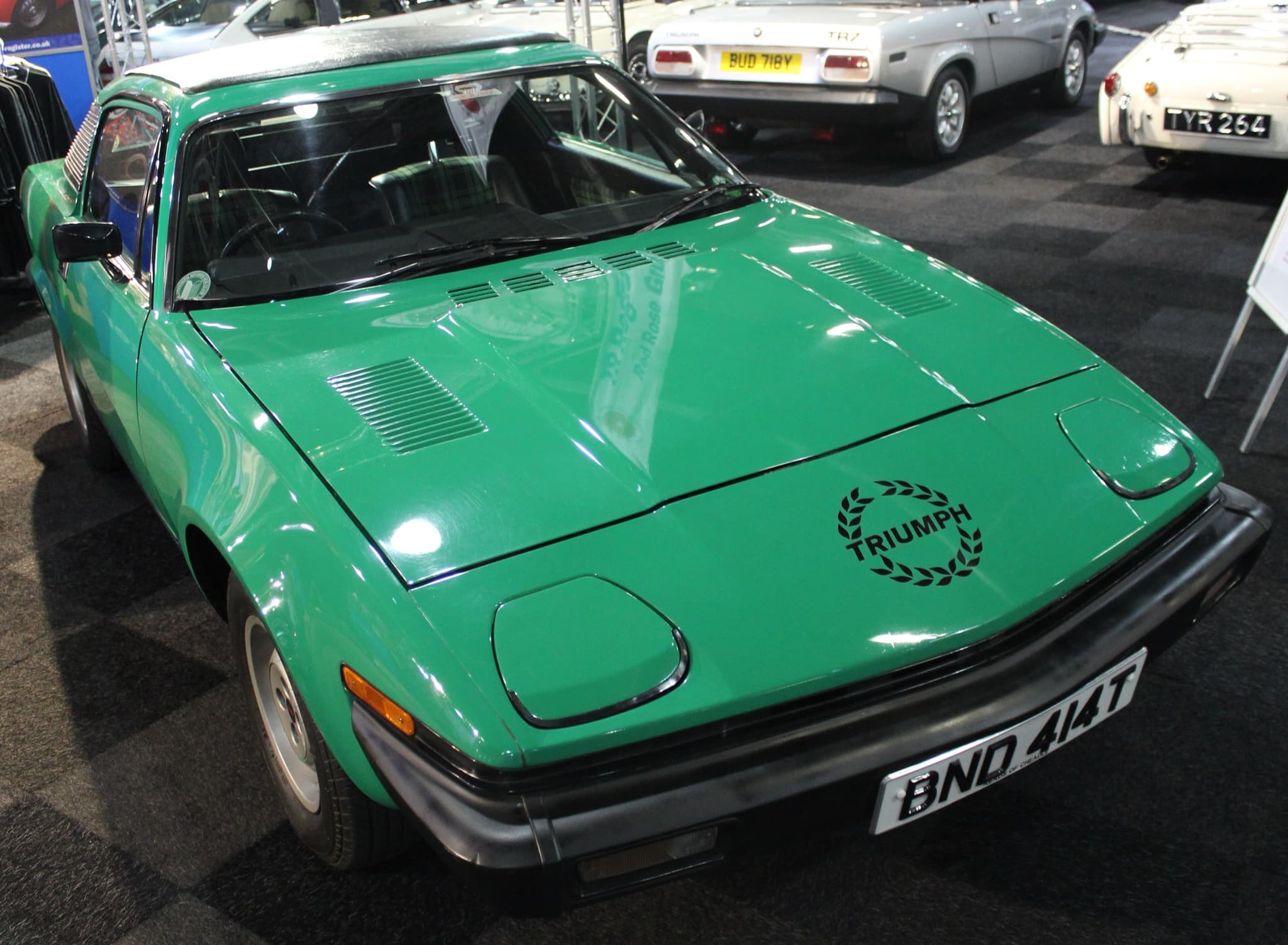
VINs from October 1979
From October 1979 a TR7's VIN has 14 characters: an eight-character code and a six-figure serial. Michael Hart's count of the build cards gives the code of the Californian cars that Solihull built with fuel injection, and the first of them was number 401225, on 1 July 1980:
The other codes, from the club's guide:
| Position | Codes |
|---|---|
| Specification | K Australia; V United States, 49 states; Z California; L Canada; J Japan, not certain to have been used |
| Body | E coupé; D convertible |
| Engine | J four-cylinder; V V8 |
| Steering and gearbox | 3 right-hand drive, automatic; 4 left-hand drive, automatic; 7 right-hand drive, manual; 8 left-hand drive, manual |
| Model year | A 1980; B 1981; C 1982 |
| Factory | T Canley; A Solihull |
British cars carry A for the model year whatever their date: the guide marks only B and C as not used on them. From May 1981 Solihull put SAT in front of the code, for Europe, the United Kingdom and Triumph, and some North American cars of 1981, TR8s and possibly TR7s, the guide says, had 17 characters, with a check digit in the ninth place, worked out by a weighted sum divided by 11, a remainder of 10 written as X.
| Serials | Built | Factory |
|---|---|---|
| 200001 to 215080 | October 1979 to August 1980, every model in one series | Canley |
| 400001 to 401918 | April to September 1980, the 1980 model year, mostly limited editions for North America | Solihull |
| 402027 to 405636 | 1981 model year, to May 1981 (402001 to 402026 were built at Canley in May and June 1980) | Solihull |
| 406001 to 408534 | May to October 1981, with SAT | Solihull |
The TR7 Spider's numbers ran from 400301 to 401918, by Hart's count. The guide prints the first Solihull series as 400001 to 410918, but its own figure for the most cars Solihull's numbers allow, and Hart's count of the build cards, show that the series ended at 401918.
The last TR7 is recorded by the TR Drivers Club as TPAD37AA408534. Its serial is not in doubt, but the code does not fit the guide's lists: the guide gives no specification letter for British cars, and a "3" stands where the engine letter belongs. Hart's codes have J there, as the guide's list does for the four-cylinder engine, so the "3" is probably a misprint, by our reading. Nor does the code begin with SAT, though the guide says Solihull added it from May 1981; only the factory's record would settle either point.source 1source 6
TPZDJ8AA401225
- TTriumph
- PTR7 or TR8
- ZSpecification: California
- DBody: convertible
- JEngine: the four-cylinder
- 8Left-hand drive, manual gearbox
- AModel year: 1980
- ABuilt at Solihull
- 401225The serial
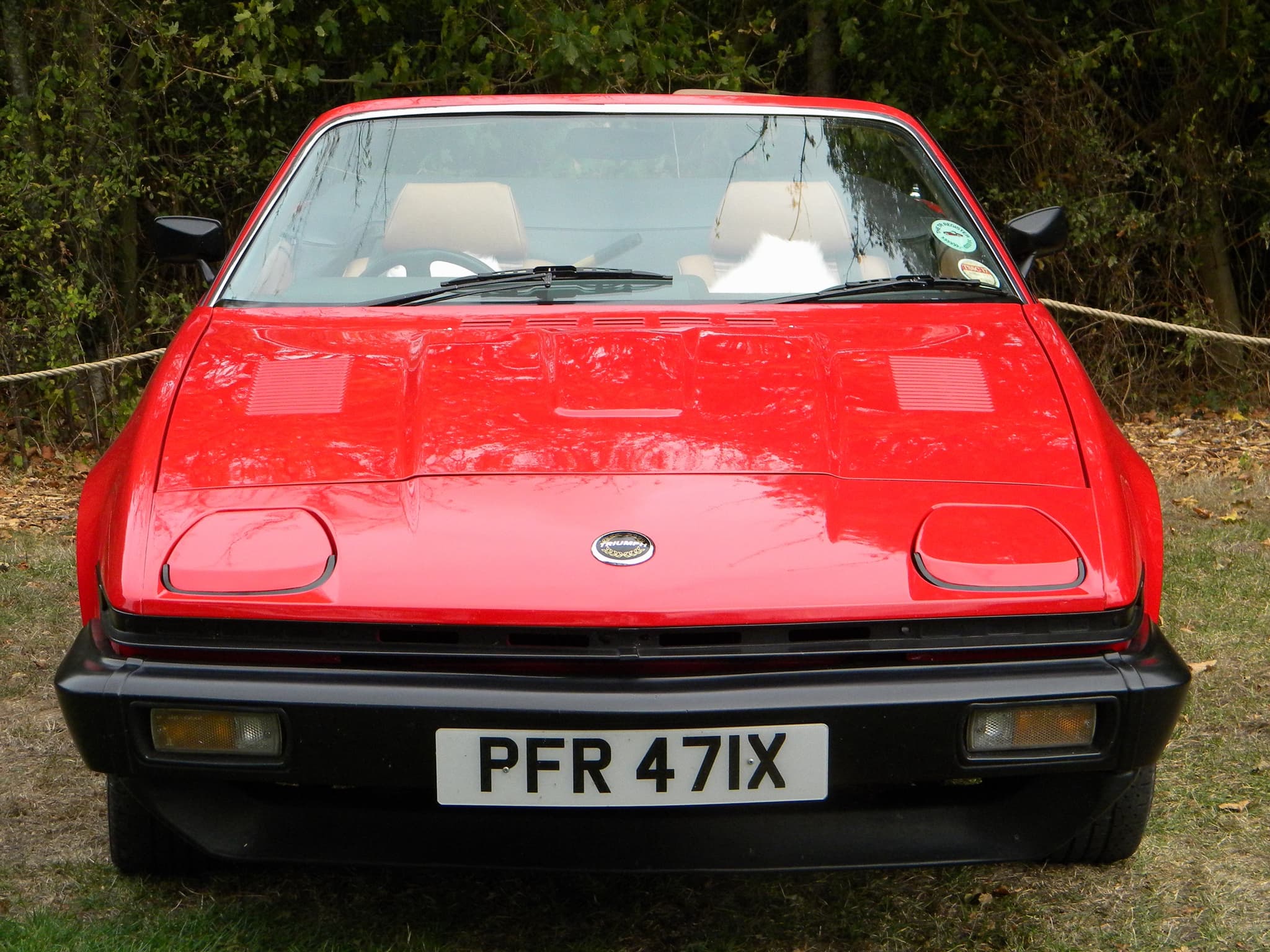
Sprints, V8s and Heritage Certificates
Two numbers prove a Sprint: its commission number starts ACH, and its engine number has CH in front and HE at the end. Any other TR7 with a 16-valve head has been converted. No source read gives the prefixes of the ordinary eight-valve engine's numbers.
The V8 cars carry prefixes of their own: ACN for the pre-production coupés built at Speke in 1977, and TCN and TCV for the Canley TR8s. The works rally cars, built at Abingdon and run as TR7 V8s, are known by their registrations, which the notable cars list; the buyers guide explains why a road-going TR7 V8 is almost always a conversion.
For any TR7, the British Motor Museum at Gaydon issues Heritage Certificates from the factory's build records, which run from 1946 to 1981 and give a car's original specification.source 7source 1source 8source 9
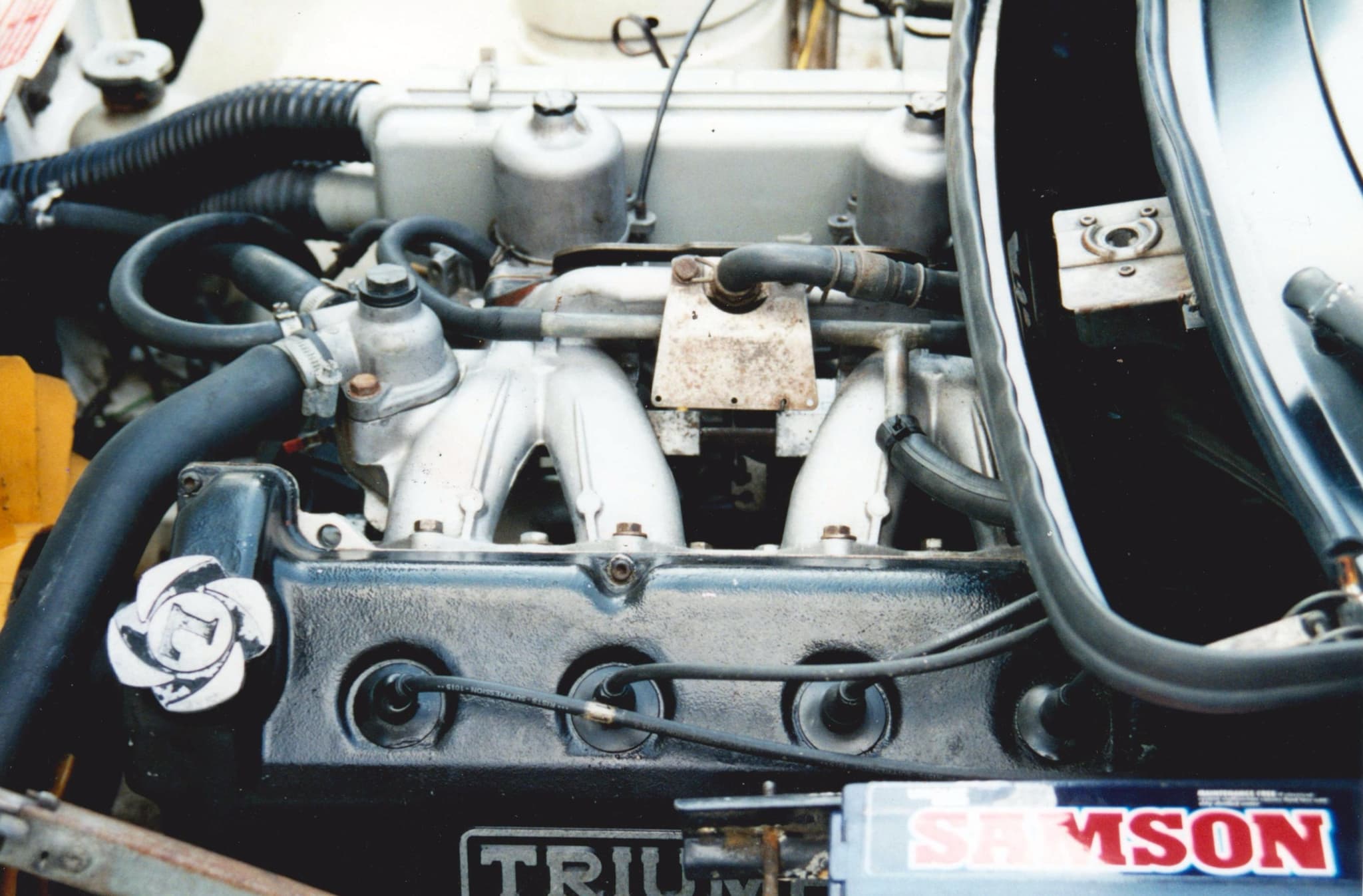
Production
Production: how far the sources agree
- maximum 60, TR7 Sprint, ACH pre-production cars, Speke, February to October 1977
- Good sources agree.
- a few dozen, TR7 Sprint
- One good source.
- 58 with production records; possible maximum 59–61, TR7 Sprint, citing the BMIHT archives
- Not yet confirmed.
- 9936, Convertible, TR7 DHC, calendar year 1980 (3,737 home, 6,199 export)
- One good source.
- 3202, Convertible, TR7 DHC, calendar year 1981 (1,781 home, 1,421 export)
- One good source.
- 28864, Convertible, convertibles
- Not yet confirmed.
- 1618, Spider special editions, VINs 400301–401918, counted from the Gaydon build cards; 548 fuel-injected for California
- One good source.
- possibly as high as 1,608, Spider
- Not yet confirmed.
- 112375, TR7; '112,375 cars built, 1975 to 1981' (the guide's text)
- One good source.
- 115090, TR7 and TR8 together; BL figures by calendar year, 1975–81
- One good source.
- 114512, TR7 and TR8 together; BL figures by factory and financial year
- One good source.
- 112368, TR7 alone ('114,865 if you include the TR8')
- Not yet confirmed.
maximum 60TR7 Sprint, ACH pre-production cars, Speke, February to October 1977
Paul Towle and Rex Holford (update) and Mark Elbers (update), "TR7 & TR8 Identification & Production Data Explained", TR Drivers Club, 1987, updated (© 2016)source 1; Graham Fountain, "The TR7 Sprint Story", TR Driver (TR Drivers Club), 1991 no. 2source 7
a few dozenTR7 Sprint
Aaron Severson, "Way of the Wedge: The Triumph TR7 and TR8", Ate Up With Motor, 5 Feb 2012, pp. 1–5source 10
58 with production records; possible maximum 59–61TR7 Sprint, citing the BMIHT archives
Wikipedia (EN), "Triumph TR7", 2026source 11
9936Convertible, TR7 DHC, calendar year 1980 (3,737 home, 6,199 export)
Paul Towle and Rex Holford (update) and Mark Elbers (update), "TR7 & TR8 Identification & Production Data Explained", TR Drivers Club, 1987, updated (© 2016)source 1
3202Convertible, TR7 DHC, calendar year 1981 (1,781 home, 1,421 export)
Paul Towle and Rex Holford (update) and Mark Elbers (update), "TR7 & TR8 Identification & Production Data Explained", TR Drivers Club, 1987, updated (© 2016)source 1
28864Convertible, convertibles
Wikipedia (EN), "Triumph TR7", 2026source 11
1618Spider special editions, VINs 400301–401918, counted from the Gaydon build cards; 548 fuel-injected for California
Michael Hart, "Counting TR7 Spiders: A Day at the Gaydon Archive", Triumph Wedge Owners Association, © 2013source 6
possibly as high as 1,608Spider
Michael Hart, "Counting TR7 Spiders: A Day at the Gaydon Archive", Triumph Wedge Owners Association, © 2013source 6
112375TR7; '112,375 cars built, 1975 to 1981' (the guide's text)
Malcolm Paris (compiler), "Triumph TR7 / TR7 V8 and TR8 Buyers Guide", TR Registersource 3
115090TR7 and TR8 together; BL figures by calendar year, 1975–81
Paul Towle and Rex Holford (update) and Mark Elbers (update), "TR7 & TR8 Identification & Production Data Explained", TR Drivers Club, 1987, updated (© 2016)source 1
114512TR7 and TR8 together; BL figures by factory and financial year
Paul Towle and Rex Holford (update) and Mark Elbers (update), "TR7 & TR8 Identification & Production Data Explained", TR Drivers Club, 1987, updated (© 2016)source 1
112368TR7 alone ('114,865 if you include the TR8')
Richard Gunn, "Obituary: Harris Mann 1938–2023", AROnline, 15 Aug 2023source 4
Sources
Every source the site cites is on the sources page.
- Primarymade at the time, by the maker or by people who were there
- Referenceserious later work: clubs, specialists, magazines, books
- Uncheckedencyclopaedias and enthusiast sites: cited beside a good source, named in the sentence, or marked Unchecked
- Paul Towle and Rex Holford (update) and Mark Elbers (update), "TR7 & TR8 Identification & Production Data Explained", TR Drivers Club, 1987, updated (© 2016), the plate's position; the three numbering systems; the BL production tables; Speke: ACL, ACG, ACW, ACH, ACN and ACT, with ranges and dates; the suffixes; Canley: TCG, TCW, TCN, TCT and TCV, with ranges and dates; the shared series; the VIN codes, position by position; the serial ranges; SAT from May 1981; the check digit; the last TR7, TPAD37AA408534; ACH, ACN, TCN and TCV; ACH prefix entry; table b, 1980; table b, 1981; BL production figures by year (table b), total; BL production figures by factory (table a), total. trdrivers.com/tr7_-_tr8_vin_numbers.htm Reference
- TR Register, "Buyer Beware: TR6" (2 pp. PDF leaflet), p. 2, the commission number on the V5; the model's registrar. tr-register.co.uk/storage/Pages/tr6-buyer-beware.pdf Reference
- Malcolm Paris (compiler), "Triumph TR7 / TR7 V8 and TR8 Buyers Guide", TR Register, introduction, the TR7 total; introduction. tr-register.co.uk/resources/buyers-guide/triumph-tr7-tr8 Reference
- Richard Gunn, "Obituary: Harris Mann 1938–2023", AROnline, 15 Aug 2023, the TR7 total "if you include the TR8"; text. aronline.co.uk/people/harris-mann Reference
- Jim Johnson, TR7 Sprint articles (group): "The Original TR7 Sprint", "Update June 2005", "Early TR7 Sprint Competition Cars", TR Drivers Club, an early ACG car built in July 1975. trdrivers.com/articles21/tr7sprint2.html Reference
- Michael Hart, "Counting TR7 Spiders: A Day at the Gaydon Archive", Triumph Wedge Owners Association, © 2013, the prefixes TPVDJ8AA and TPZDJ8AA; 401225, the first injected car, 1 July 1980; the Spiders' numbers; Spider page, count and table; note [2]. triumphwedgeowners.org/spider Reference
- Graham Fountain, "The TR7 Sprint Story", TR Driver (TR Drivers Club), 1991 no. 2, ACH and CH…HE; para. 2. trdrivers.com/articles21/tr7sprintarticle-1991.html Reference
- Chris Turner (credited by the club), "The Works Triumph TR7 V8 Rally Cars" and the car pages (group), TR Drivers Club, the works cars by registration. trdrivers.com/articles21/rallyhistory.html Reference
- British Motor Museum (BMIHT), "Heritage Certificates", the service; build records 1946–81. britishmotormuseum.co.uk/archive/heritage-certificates Primary
- Aaron Severson, "Way of the Wedge: The Triumph TR7 and TR8", Ate Up With Motor, 5 Feb 2012, pp. 1–5, p. 4. ateupwithmotor.com/model-histories/triumph-tr7-tr8 Reference
- Wikipedia (EN), "Triumph TR7", 2026, TR7 Sprint section; infobox. en.wikipedia.org/wiki/Triumph_TR7 Unchecked