Where Was the Triumph TR7 Made?
In three factories in seven years: Speke No. 2 in Liverpool, which British Leyland closed after a strike in 1978; Triumph's home works at Canley, Coventry; and Rover's Solihull plant, where the last TR7 was built in October 1981.
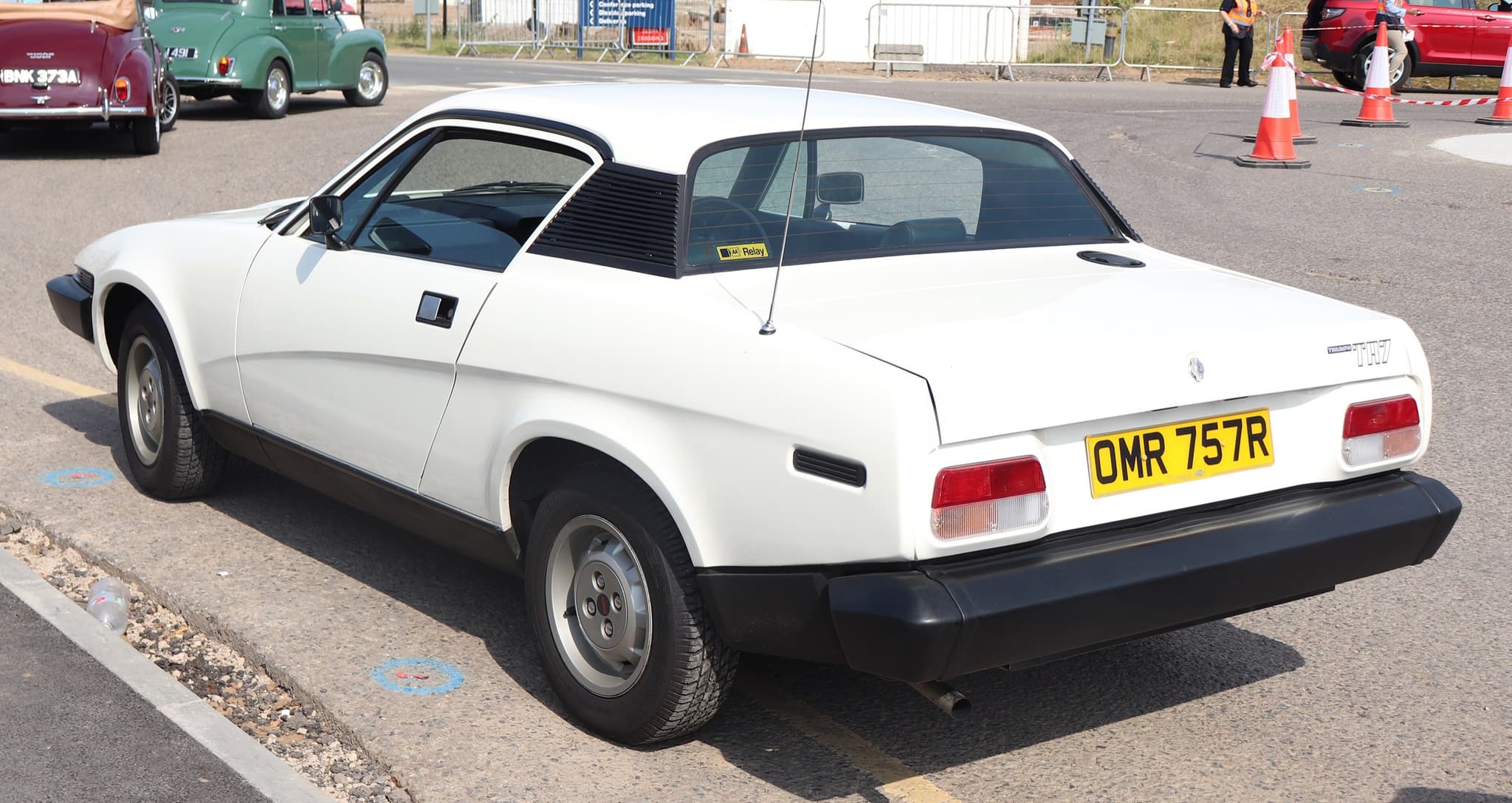
About the pictureA TR7 coupé registered in 1976–77, photographed at Gaydon in 2022.
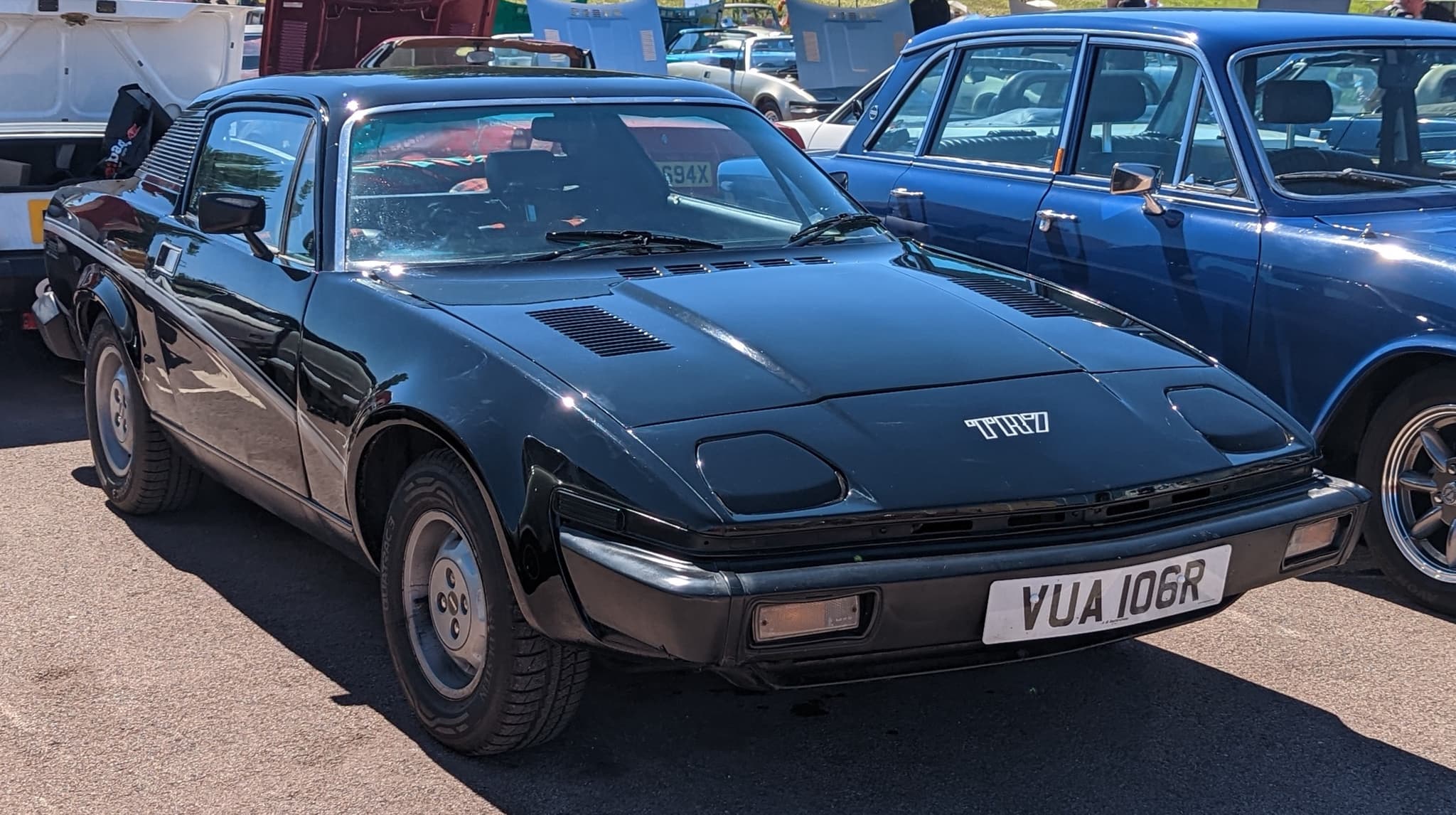
The TR7 was built in three places, and each move followed a decision to close a plant. It began in Liverpool, at the plant British Leyland had chosen as its sports-car factory, which it closed after a strike. It moved to Triumph's home works at Canley, in Coventry, until that closed too. And it ended at Solihull, at Rover's plant for the SD1 saloon (sedan), which BL decided in 1981 to close.source 1source 2source 3
| Factory | Built TR7s | Commission numbers |
|---|---|---|
| Speke No. 2, Liverpool | September 1974 to May 1978 | Beginning A: ACG, ACH, ACL, ACN, ACT, ACW |
| Canley, Coventry | October 1978 to August 1980 | Beginning T: TCG, TCN, TCT, TCV, TCW, then VINs with T |
| Solihull | April 1980 to October 1981 | VINs with A |
Speke No. 2, Liverpool, 1974–78
Standard-Triumph came to Speke in 1959, after, in the BBC's words, the government "twisted its arm", and took space for a second factory in 1960. When that second plant opened is not settled: Ate Up With Motor gives 1969, and the BBC says British Leyland spent £10.5 million building it in 1970. Speke had built the Herald, the Vitesse and the 1300 in the 1960s, and the Stag and the Toledo were assembled there in the early 1970s. Speke No. 2 was one of the few plants in the group, Ate Up With Motor notes, that welded, painted, trimmed and assembled cars in one place, a mile from the presses of Speke No. 1. The BBC puts its capacity at 100,000 vehicles a year; AROnline gives 150,000 cars.
In April 1972 BL chose it for the TR7 and its family. It built every TR7 until 1978: the coupés for America, Britain, Europe and Australia and the Sprints, and pre-production cars for what came next, the V8 coupés of 1977 and about 10 convertibles in the spring of 1978. In October 1975 it was building about 600 TR7s a week, Motor Sport reported.
Then the stoppages began. Disputes at suppliers and other BL plants idled Speke No. 2 for much of March, September and October 1977, and in November came the first strike in the plant's own history. AROnline dates it to 1 November, the day Michael Edwardes became BL's chairman. According to the union's own 1978 account, as summarised by Ate Up With Motor, its roots went back to November 1973, when both Speke plants moved from piecework to day rates under a Mutuality Agreement that required managers to consult the stewards on schedules and job timings. The workers said the timings were cut regardless; management said the stewards offered nothing constructive; BL ended the agreement, and the workers struck.
The industrial journalist Graham Turner told BBC Nationwide in February 1978, as the workers went back after 17 weeks, that Speke was only half as efficient as Abingdon, with absenteeism of 15 to 25% on Mondays and Fridays, and that the agreement's main purpose, it seemed to him, was "to stop the place being managed at all", in the words BBC Liverpool quoted in 2009. A worker on the same film told of a time Speke had 5,000 left-hand front wings (fenders) and sent to Coventry for 5,000 right-hand ones, only to be sent 5,000 more left-hand wings, which laid the line off for three days "through stupid management".
On 15 February 1978 the news broke that BL would close the plant. Eric Heffer raised it in the Commons the next day:
I should like to raise under Standing Order No. 9 a matter that is definite, urgent and of public importance, namely the proposal of British Leyland to close No. 2 plant at Speke, Liverpool, which will throw out of work 3,000 workers in an area which already has 90,000 unemployed.
The reason given was excess capacity, but Eddie Loyden, MP for Garston, said BL's executives had told MPs the plant would have closed even at full capacity, Ate Up With Motor records. In May 1978 the workers withdrew their opposition and took severance, and Speke No. 2 closed. With it went the Lynx, whose tooling had largely been bought, and the TR7 Sprint. Speke No. 1 carried on until 1981, when car work on the site ended; in 2009, the BBC wrote, the site was a supermarket.source 4source 5source 6source 7source 2source 8source 9source 1
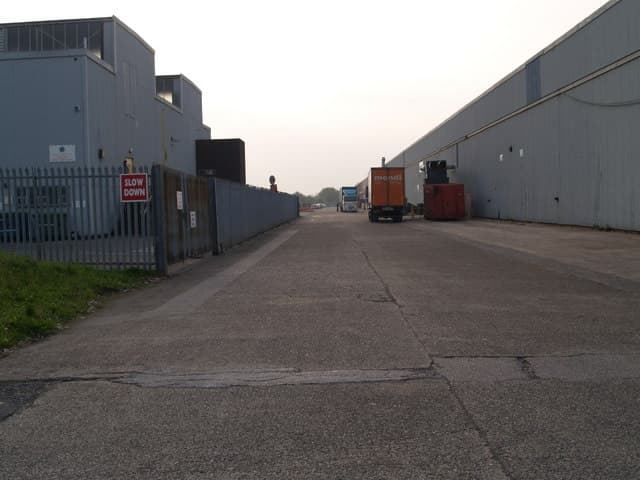
Canley, Coventry, 1978–80
Production came back to Triumph's home works at Canley "at Motor Show time" in October 1978, Motor Sport reported, and the first Canley TR7s reached the press early in 1979. The bodies now came from Pressed Steel Fisher at Swindon, "some 60-odd miles" away, Ate Up With Motor notes. Canley built the TR7 beside Spitfires and Dolomite saloons, the TR Drivers Club records, and the move brought, in the words of Rover Triumph's managing director Jeff Herbert, as Motor Sport reported his letter, "over 200 manufacturing and product improvements". The coupé page describes the main ones.
The American convertible was first built here, from January 1979, and so were pre-production TR8s. But in September 1979 BL announced the closure of MG's factory at Abingdon, and a few months later that car assembly at Canley would end by the autumn of 1980. Canley built its last TR7s in August 1980.source 10source 5source 2source 1
Solihull, 1980–81
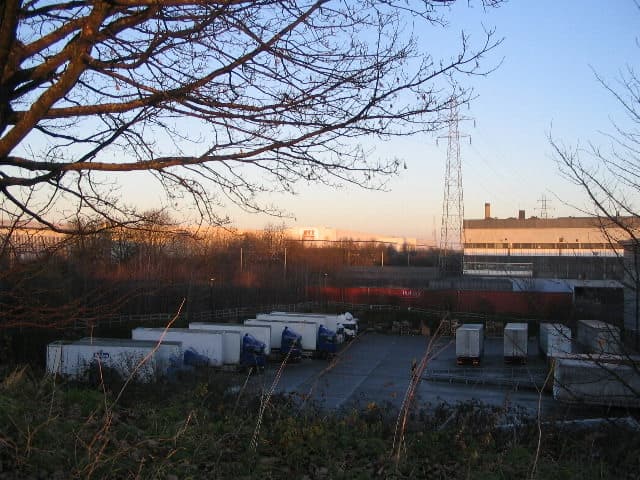
Rover had built a new factory at Solihull for the SD1, and the TR7 and TR8 were built alongside it there. Motor Sport gave two costs for it five years apart, "a 64-acre £95-million new factory" in July 1976 and "some £31-million" in August 1981, and no source read reconciles them. Solihull began building TR7s on 1 April 1980, by the factory's numbers and its build cards, while Canley carried on until August. Its first cars, Michael Hart found from the build cards, were all American convertibles; its numbers ran from 400001, and from May 1981 the VINs began with SAT.
In May 1981 BL announced that car production at Solihull would end, and that Rover's own cars would move to Cowley. AROnline counts 3,000 more BL jobs lost, with knock-on losses at Speke and Swindon and the closure of BL's foundry at Wellingborough. The last TR7 was built at Solihull in October 1981. Motor Sport's farewell was to the factory as much as the car:
The Solihull Rovers have been great cars. Will a Rover-Cowley ever seem quite the same?
Production by factory
British Leyland's figures by factory, as the TR Drivers Club reproduces them, count the TR7 and the TR8 together and run by BL's financial year, which began in October; Speke's entry for 1975–76 covers 15 months. Other BL sets that the club calls equally official give Speke up to 76,979 and Canley as few as 30,054.
| Factory | Year | Cars |
|---|---|---|
| Speke | 1973–74 | 88 |
| Speke | 1974–75 | 8,982 |
| Speke | 1975–76, 15 months | 38,172 |
| Speke | 1977 | 22,945 |
| Speke | 1978 | 5,894 |
| Speke | Total as printed | 76,081 |
| Canley | 1978 | 833, as printed |
| Canley | 1979 | 18,869 |
| Canley | 1980 | 10,623 |
| Canley | Total as printed | 30,375 |
| Solihull | 1980 | 2,986 |
| Solihull | 1981 | 5,070 |
| Solihull | Total as printed | 8,056 |
Canley's printed rows add to 30,325, not the 30,375 printed beside them. With 883 for 1978 they would add up, and the calendar-year table would agree more closely too, so the 1978 row is probably a misprint, by our arithmetic; which figure is wrong, no source read says. Solihull's number series allow 8,062 cars against BL's 8,056. The three factory totals together make BL's figure for every TR7 and TR8, which identification sets beside the other counts.source 2
How to tell a car's factory
The commission number is the proof. Speke's prefixes begin with A, Canley's with T, and from October 1979 every car carries a VIN, whose assembly-plant letter is T for Canley or A for Solihull. The car itself gives clues, though parts can be changed:
| Clue | Speke cars | Canley and Solihull cars |
|---|---|---|
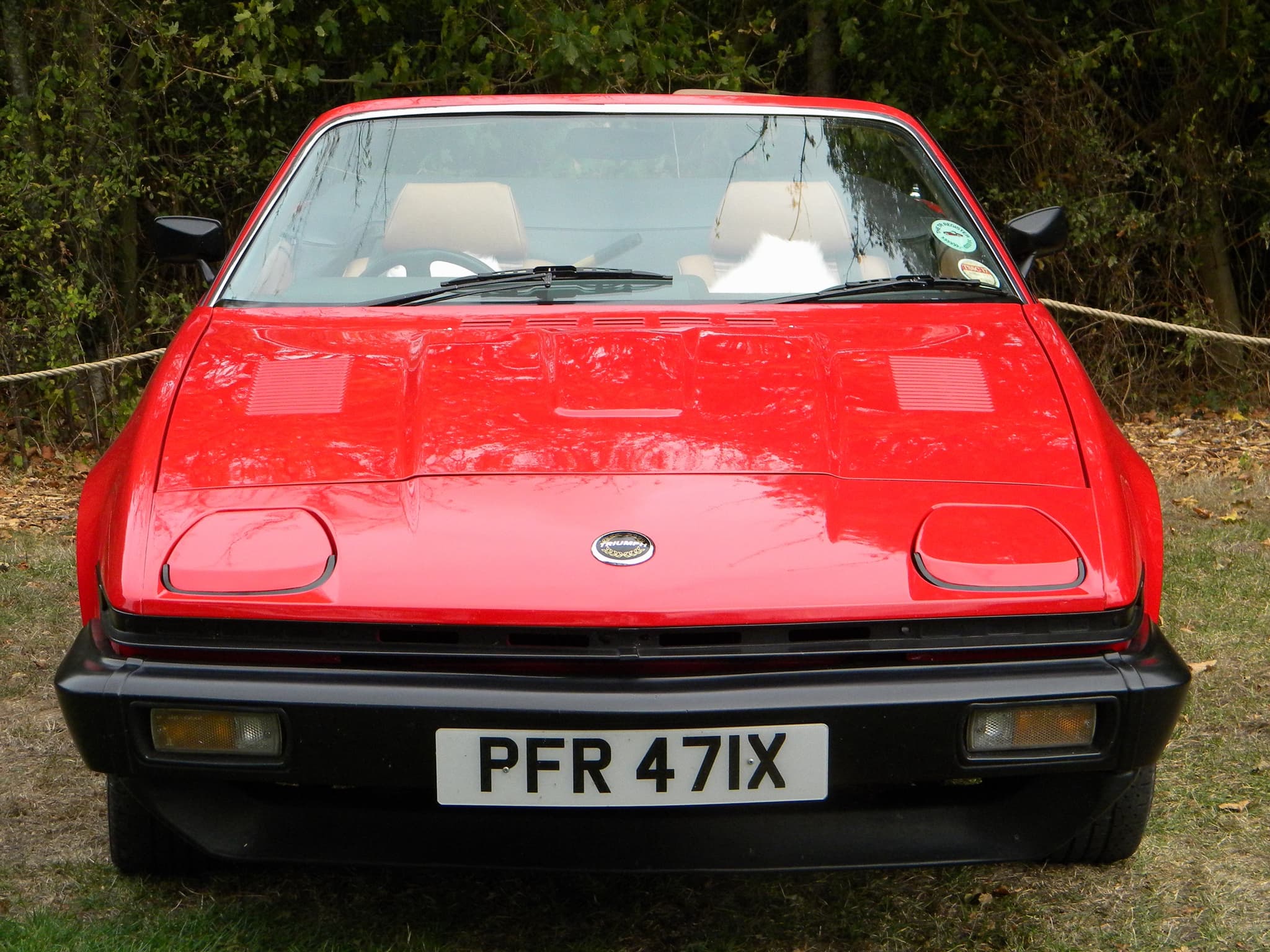
| Bonnet (hood) | One bulge | Two on the later Canley cars and on the Solihull cars |
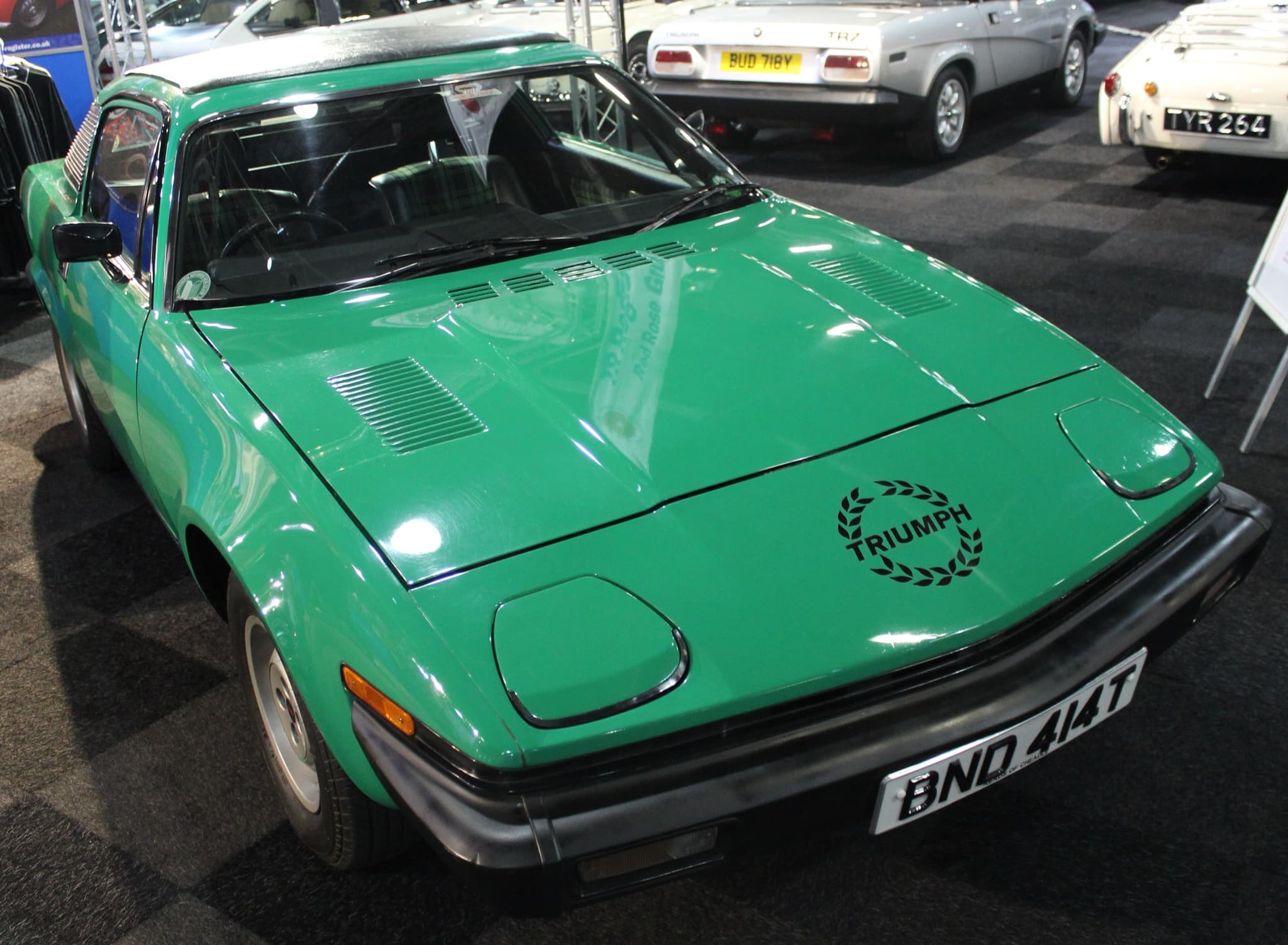
| Nose badge | An earlier badge | The laurel wreath, which Motor Sport noted on the Canley cars in 1979 |
Wikipedia, citing Bill Piggott, adds that the last Solihull cars had a small round badge instead. Identification decodes every number.source 2source 10source 1source 5
The quality argument
The TR7's early reputation, for overheating, head gaskets, electrics and warranty claims, was made at Speke, and who was to blame is still argued. Management, much of the press and many later writers put it on the Liverpool workforce. The workers, in the union's 1978 account and in their own words on BBC film, put it on thousands of engineering changes, shortages of parts, parts sent in the wrong order and pressure on the speed of the line. In the Commons on 27 February 1978, asked by Tom Litterick whether he approved of the way the closure had been decided, the Industry Secretary, Eric Varley, answered:
The decision on Speke was taken by the management. It was a decision for British Leyland to take. Only the management can run the business.
It is often said that the TR7s built at Canley and Solihull were better made. AROnline writes that the quality of final assembly was higher there; Ate Up With Motor reports it as what many Triumph experts maintain, and adds that former Speke workers said they had got the bugs out of the car just as the plant closed. It is an opinion, widely held, and no source read gives figures for it. The buyers guide advises judging the car, not the factory.source 5source 4source 12source 1
Sources
Every source the site cites is on the sources page.
- Primarymade at the time, by the maker or by people who were there
- Referenceserious later work: clubs, specialists, magazines, books
- Keith Adams, "The Cars: Triumph TR7/TR8 development story", AROnline, updated 8 Feb 2024, timeline: September 1974, May 1978, October 1978, August 1980, October 1981; the Lynx and the Sprint; timeline, October 1978 and August 1980; built beside the SD1; the May 1981 announcement; 3,000 jobs; Speke, Swindon and Wellingborough; a bonnet power bulge among the Canley changes; "the quality of final assembly was of a higher order". aronline.co.uk/cars/triumph/tr7-tr8/bullet-development-story Reference
- Paul Towle and Rex Holford (update) and Mark Elbers (update), "TR7 & TR8 Identification & Production Data Explained", TR Drivers Club, 1987, updated (© 2016), Speke, Canley and Solihull sections; ACG, ACH, ACL, ACN, ACT and ACW; Canley section: built beside Spitfires and Dolomites; TCG, TCN, TCT, TCV, TCW; VINs with T; Solihull section: from April 1980; the number series; A and SAT; BL production figures by factory (table a), the rows and printed totals; the other BL sets; the prefixes by factory; the VIN's assembly-plant letter; SAT from May 1981. trdrivers.com/tr7_-_tr8_vin_numbers.htm Reference
- Michael Hart, "Counting TR7 Spiders: A Day at the Gaydon Archive", Triumph Wedge Owners Association, © 2013, Solihull from 1 April 1980; build cards from 1 April 1980. triumphwedgeowners.org/spider Reference
- BBC Liverpool, "The failure of Triumph in Speke", 8 Dec 2009, 1959; £10.5 million in 1970; 100,000 vehicles a year "all under one roof"; Herald, Vitesse and 1300; the 17-week strike; Turner; the unnamed worker; May 1978; 1981; the supermarket; the workers' account on Nationwide, February 1978. news.bbc.co.uk/local/liverpool/hi/people_and_places/history/newsid_8401000/8401200.stm Reference
- Aaron Severson, "Way of the Wedge: The Triumph TR7 and TR8", Ate Up With Motor, 5 Feb 2012, pp. 1–5, p. 2, Speke No. 2 opened in 1969, integrated, a mile from No. 1; Stag and Toledo; April 1972; p. 3, the owners' complaints; p. 4, the 1977 stoppages, the strike, the Mutuality Agreement, Loyden, severance; pp. 4–5, Swindon, "some 60-odd miles"; p. 4, the closures of Abingdon and Canley; p. 4, May 1981; p. 3, single and double bulges; p. 3, the complaints and the two accounts; p. 4, the union's account; p. 5, "many Triumph experts maintain"; the Speke workers on the bugs. ateupwithmotor.com/model-histories/triumph-tr7-tr8 Reference
- Chris Cowin, "History: Exporting British cars to the USA – Part Two", AROnline, 31 May 2025, updated 21 Oct 2025, Speke's capacity, 150,000 a year. aronline.co.uk/history/exporting-british-cars-to-the-usa-part2 Reference
- Motor Sport, News, editorials and short items on the TR7 (group), Jul 1975 – Aug 1981; Apr 2002, Nov 1975, p. 30, about 600 TR7s a week; Jul 1976, p. 21, "a 64-acre £95-million new factory"; Aug 1981, p. 27, "some £31-million"; Rover to Cowley; "Will a Rover-Cowley …". motorsportmagazine.com/archive Primary
- Keith Adams, "Concepts and Prototypes: Triumph Lynx (1972–1978)", AROnline, 20 Jan 2024, 1 November 1977; the Lynx tooling. aronline.co.uk/cars/triumph/tr7-tr8/triumph-lynx Reference
- House of Commons (Hansard), "British Leyland", HC Deb 16 Feb 1978, vol 944 cc680–2, c681, Heffer. api.parliament.uk/historic-hansard/commons/1978/feb/16/british-leyland Primary
- Clive Richardson ("C.R."), "The Triumph TR7", Motor Sport, Jun 1979, p. 58, p. 58, "Motor Show time"; Jeff Herbert's letter, "over 200 manufacturing and product improvements"; the press cars of early 1979; p. 58, the laurel-wreath badge of the Canley cars. motorsportmagazine.com/archive/article/june-1979/58/the-triumph-tr7 Primary
- Keith Cox, "Gaydon cars with a TR7 connection", TR Drivers Club, the museum board: built beside the SD1. trdrivers.com/articles21/gaydoncars.html Reference
- House of Commons (Hansard), "British Leyland", HC Deb 27 Feb 1978, vol 945 cc14–9, cc14–9, Litterick and Varley. api.parliament.uk/historic-hansard/commons/1978/feb/27/british-leyland Primary