Triumph TR7 Sprint
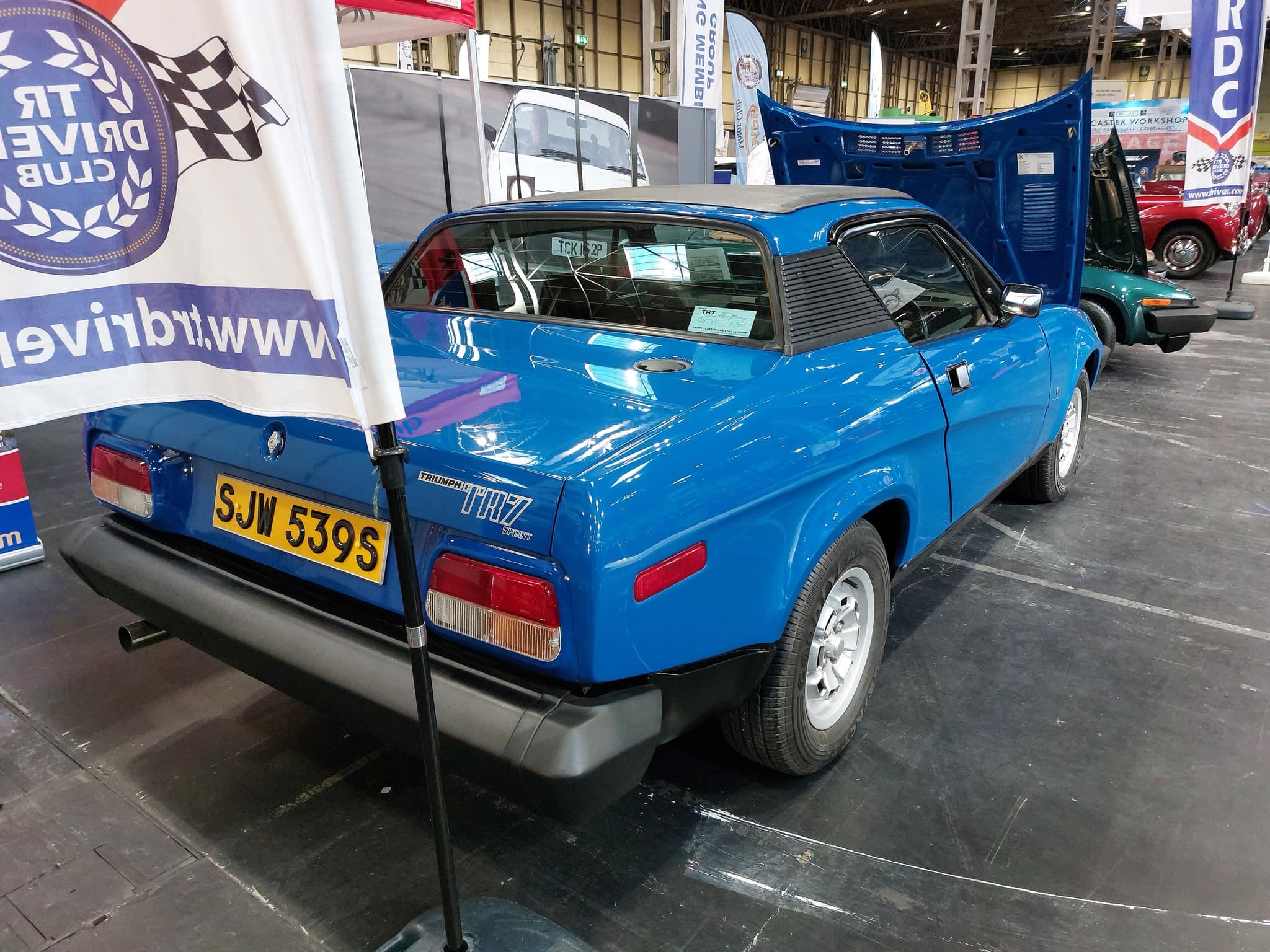
The TR7 coupé with the Dolomite Sprint's 16-valve engine: planned from the start, built at Speke in 1977 as a pre-production run, and never offered for sale. A genuine car has an ACH commission number; many 16-valve TR7s are conversions.
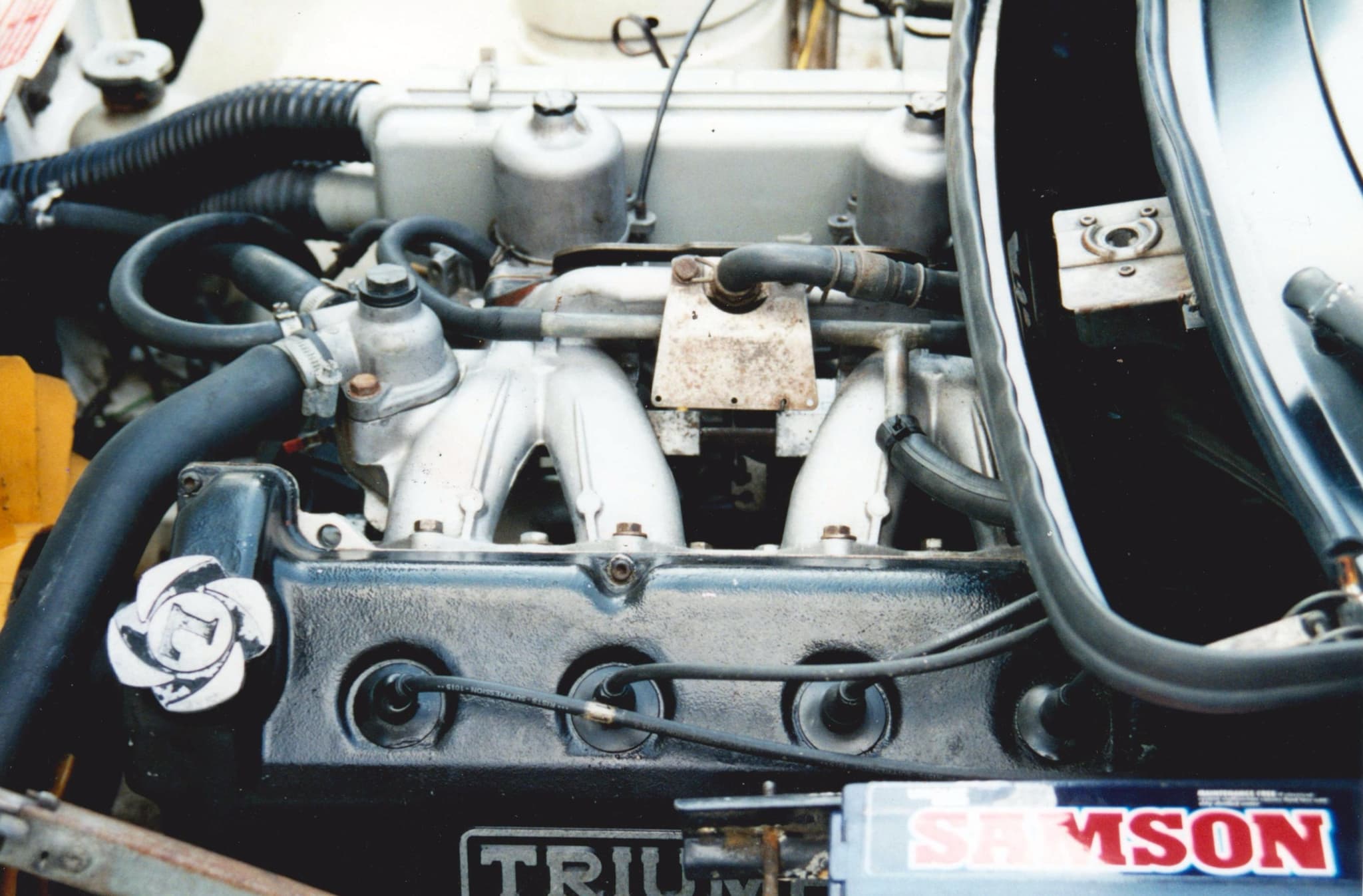
The TR7 Sprint was expected before the TR7 itself was on sale, and it was never sold. A short pre-production run was built at Speke between February and October 1977; then the plant closed, and the Sprint went with it. The production readings below give the counts, none of them exact.source 1source 2source 3source 4
Planned from the start
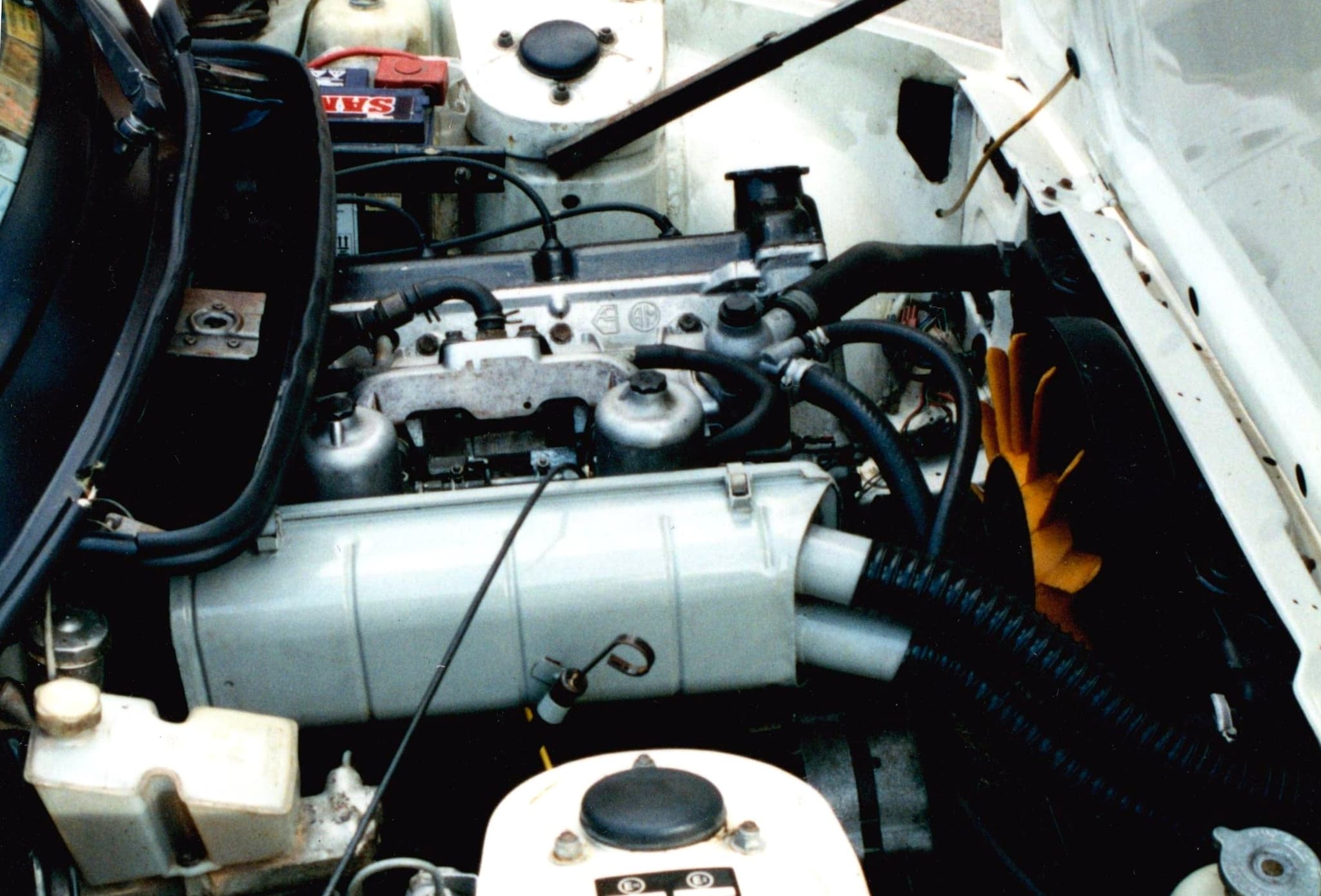
The TR7 was designed to take a 16-valve head from the beginning: the Dolomite Sprint's, with four valves a cylinder, on the same block as the TR7's own. Graham Fountain, who wrote the Sprint's history for the TR Drivers Club in 1991, dates the expectation to the American launch:
Even as early as January of 1975, when the TR7 was first launched in the U.S., the 16 valve engine (called a 4 valve engine by BL) Sprint version was expected to follow fairly soon after.
Motor Sport wrote in February 1975 that a Sprint-engined version with fuel injection would follow "for certain". In the Dolomite saloon (sedan) the 16-valve engine was rated at 127 bhp DIN.source 2source 5source 4source 3
The cars, 1977
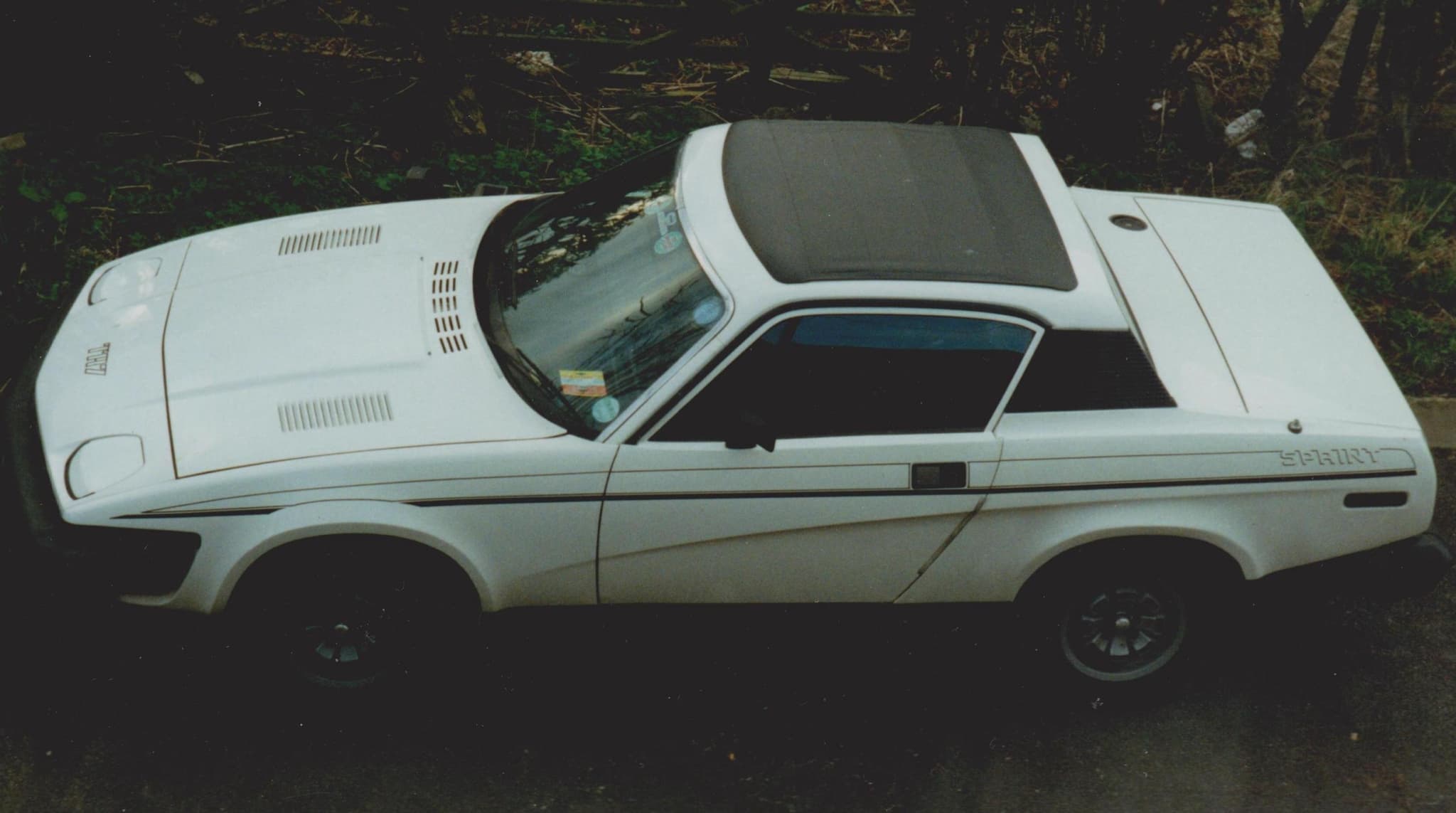
The Sprints were built at Speke as pre-production cars, with commission numbers beginning ACH. Fountain counts two batches. The first, of about 25, were mostly left-hand-drive cars exported to Europe; its first four were not properly documented, he writes, and ACH1F, presumed the first, is right-hand drive. The second, of about 35, were home-market cars on the body of the 1978 model year, with courtesy lights in the doors, and with the larger-pad brakes of the early TR8. The first two of that batch went to the factory's test track at Webb Lane for reliability running, registered VVC 696S and VVC 697S, and the next 23 seem to have gone to BL's press garage at Canley, with SJW registrations in the 520s to 550s. What became of the rest, Fountain writes, "is something of a mystery".
The TR Drivers Club's survey of surviving cars found commission numbers from ACH 1 to 25, from ACH 00501 to 00536, and ACH 00700; the club's guide to the factory's numbers notes that not every number in the range was used.source 1source 2source 6
Rallying and homologation
The Sprint's engine raced before the Sprint was built. BL's works team at Abingdon rallied TR7s with competition 16-valve engines in 1976 and 1977, and Motor Sport reported in June 1976 that the rally TR7s had been "homologated and built with 16-valve Sprint engines". Fountain gives the TR7's homologation as 1975, under number 3071, and writes that, according to the RAC, the TR7 Sprint with the 16-valve engine was not homologated until February 1978. Wikipedia's explanation is that the 16-valve head had been allowed in 1975 under the FIA's rule for optional equipment, and that when the rule was dropped a batch of road cars was needed. It also records photographs in the British Motor Museum's archive titled "TR7 Sprint Homologation" that show one of those road cars. The rallying page tells the 16-valve cars' seasons.
At least one of the works cars began as a Sprint. The TR Drivers Club's register gives the rally car SJW 533S an ACH number, and its Sprint survey lists three of the team's V8 cars, among them SJW 540S, with the SJW Sprints; the museum at Gaydon says the SJW rally cars were built from discarded production TR7s. Whether those three began as Sprints, no source read settles.source 7source 2source 8source 9source 6source 10
Why it never went on sale
Speke stopped again and again while the Sprints were being built, for disputes at suppliers and other BL plants; its own strike began in November 1977, after the last of them, and in February 1978 BL announced that the plant would close. Fountain, AROnline and Ate Up With Motor all put the Sprint's end down to the strike and the closure. Wikipedia, citing David Knowles, adds two more reasons from inside the company: the sales and marketing staff thought the Sprint not different enough from the TR7, and the 16-valve engine did not suit the American emissions equipment.
The idea lingered. In 1979 Motor Sport still expected a 16-valve TR7 for Europe. By the following spring it had given up:
It seems that the sixteen-valve TR7, at one time intended for the European market, is a non-starter.
Telling a genuine Sprint
A 16-valve TR7 is not necessarily a Sprint. The TR7's block is the Sprint's, so a 16-valve head is an easy change, and many cars have had one. What makes a Sprint is its numbers: a commission number beginning ACH, and an engine number beginning CH and ending HE. In 2005 the TR Drivers Club had traced 16 genuine cars, four of them works rally cars or shells; Fountain had found about 14 in 1991.
Specification
Production
Sources for Production, TR7 Sprint
- Built
- Several figures in print.Paul Towle and Rex Holford (update) and Mark Elbers (update), "TR7 & TR8 Identification & Production Data Explained", TR Drivers Club, 1987, updated (© 2016)source 1; Graham Fountain, "The TR7 Sprint Story", TR Driver (TR Drivers Club), 1991 no. 2source 2
- Designers
- One good source.The TR7 coupé, 1976. Clive Richardson ("C.R."), "Triumph TR7: sports car or two-seater saloon?", Motor Sport, Jun 1976, p. 63source 7
- Built at
- Good sources agree.Paul Towle and Rex Holford (update) and Mark Elbers (update), "TR7 & TR8 Identification & Production Data Explained", TR Drivers Club, 1987, updated (© 2016)source 1; Graham Fountain, "The TR7 Sprint Story", TR Driver (TR Drivers Club), 1991 no. 2source 2
| Built | Feb – Oct 1977 Built, TR7 Sprint Several figures in print.
|
|---|---|
| Designers | Harris Mann (body) |
| Built at | Speke |
Engine
Sources for Engine, TR7 Sprint
- Engine maker
- One good source.The Dolomite Sprint engine. Aaron Severson, "Way of the Wedge: The Triumph TR7 and TR8", Ate Up With Motor, 5 Feb 2012, pp. 1–5source 4
- Capacity
- One good source.The Dolomite Sprint's 16-valve engine, the TR7 Sprint's (Fountain, AROnline); 122 cu in. Aaron Severson, "Way of the Wedge: The Triumph TR7 and TR8", Ate Up With Motor, 5 Feb 2012, pp. 1–5source 4
- Engine position
- One good source.The TR7 coupé, 1976. Clive Richardson ("C.R."), "Triumph TR7: sports car or two-seater saloon?", Motor Sport, Jun 1976, p. 63source 7
- Block
- One good source.Triumph's slant four as designed. Aaron Severson, "Way of the Wedge: The Triumph TR7 and TR8", Ate Up With Motor, 5 Feb 2012, pp. 1–5source 4
- Valve gear
- Several figures in print.Graham Fountain, "The TR7 Sprint Story", TR Driver (TR Drivers Club), 1991 no. 2source 2; Keith Adams, "The Cars: Triumph TR7/TR8 development story", AROnline, updated 8 Feb 2024source 3
- Bore × stroke
- One good source.Clive Richardson ("C.R."), "The Triumph TR7", Motor Sport, Jun 1979, p. 58source 11
- Cooling
- One good source.The TR7's block. Simon Godrich, "TR7 Tribulations" (owner's checklist), TR Drivers Clubsource 13
- Cylinder layout
- One good source.Clive Richardson ("C.R."), "The Triumph TR7", Motor Sport, Jun 1979, p. 58source 11
- Cycle
- One good source.Graham Fountain, "The TR7 Sprint Story", TR Driver (TR Drivers Club), 1991 no. 2source 2
| Engine maker | Triumph |
|---|---|
| Capacity | 1998 cc |
| Engine position | Front |
| Block | iron |
| Valve gear | 16 valves ('called a 4 valve engine by BL') Valve gear, TR7 Sprint Several figures in print.
|
| Bore × stroke | 90.3 x 78 mm |
| Cooling | Water-cooled |
| Cylinder layout | in-line, slant-four |
| Cycle | Four-stroke |
Running gear
Sources for Running gear, TR7 Sprint
- Steering
- One good source.The TR7 coupé, 1979. Clive Richardson ("C.R."), "The Triumph TR7", Motor Sport, Jun 1979, p. 58source 11
- Layout
- One good source.The TR7 coupé, 1976. Clive Richardson ("C.R."), "Triumph TR7: sports car or two-seater saloon?", Motor Sport, Jun 1976, p. 63source 7
- Front suspension
- One good source.The TR7 coupé, 1979. Clive Richardson ("C.R."), "The Triumph TR7", Motor Sport, Jun 1979, p. 58source 11
- Rear suspension
- One good source.The TR7 coupé, 1976. Clive Richardson ("C.R."), "Triumph TR7: sports car or two-seater saloon?", Motor Sport, Jun 1976, p. 63source 7
- Final drive
- One good source.The TR7 coupé, 1976. Clive Richardson ("C.R."), "Triumph TR7: sports car or two-seater saloon?", Motor Sport, Jun 1976, p. 63source 7
| Steering | rack and pinion |
|---|---|
| Layout | RWD |
| Front suspension | MacPherson struts, coil springs, anti-roll bar |
| Rear suspension | a four-link located live rear axle sprung by coils and aided by telescopic dampers and an anti-roll bar |
| Final drive | Shaft |
Body and chassis
Sources for Body and chassis, TR7 Sprint
- Body material
- One good source.The TR7 coupé, 1979. Clive Richardson ("C.R."), "The Triumph TR7", Motor Sport, Jun 1979, p. 58source 11
- Doors
- One good source.The drophead kept the coupé's doors. Rover Triumph (reprinted by the TR Drivers Club), "Triumph TR7 Drophead: Structural Engineering and Specifications" (press release), Press release, for release 2 Mar 1980source 14
- Seats
- One good source.The TR7 coupé, 1976. Clive Richardson ("C.R."), "Triumph TR7: sports car or two-seater saloon?", Motor Sport, Jun 1976, p. 63source 7
- Chassis material
- One good source.The TR7 coupé, 1976, 1979. Clive Richardson ("C.R."), "Triumph TR7: sports car or two-seater saloon?", Motor Sport, Jun 1976, p. 63source 7
- Chassis
- One good source.The TR7 coupé, 1976. Clive Richardson ("C.R."), "Triumph TR7: sports car or two-seater saloon?", Motor Sport, Jun 1976, p. 63source 7
| Body material | Steel |
|---|---|
| Doors | 2 |
| Seats | 2 |
| Chassis material | Steel |
| Chassis | Monocoque |
Dimensions and weight
Sources for Dimensions and weight, TR7 Sprint
- Length
- One good source.Aaron Severson, "Way of the Wedge: The Triumph TR7 and TR8", Ate Up With Motor, 5 Feb 2012, pp. 1–5source 4
- Width
- One good source.The TR7 coupé, 1975. Clive Richardson ("C.R."), "The TR7 makes a quiet British bow", Motor Sport, Feb 1975, p. 30source 5
- Wheelbase
- One good source.Aaron Severson, "Way of the Wedge: The Triumph TR7 and TR8", Ate Up With Motor, 5 Feb 2012, pp. 1–5source 4
- Fuel tank
- One good source.The TR7 coupé, 1979. Clive Richardson ("C.R."), "The Triumph TR7", Motor Sport, Jun 1979, p. 58source 11
| Length | 160 in |
|---|---|
| Width | 5 ft 6.2 in |
| Wheelbase | 85 in |
| Fuel tank | 12 gal |
Production
Production: how far the sources agree
- maximum 60, ACH pre-production cars, Speke, February to October 1977
- Good sources agree.
- a few dozen
- One good source.
- 58 with production records; possible maximum 59–61, citing the BMIHT archives
- Not yet confirmed.
maximum 60ACH pre-production cars, Speke, February to October 1977
Paul Towle and Rex Holford (update) and Mark Elbers (update), "TR7 & TR8 Identification & Production Data Explained", TR Drivers Club, 1987, updated (© 2016)source 1; Graham Fountain, "The TR7 Sprint Story", TR Driver (TR Drivers Club), 1991 no. 2source 2
a few dozen
Aaron Severson, "Way of the Wedge: The Triumph TR7 and TR8", Ate Up With Motor, 5 Feb 2012, pp. 1–5source 4
58 with production records; possible maximum 59–61citing the BMIHT archives
Wikipedia (EN), "Triumph TR7", 2026source 8
Sources
Every source the site cites is on the sources page.
- Primarymade at the time, by the maker or by people who were there
- Referenceserious later work: clubs, specialists, magazines, books
- Uncheckedencyclopaedias and enthusiast sites: cited beside a good source, named in the sentence, or marked Unchecked
- Paul Towle and Rex Holford (update) and Mark Elbers (update), "TR7 & TR8 Identification & Production Data Explained", TR Drivers Club, 1987, updated (© 2016), ACH, Speke, February to October 1977; ACH 1–700, "not all numbers used"; February to October 1977; ACH; ACH prefix entry. trdrivers.com/tr7_-_tr8_vin_numbers.htm Reference
- Graham Fountain, "The TR7 Sprint Story", TR Driver (TR Drivers Club), 1991 no. 2, the 16-valve engine; never sold; "Even as early as January of 1975 …"; "called a 4 valve engine by BL"; the two batches; the first four undocumented; ACH1F; Webb Lane and VVC 696S and 697S; the press garage's SJW registrations; the 1978 model-year body and the early TR8's brakes; homologation number 3071, 1975; the RAC's approval of February 1978; the strike and the closure; ACH and the CH…HE engine numbers; the shared block; about 14 cars traced; text; para. 1; para. 2. trdrivers.com/articles21/tr7sprintarticle-1991.html Reference
- Keith Adams, "The Cars: Triumph TR7/TR8 development story", AROnline, updated 8 Feb 2024, the Sprint planned; ended with Speke; the 16-valve version of the slant-four; the Sprint died with Speke; text. aronline.co.uk/cars/triumph/tr7-tr8/bullet-development-story Reference
- Aaron Severson, "Way of the Wedge: The Triumph TR7 and TR8", Ate Up With Motor, 5 Feb 2012, pp. 1–5, p. 4, the Sprint never put on sale; p. 2, the 16-valve engine planned; the Dolomite Sprint's ratings; p. 4, the Sprint dropped with Speke; p. 2, the Dolomite Sprint's 127 bhp DIN; p. 5, conversions; p. 2, sidebar; p. 2 (engine sidebar); p. 2 caption; p. 4. ateupwithmotor.com/model-histories/triumph-tr7-tr8 Reference
- Clive Richardson ("C.R."), "The TR7 makes a quiet British bow", Motor Sport, Feb 1975, p. 30, p. 30, a Sprint-engined version with fuel injection "for certain"; Feb 1975 p. 30, space paragraph. motorsportmagazine.com/archive/article/february-1975/30/the-tr7-makesa-quiet-british-bow Primary
- Jim Johnson, TR7 Sprint articles (group): "The Original TR7 Sprint", "Update June 2005", "Early TR7 Sprint Competition Cars", TR Drivers Club, the commission numbers surveyed: ACH 1–25, ACH 00501–00536, ACH 00700; the survey's SJW-registered Sprints; the 2005 survey: 16 genuine cars traced, four of them works cars or shells. trdrivers.com/articles21/tr7sprint2.html Reference
- Clive Richardson ("C.R."), "Triumph TR7: sports car or two-seater saloon?", Motor Sport, Jun 1976, p. 63, p. 63, rally TR7s "homologated and built with 16-valve Sprint engines"; Jun 1976 p. 63, styling paragraph; Jun 1976 p. 63, opening paragraph; Jun 1976 p. 63, suspension paragraph; Jun 1976 p. 63, engine paragraph. motorsportmagazine.com/archive/article/june-1976/63/triumpuh-tr7 Primary
- Wikipedia (EN), "Triumph TR7", 2026, the options rule; the BMIHT negatives titled "TR7 Sprint Homologation"; the reasons given by Knowles, pp. 110–115; TR7 Sprint section. en.wikipedia.org/wiki/Triumph_TR7 Unchecked
- Chris Turner (credited by the club), "The Works Triumph TR7 V8 Rally Cars" and the car pages (group), TR Drivers Club, car page, SJW 533S, an ACH shell. trdrivers.com/articles21/rallyhistory.html Reference
- Keith Cox, "Gaydon cars with a TR7 connection", TR Drivers Club, rally car: the SJW cars built from discarded production TR7s. trdrivers.com/articles21/gaydoncars.html Reference
- Clive Richardson ("C.R."), "The Triumph TR7", Motor Sport, Jun 1979, p. 58, p. 58, the 16-valve car still expected for Europe; Jun 1979 p. 58, engine paragraph; Jun 1979 p. 58, handling paragraph; Jun 1979 p. 58, suspension paragraph; Jun 1979 p. 58, appearance paragraph; Jun 1979 p. 58, interior paragraph. motorsportmagazine.com/archive/article/june-1979/58/the-triumph-tr7 Primary
- "C.R.", "The Triumph TR7 Drophead" ("Sunshine Seven"), Motor Sport, Apr 1980, p. 35, p. 35, "a non-starter". motorsportmagazine.com/archive/article/april-1980/35/sunshine-seven Primary
- Simon Godrich, "TR7 Tribulations" (owner's checklist), TR Drivers Club, items 4 (cooling), 5 (water pump). trdrivers.com/articles21/tr7tribulations1.html Reference
- Rover Triumph (reprinted by the TR Drivers Club), "Triumph TR7 Drophead: Structural Engineering and Specifications" (press release), Press release, for release 2 Mar 1980, release text. trdrivers.com/articles21/tr7dhcengspec1.html Primary