stylist
John Ashford
Triumph stylist.
The stylists and engineers who made the TR7, the managers who chose it and ended it, the crews of its works rally team, its racers in America and at Le Mans, and the workers of the plant where it began: who they were and what each did.
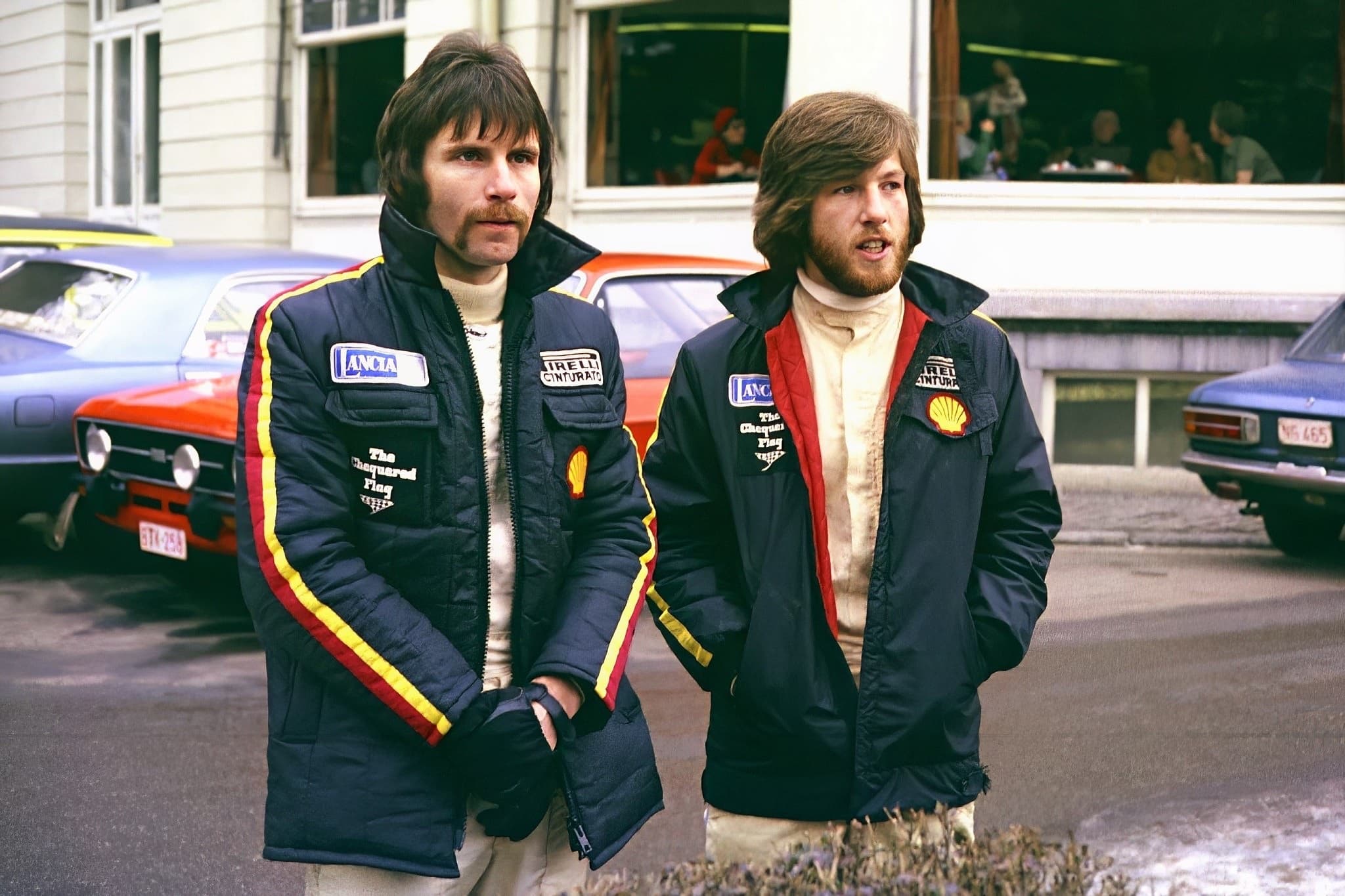
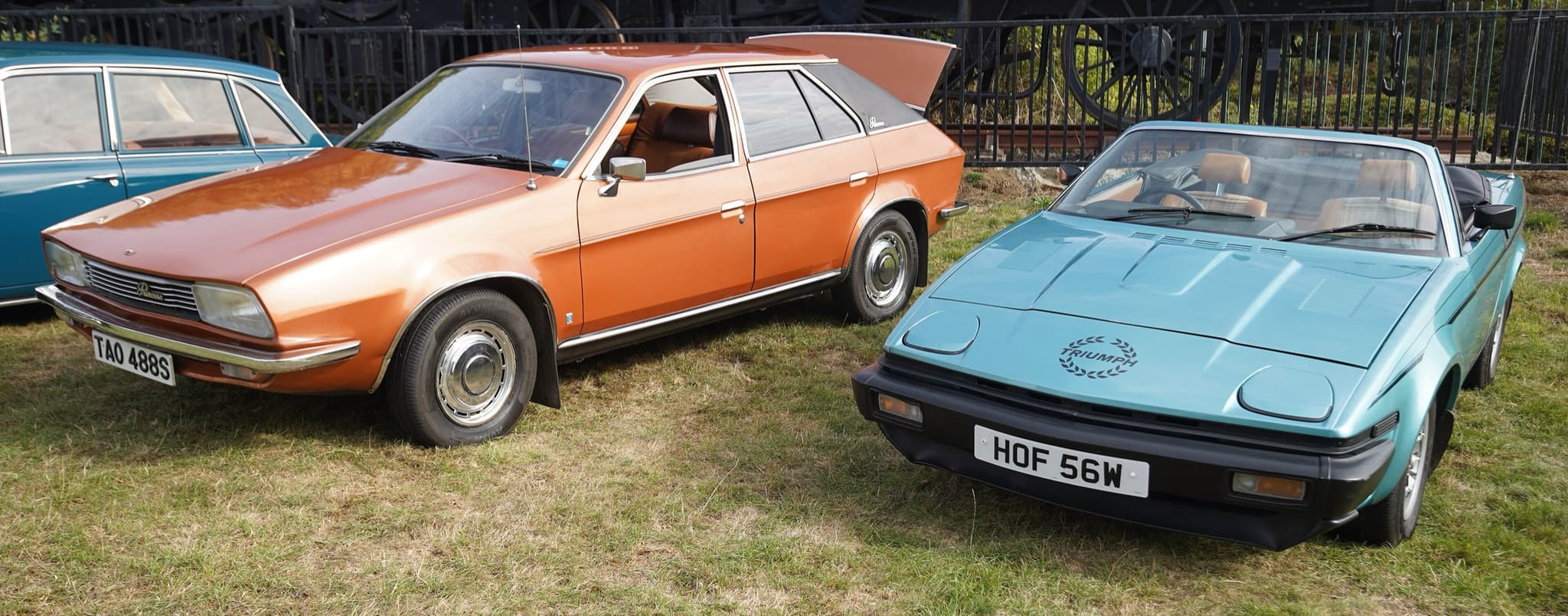
The TR7 was a Longbridge shape on a Triumph chassis, chosen by managers who then had to find a factory for it, and rallied by a works team that BL ran from the old BMC competitions department at Abingdon. Four of them have pages of their own: its stylist, Harris Mann; its engineering chief, Spen King; and two of its drivers, Tony Pond and John Buffum. Everyone else with a part in the story has a card below; the entries here add what the cards do not say.source 1source 2source 3
Short entries, in the year each joins the story. The history tells how the TR7 was chosen, and the Lynx, Broadside and Boxer page the family that was planned around it.
The family of slant-four and V8 engines he conceived that year gave the TR7 its engine; the Spen King page tells who is credited with its 16-valve head.
Drew Bullet, Triumph's own first proposal for a car to follow the TR6, and with Giovanni Michelotti the first Lynx, a 2+2 cancelled in 1969.
The Turin stylist. At King's request he revised Bullet before BL's board chose the Longbridge design in July 1971; he built the prototype of the convertible, and late in 1979 he restyled the coupé of the Broadside.
The Triumph stylist of the second Lynx, begun in 1971–72, a 2+2 on the TR7's running gear; by Ate Up With Motor's account its final form went back largely to his first drawings.
Wanted Bullet ready for 1975, then, when the board preferred the Longbridge design in July 1971, decided that Triumph, not MG, would engineer and sell it.
BL's chairman from November 1977, the month Speke No. 2's first strike began; in his first months BL decided to close the plant.
Rover Triumph's managing director when the TR7 was built at Canley; Motor Sport reported his letter on what the move there had changed, which the factories page quotes.
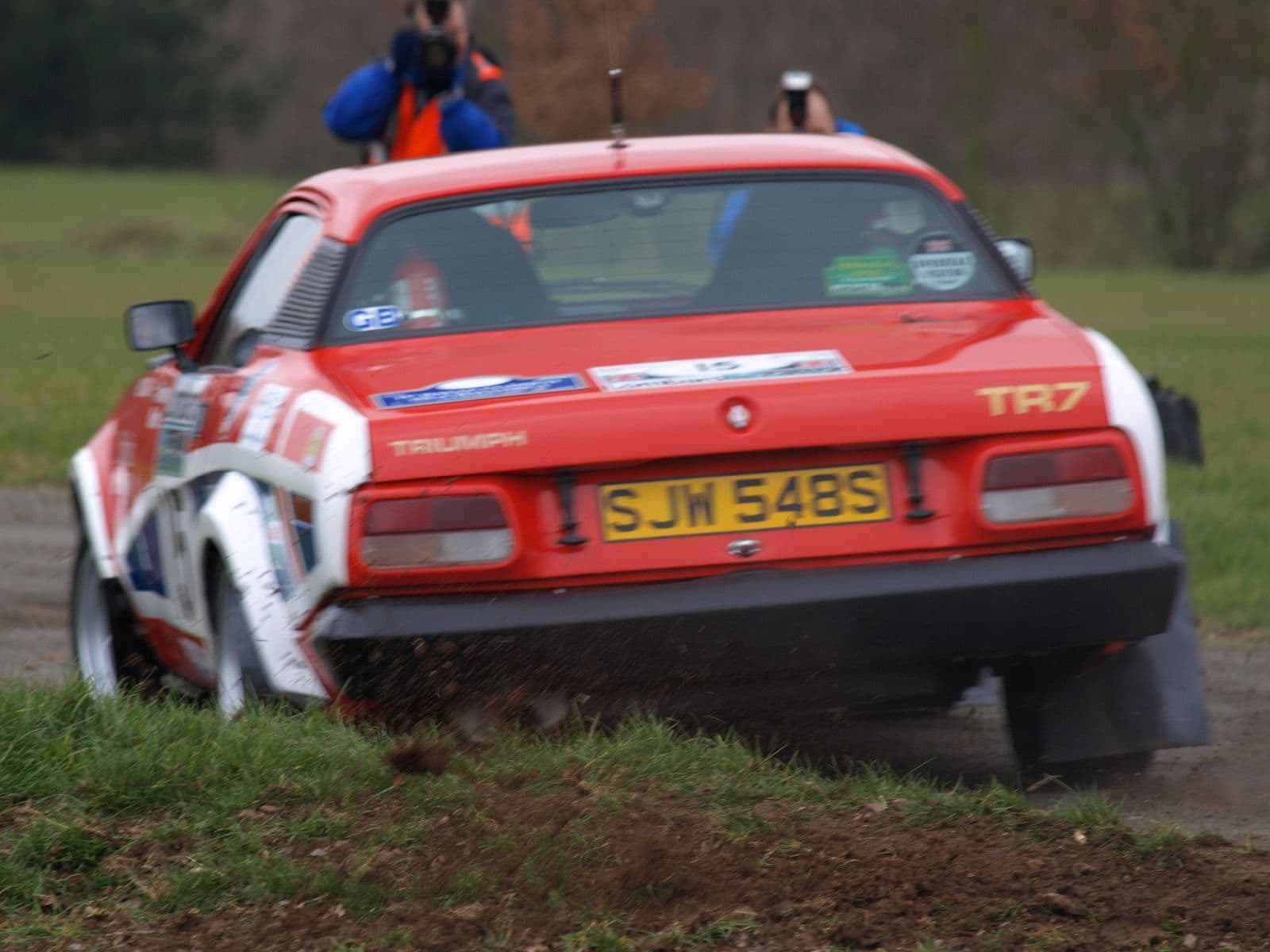
Leyland ST, later BL Motorsport, ran the works TR7s from Abingdon from 1976 to 1980. The rallying page tells their story, with every result the records hold.
John Davenport brought him in for 1977, with the Boucles de Spa as a trial of how he and Pond got on; when Pond went to Talbot for 1979, he stayed with the team.
Group 44's founder; its TR7 won five SCCA national races running in 1976, by Ate Up With Motor's account, and the racing page has the rest.
The TR7 was first built at Speke No. 2, in Liverpool, and its workers' strike of 1977–78 and the plant's closure are part of the car's story. Their union's account of the strike, a pamphlet of 1978 from the TGWU's 6-612 branch, is quoted, among the sources read, only by Ate Up With Motor, and two Liverpool MPs, Eric Heffer and Eddie Loyden, took up their case. The factories page tells what happened there.source 1source 17
stylist
Triumph stylist.
Rally driver: drove works TR7 V8s in 1978–79. On the 1978 Ulster Rally his TR7 V8 lost oil pressure with 21 competitive miles left (Motor Sport); for 1979 Fred Gallagher recalls "a Chequered Flag TR7 that was mostly driven by Derek Boyd", in which the two crashed on the Galway Rally: SJW 533S in the TR Drivers Club's register.
Racing driver: raced an Abingdon/Ashley Motors TR7 in IMSA and Trans-Am events in 1978.
Racing driver: listed by racingsportscars among the drivers of the Janspeed/ADA TR7 turbo at Le Mans in 1980 and Silverstone in 1981.
Rally co-driver: Per Eklund's on the 1979 Mintex Rally, second in SJW 548S.
Rally co-driver: Simo Lampinen's in SJW 548S on the 1978 RAC Rally.
works driver
American rally driver, who began rallying in Europe while stationed there with the US forces. In British Leyland's TR7s and TR7 V8s he was SCCA Pro Rally champion in 1977, 1978, 1979 and 1980; he also drove Abingdon's cars in Britain, 8th on the 1978 Burmah Rally. He later won the 1984 Cyprus Rally in an Audi quattro, with Fred Gallagher beside him.
product planner
British Leyland's Central Product Planning manager when the TR7 was conceived.
works driver
Rally driver: with Jim Porter he drove works TR7 V8s in Sparkrite colours in 1980, 9th on the Scottish Rally.
Rally co-driver: Derek Boyd's in KDU 497N on the 1978 Cork Rally.
works driver
Rally driver. With Johnstone Syer he drove works TR7s in 1976–77, 2nd on the 1977 Manx and 4th on the 1977 Mille Pistes. He joined Dealer Opel Team for 1978 after "a lean time … with Leyland's only sporadically successful Triumph TR7 programme" (Motor Sport), and retired after the 1979 RAC Rally.
director of motorsport
Former rally co-driver and RAC Motor Sport Executive; BL's Director, Motorsport, through the TR7 V8 years. In 2002 he wrote Tony Pond's tribute in Motor Sport.
engineer
Standard-Triumph engineer who conceived the family of V8 and slant-four engines in 1962.
works driver
Swedish rally driver who joined BL from Saab in 1979: 2nd on the 1979 Mintex, 3rd on the 1979 Scottish and 3rd on the 1980 1000 Lakes in works TR7 V8s, and winner of the 1979 BP TV rallysprint.
Rally driver: drove works TR7 V8s in 1978–79, 2nd on the 1978 Wyedean, 3rd on the 1979 Manx and winner of the 1979 Peter Russek Manuals Rally.
co-driver
Rally co-driver. With Tony Pond in works TR7s and TR7 V8s in 1977–78 and 1980 he won the 1977 Boucles de Spa, the 1978 Granite City, 24 Hours of Ypres and Manx rallies, and Ypres and the Manx again in 1980. A crash on the 1979 Galway Rally put him in hospital for two months. In 1984 he and John Buffum won the Cyprus Rally in an Audi quattro.
Rally co-driver in works TR7s (the TR Drivers Club prints "I. Grindrod" and "I. Grinrod"): Markku Saaristo's on the 1977 RAC Rally, John Haugland's on the 1978 RAC Rally, Simo Lampinen's on the 1979 Welsh Rally and John Buffum's on the 1980 RAC Rally.
Rally co-driver: Graham Elsmore's in works TR7 V8s, 1978–79.
constructor
Racing driver and, with Chris Crawford, of ADA Engineering, which built and ran the Le Mans TR7 turbo; he drove it in 1980–81.
Norwegian rally driver: 12th on the 1978 RAC Rally in the works TR7 V8 SJW 533S, one of the three TR7s Leyland entered with British Airways sponsorship.
development engineer
BL Motorsport engineer: chassis development engineer for the works TR7 V8s from July 1979. His memo of December 1980 on a TR8 development car records that the rally TR8 being built for 1981 had been scrapped.
Rally driver: drove works TR7 V8s in 1979, winning the Halewood Stages and finishing fourth on the Manx.
Rally co-driver: Derek Boyd's in works TR7 V8s on the 1978 Ulster and Manx rallies and the 1979 Circuit of Ireland.
chief engineer, technical director
British engineer (1925–2010). He joined Rover in 1945 and became its chief engineer in 1959; the Range Rover (1970) is his best-known car, and he also engineered the Rover SD1. After the 1968 merger he succeeded Harry Webster as Triumph's technical director and led the TR7's engineering. AROnline credits him with developing the 16-valve head; Ate Up With Motor credits it to Lewis Dawtrey.
Finnish driver, signed by Harry Webster for the Triumph rally team; class winner at Le Mans in 1965 and 1st in the Prototype category of the 1965 Coupe des Alpes.
stylist
British car stylist: British Leyland's chief designer in the 1970s and early 1980s, best known for the Allegro, the Princess and the TR7. Trained at engineering school and as an apprentice at the coach and bus builder Duple, he worked with Roy Haynes on the Marina and styled the wedge-shaped Austin Zanda show car (1969). His Longbridge team's wedge became the TR7: he said he went to the United States before drawing it, which made the design more extreme, and that it was meant to have a targa roof, which engineering could not make work. The convertible's prototype was Michelotti's, not his. He died in 2023, aged 85.
Rally co-driver: Simo Lampinen's in TUD 683T on the 1979 1000 Lakes.
Racing driver: Rod Bremner's co-driver in the TR7 at the 1978 Talladega 6 Hours.
Rally co-driver: Terry Kaby's on the 1979 Manx, fourth in SJW 540S.
executive vice-president of marketing, executive
A former Rover executive, he became executive vice-president of marketing for Leyland's US organisation after the Leyland–Rover merger of late 1966. According to Ate Up With Motor he pressed for the TR250's brighter colours and nose stripe, authorised the TR250K prototype and later held that it was unsuitable for production. As head of British Leyland's US organisation he judged Triumph's own Bullet proposal dated, disliked the Longbridge design that became the TR7 and opposed the Lynx 2+2; according to Ate Up With Motor, he later told David Knowles that the Lynx was cancelled after he repeated that it would not sell in the US.
stylist
Turin car stylist. He began his career in 1937 as an apprentice at Stabilimenti Farina; according to carrozzieri-italiani he opened his own design studio in Turin in 1949, the first in Italy devoted only to car design; the TSOA Newsletter of 1966 also dates the studio to 1949. His first contact with Standard-Triumph came in 1957: Harry Webster's obituary in the Telegraph says Webster "discovered" him, while Graham Robson says he was found through Raymond Flower and hired on Webster's recommendation with Alick Dick's approval. His first Triumph design was the one-off TR3 "Dream Car" on a TR3 chassis, shown at Geneva in 1957 according to later accounts; Krause says it followed a chance meeting with Alick Dick at a motor show. He went on to design the Italia (1959–62) on TR3A and TR3B running gear. On his own initiative he drew a one-off body for a BMW 507 chassis, shown at the Turin show in 1959, which BMW has owned since 2005. He styled the Herald (1959), whose separate chassis made the Spitfire possible; answering Webster's idea of a "Herald sports car", he built a single prototype in 1960, code-named "Bomb", and later restyled the car as the Mk IV of 1970. For the TR he styled the prototypes Zest (1958) and Zoom (1959) and the TR4 of 1961, which joined Zest's nose to Zoom's tail and kept Zoom's hardtop with its lift-out panel; the TR4A, TR5 and TR250 kept that body with new detail, and its centre section on the TR6 (1969), whose new front and rear Karmann designed because he was busy. According to his son Edgardo, his work for Triumph ended in the late 1970s with a restyle of the TR7 from coupé to spider; he died in January 1980. No source read links him to the Le Mans or Macau competition bodies.
stylist
Triumph's styling chief at the start of the TR7 story.
driver
SCCA national champion in a Spitfire (F Production, 1969) and in a TR7 (D Production, 1979). In 1974–75 he drove Huffaker Engineering's V12 E-Type in SCCA B Production, winning on its debut at Seattle in August 1974.
Rally driver: drove the works TR7 V8 HRW 251V on the 1980 1000 Lakes, retiring.
Rally co-driver: with Tony Pond he won the 1976 Raylor Rally, the TR7's first win, and he sat with Pat Ryan in a works TR7 on the 1977 RAC Rally.
constructor
Of the tuning firm Janspeed, which had used a TR7 as a development car for BL Motorsport and then built it into the Le Mans TR7 turbo.
works driver
British rally driver, the works TR7's most successful. Before Leyland he rallied Minis and Escorts, drove a Kadett for Dealer Opel Team and won the 1975 Avon Tour of Britain in a privately prepared RS2000. In TR7s he won the Raylor (1976) and the Boucles de Spa (1977), and in the TR7 V8 the Granite City, the 24 Hours of Ypres and the Manx in 1978, then the Rothmans Manx Stages, Ypres, the Manx and the Eaton Yale rallysprint in 1980; he was 4th on the 1978 RAC Rally and 7th on the 1980 one. He spent 1979 with Chrysler/Talbot and returned for 1980. Later he drove the Metro 6R4, and he won the Manx four times in all. He died in February 2002, aged 56.
Rally co-driver: Roger Clark's in the works TR7 V8s, 1980.
competitions manager
Manager of Leyland Special Tuning, BL's competitions department at Abingdon, when the TR7 rally programme began.
Rally co-driver: Terry Kaby's in works TR7 V8s in 1979, in national rallies and on the RAC Rally.
Rally co-driver: Tony Pond's at Dealer Opel Team, fourth with him on the 1975 RAC Rally, and in the works 16-valve TR7s in 1976, third on that year's Manx and Castrol rallies.
Rally driver: named by Motor Sport in March 1977 among Leyland's drivers; he drove the works TR7 OOM 513R on the 1977 RAC Rally.
Rally driver: drove the Safety Devices-built TR7 SCE 645S on the 1977 RAC Rally, finishing 37th.
Rally co-driver: Timo Mäkinen's in HRW 251V on the 1980 1000 Lakes.
Rally co-driver: Graham Elsmore's in OOM 514R on the 1979 Halewood Stages, second.
Racing driver: one of the drivers Motor Sport named in advance for the Janspeed/ADA Le Mans TR7 turbo in 1980; racingsportscars lists him in its 1980 entries.
American racing driver. He won the SCCA C Production national championship at the 1981 Runoffs at Road Atlanta in "a highly modified TR8", in Mike Cook's words.
Rally co-driver: Brian Culcheth's in the works TR7s, 1976–77.
Rally co-driver: Per Eklund's in the works TR7 V8s, 1979–80.
Rally driver: drove the first left-hand-drive works TR7 V8, SJW 548S, on the 1978 Tour de Corse and the 1979 Boucles de Spa.
founder, driver
American racing driver. He bought a TR3 in 1960 and raced from 1961. In TR4s he won the SCCA national E Production championship in 1962, Triumph's first national class title by the importer's account, and D Production in 1963 and 1964; Triumph gave him one of Kas Kastner's Sebring TR4s. With Brian Fuerstenau and Dick Gilmartin he founded Group 44 Inc. in 1965; it won 14 SCCA national titles and three Trans-Am championships before closing in 1990. In 1968 he raced Group 44's TR250 in SCCA C Production. By the importer's count in September he had six wins in the Northeast Division, enough for at least a tie for its title, and three outside it. He was 3rd in C Production at the ARRC, and he co-drove the TR250K at Sebring. From 1969 to 1974 he raced Group 44's TR-6 in SCCA C Production, 2nd at the 1972 American Road Race of Champions, and showed it on British Leyland's stand at the 1972 London Motor Show; Severson writes that the last TR6 built went to him. In 1974–75 he raced Group 44's V12 E-Type in SCCA B Production: 2nd at the 1974 Runoffs by 0.8 s, and national champion in 1975. He had won the SCCA Trans-Am drivers' championship in 1977 and 1978 with a Jaguar XJ-S. From 1979 to 1981 Group 44, Jaguar Rover Triumph's official US racing team, raced the TR8 in IMSA and the Trans-Am. It won its class on the car's debut, the Watkins Glen 6 Hours of July 1979; Tullius won his class four times in 1979, in IMSA GTO and the Trans-Am, as Car and Driver and Lamm count them, and Group 44's No. 44 won the IMSA GTO class four times in 1980. British Sports Car Hall of Fame, first class (2017).
Rally co-driver: Jean-Luc Thérier's in SJW 548S, 1978–79.
Rally co-driver, as the TR Drivers Club prints the name: John Buffum's in OOM 512R on the 1978 Burmah Rally (eighth) and Roger Clark's in XJO 414V on the 1980 RAC Rally.
development engineer
BL Motorsport engine development engineer for the works TR7s from 1977.
Racing driver: drove the Janspeed/ADA TR7 turbo with Ian Harrower in the 1981 Brands Hatch 1000 km.
Every source the site cites is on the sources page.