Triumph TR7 Coupe
The fixed head coupé (FHC), as British Leyland listed it: the TR7's first body, its only one until 1979 and built to the end, at Speke, then Canley, then Solihull, from 1974 to 1981.
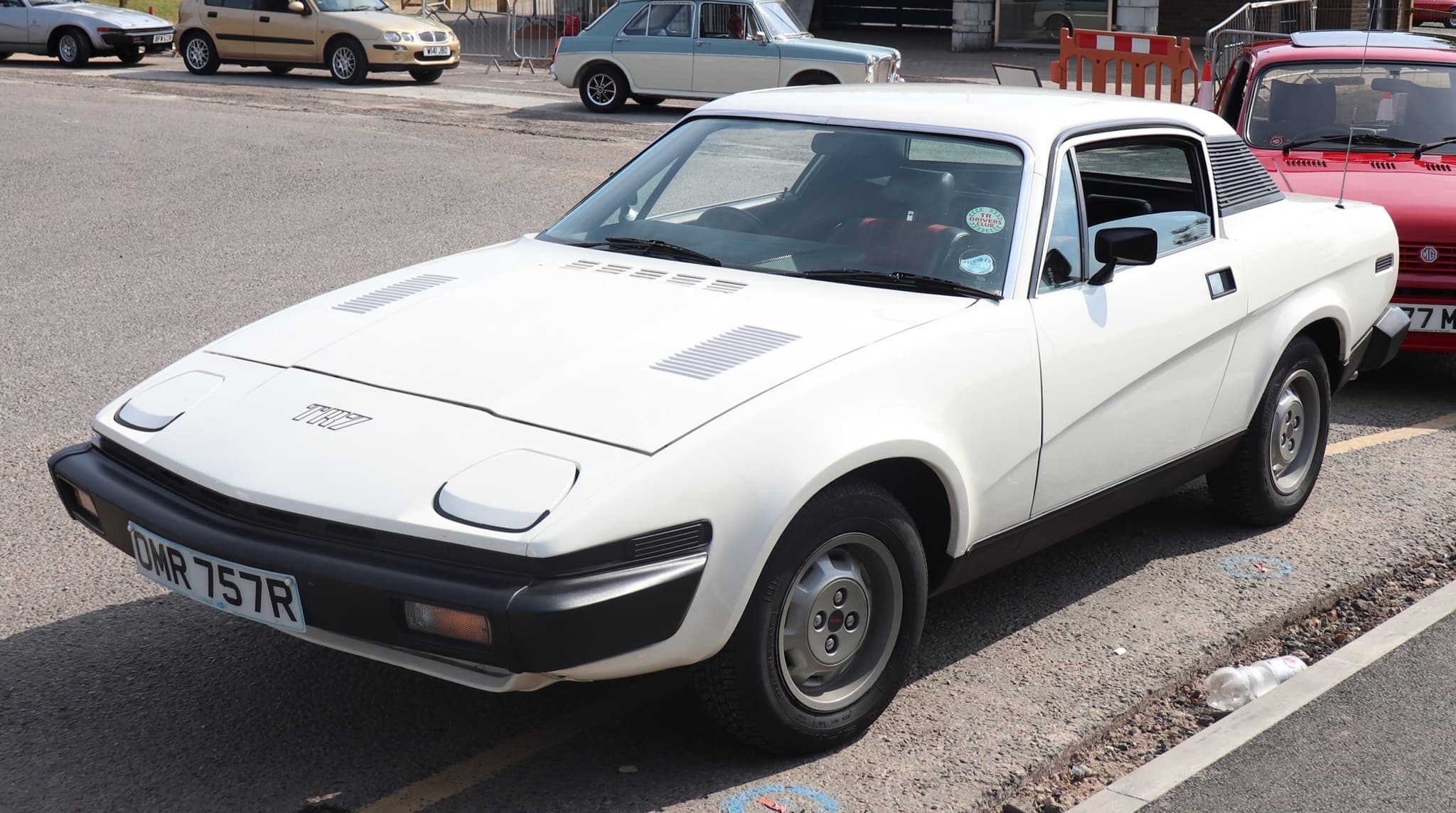
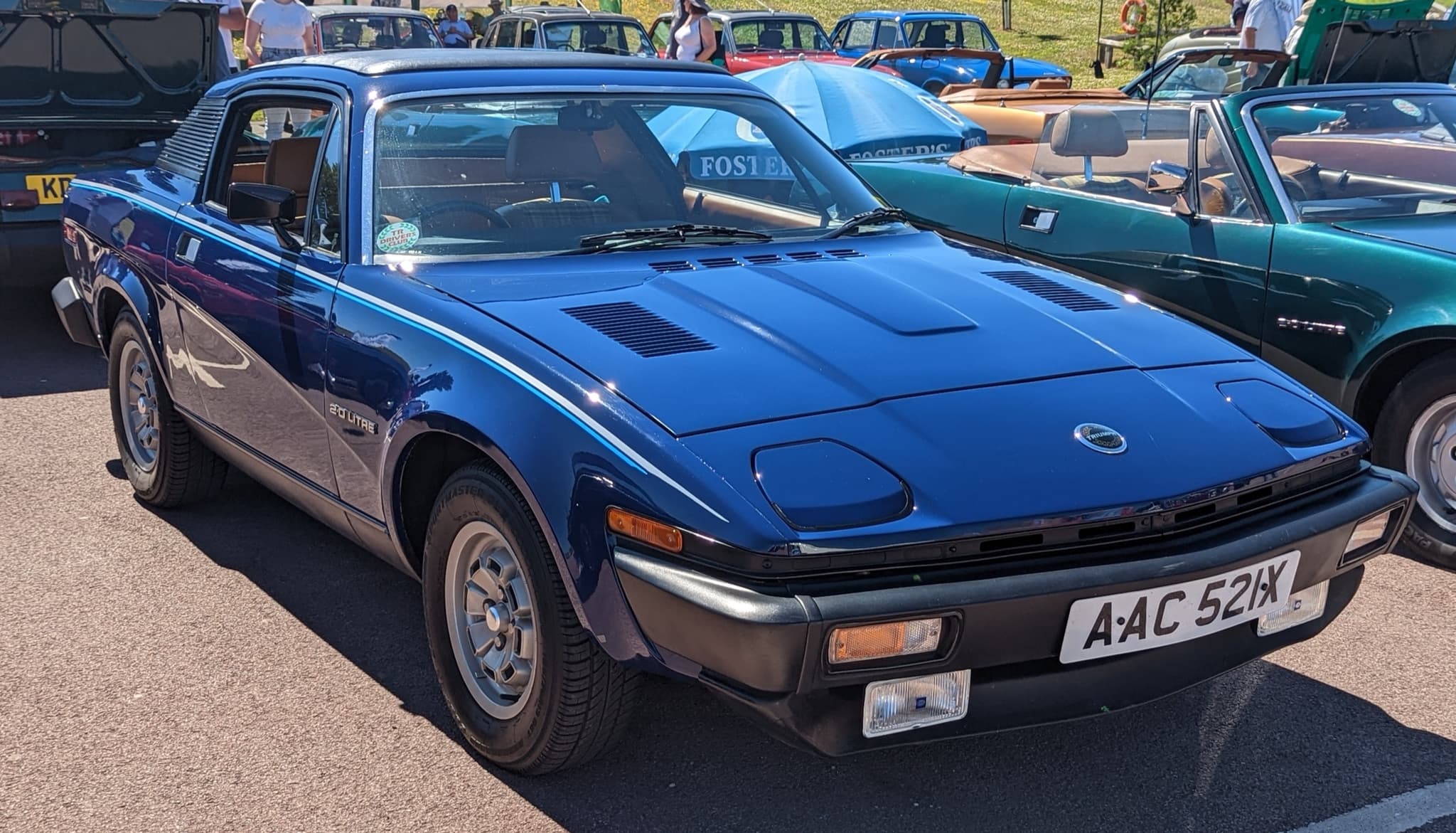
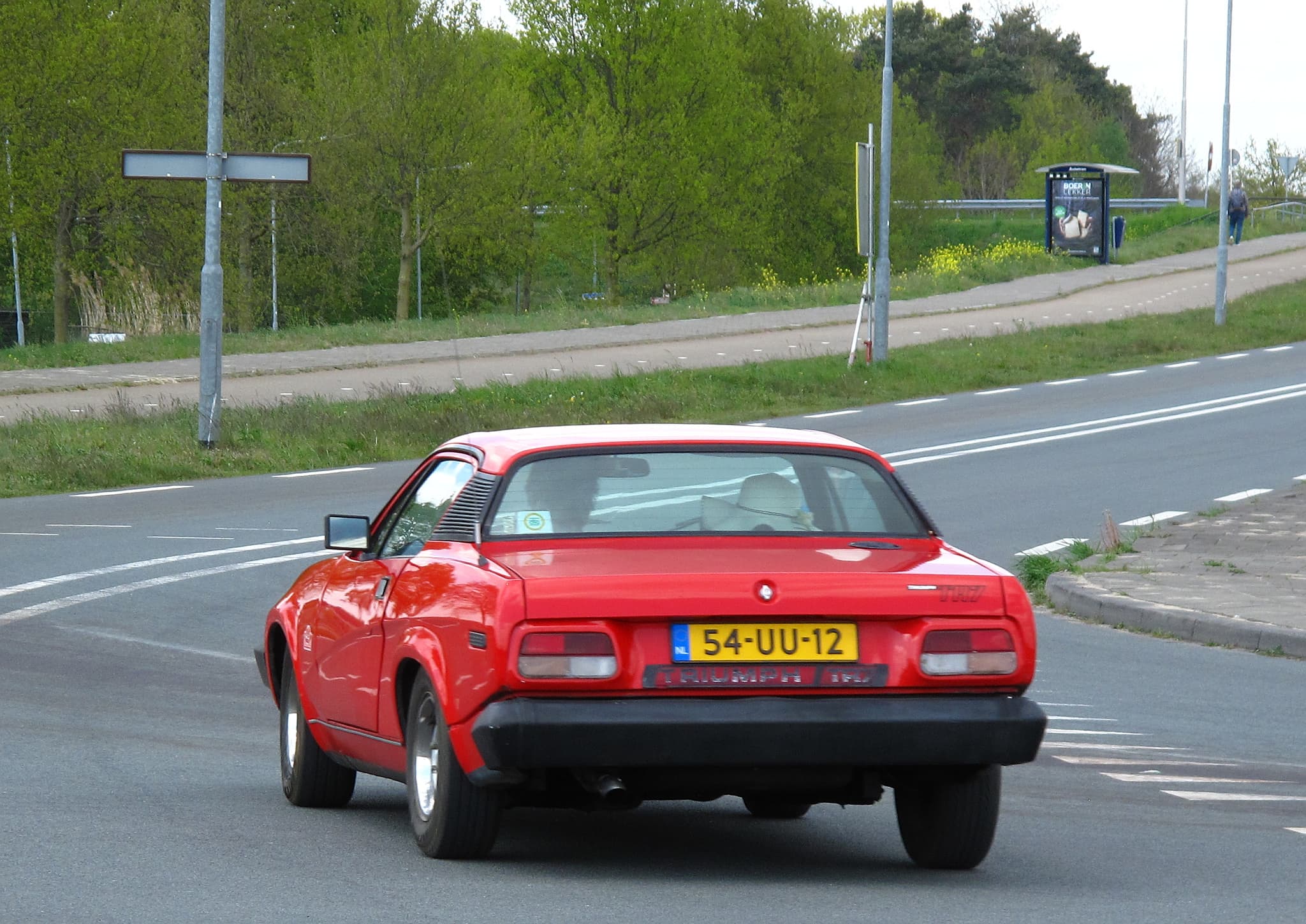
For its first four years the TR7 was a coupé and nothing else, a two-seater with a fixed steel roof and a body that carried its own strength. When the convertible came, in 1979, the coupé carried on beside it to the end of production, built in each of the TR7's three factories in turn. It began with a single bulge on its bonnet (hood) and a four-speed gearbox (transmission), and ended with a second bulge, five speeds and a new badge. The figures for each are in the specifications below.source 1source 2source 3
Why a coupé
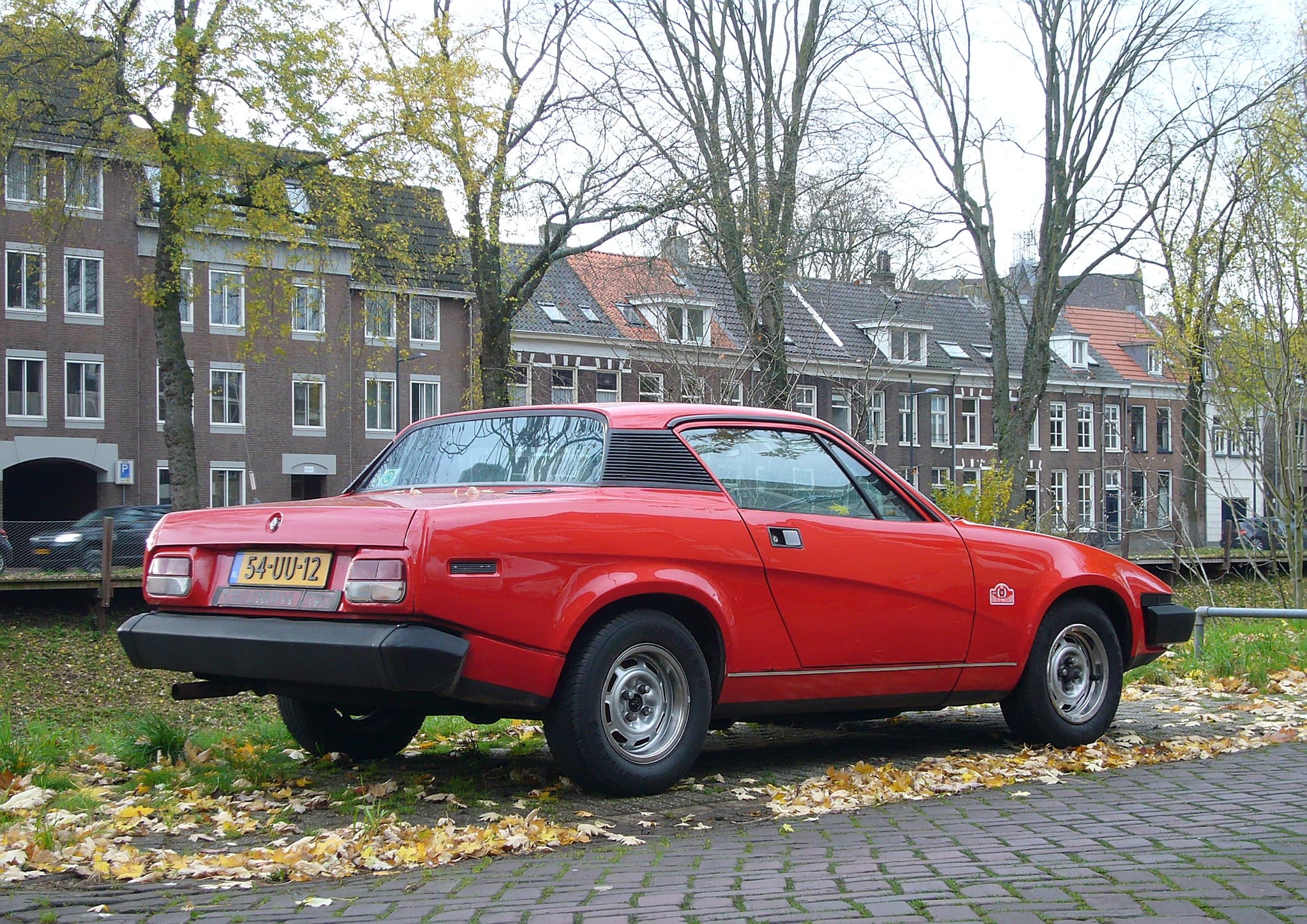
It was meant to have an opening roof. The full-size mock-ups that became the TR7 had a lift-out targa panel. It was hard to engineer, and the American safety rules being drafted looked set to ban open cars, so the panel went and the roof became fixed. The roof that resulted was not a hoop over a hole. AROnline describes a strong box structure in each rear quarter and a rail along the top of the door openings, tying the roof to the body, with a torsional stiffness of about 10,200 Nm (7,500 lb ft) per degree, and the doors had side-intrusion beams.
Some of the coupé's details came from the car it might have been. Ate Up With Motor calls the five vents on the bonnet, at the foot of the windscreen (windshield), a vestige of the grilles on the MG Magna mock-up.source 2source 3source 4
Speke, 1974–78
The first coupés, built at Speke, in Liverpool, had a four-speed gearbox. The American car previewed in 1975 had the Dolomite saloon's (sedan's) gearbox ratios and a 3.63:1 axle, and air conditioning as an option; for the 1976 model year, five-speed and automatic gearboxes joined the list of options. Their bonnets had a single central bulge between the louvred panels. Inside, the British cars of 1976 were black, with seats in a nylon trim called Broadcord, until tartan inserts arrived in March 1977; early that year, too, shorter springs lowered the car by about 25 mm (1 in).
Speke's coupés carry commission numbers beginning ACL, for the American cars of the 1975 and 1976 model years, ACG, for Britain, Europe and Australia, and ACW, for the American cars of the 1977 and 1978 model years. The strike of 1977–78 stopped the line for about four months, and Speke built its last TR7s in the spring of 1978, before it closed in May.source 1source 5source 6source 7source 8source 2
Canley, 1978–80
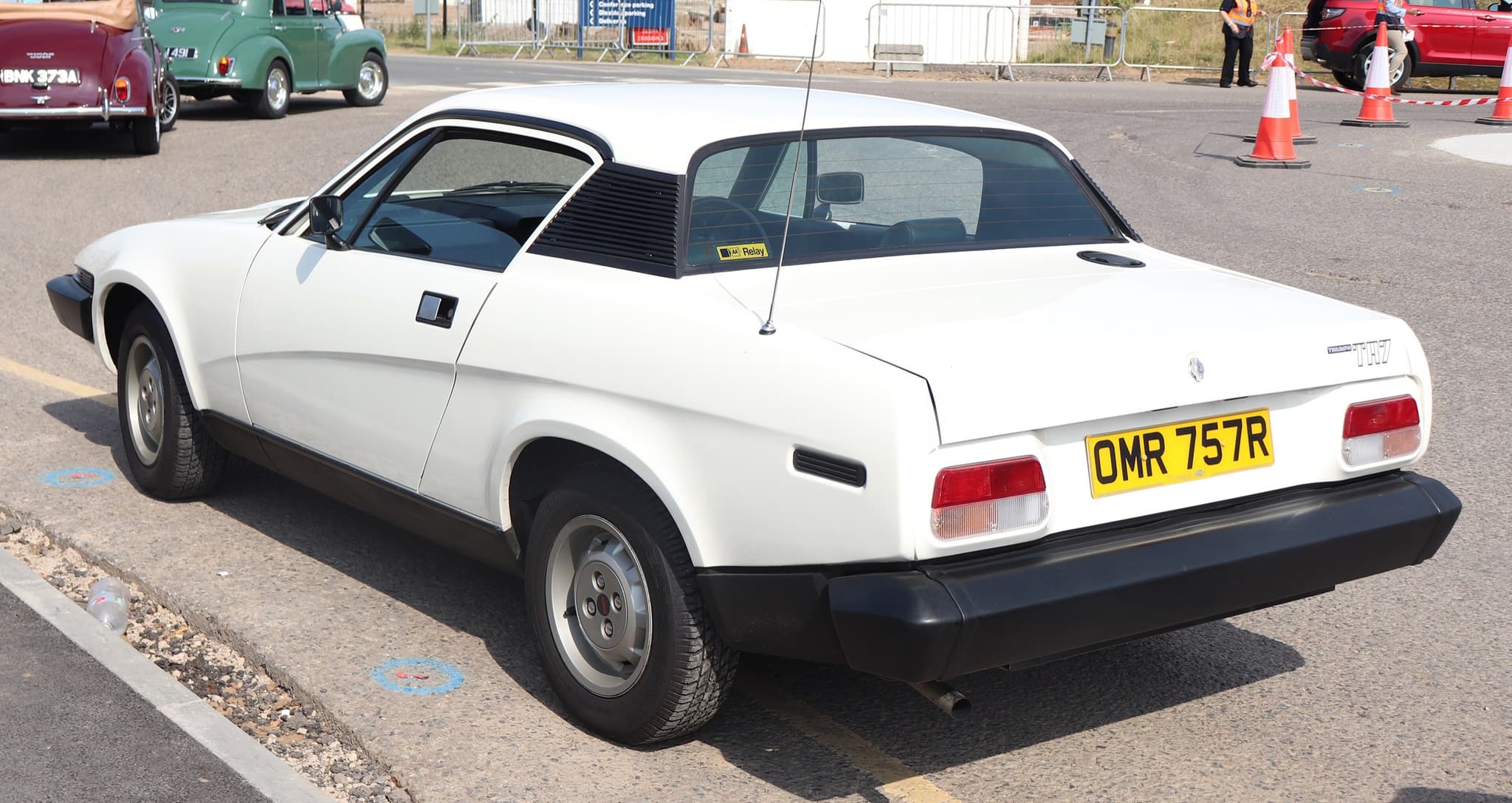
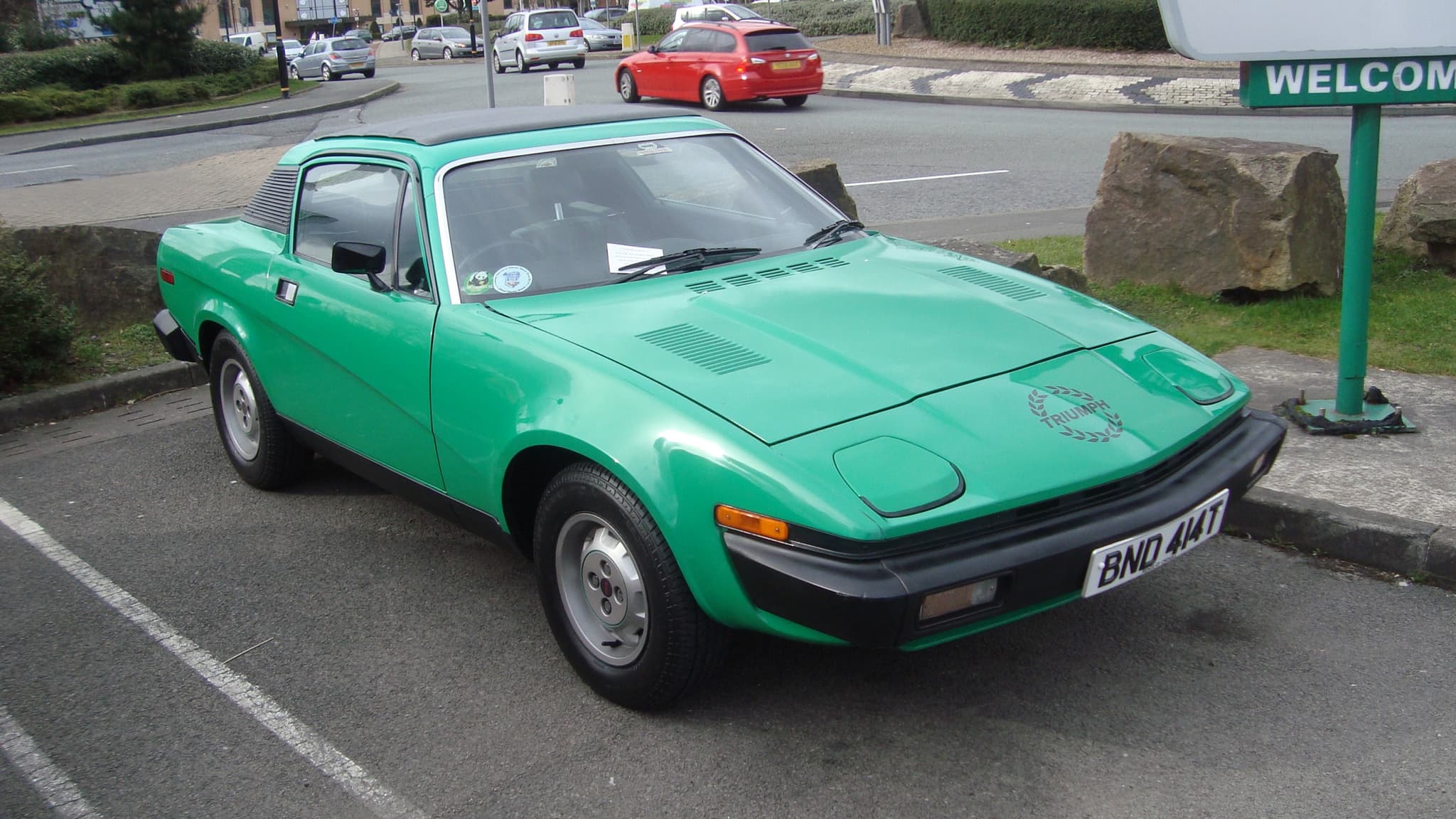
The move to Canley brought the biggest set of changes in the coupé's life. The five-speed gearbox became standard, with the Rover SD1's type of axle and bigger rear brake drums, although automatic cars kept the old axle and tyres; the automatic cost £219 more in 1979. The badges were new, with a laurel wreath on the nose in place of the earlier badge, and the cooling was revised, with a flap to feed warm air to the carburettors. The headlamp motors were sealed, the seats had more padding, the body was given an anti-chip coating and the fuses were reorganised. The later Canley cars, and the Solihull cars, also had the second bulge on the bonnet that was made for the V8.
Motor Sport, trying a Canley coupé in 1979, found "the attractive, plaid-trimmed seats are most comfortable".
In general appointments and comfort the TR7 comes much nearer to saloon car quality than most sports cars and in that respect is easy to live with.
Canley's coupés carry the prefixes TCG, for Britain and Europe, and TCW, for North America, until the VINs of October 1979, which carry T as the assembly-plant letter.source 9source 3source 2
Solihull, 1980–81
The coupé moved to Solihull with the rest of the line in 1980. For Britain that year it had alloy wheels as standard, and a front spoiler, as the new drophead did; Motor Sport noted that it cost £217 more than the drophead. The last cars were trimmed in velour, by Wikipedia's account, which cites Bill Piggott's originality guide. BL's figures show coupés still being built in 1981, most of them for the home market. No source read says whether coupés of the 1981 model year were sold in America.
Three things tell the factories' coupés apart, though badges can be changed and only the numbers are proof:
The nose
The laurel-wreath badge arrived with the Canley cars; the last Solihull cars have a small round one, Wikipedia says, citing Piggott.
The bonnet
The Speke cars have one bulge; the later Canley cars and the Solihull cars have two.
The number
A commission number's first letter is A at Speke and T at Canley; on the VINs from October 1979, the assembly-plant letter tells Canley from Solihull.
On the road
The testers liked the coupé's cockpit, its ride and, in 1976, its handling, and disliked its brakes and its buzzy engine. Of the American car previewed in London, Motor Sport wrote:
'Speedy' this car is not, the maximum speed being 107 m.p.h., but it is said to be economical.
In Britain in 1976 the magazine's verdict was that its test car "felt characterless", largely because the roadholding and handling were too good for the performance, and it found the brakes wanting. Three years later the brakes were still its complaint, and so was the price: for what the TR7 then cost, it wrote, the enthusiast would be better off with an Escort RS2000 or a Fiat Mirafiori Sport, and "'Posers' might choose the TR7". At the British launch the coupé had cost £16 more than the RS2000 and £696 less than a 3.0-litre Capri; the rivals and the road tests follow the comparison through the car's life.source 6source 7source 9source 3
Specification: Coupe
Production
Sources for Production, Coupe
- Price new
- Several figures in print.Clive Richardson ("C.R."), "Triumph TR7: sports car or two-seater saloon?", Motor Sport, Jun 1976, p. 63source 7; Keith Adams, "The Cars: Triumph TR7/TR8 development story", AROnline, updated 8 Feb 2024source 3; Clive Richardson ("C.R."), "The Triumph TR7", Motor Sport, Jun 1979, p. 58source 9
- Built
- Several figures in print.Keith Adams, "The Cars: Triumph TR7/TR8 development story", AROnline, updated 8 Feb 2024source 3; Paul Towle and Rex Holford (update) and Mark Elbers (update), "TR7 & TR8 Identification & Production Data Explained", TR Drivers Club, 1987, updated (© 2016)source 1
| Price new | £2,999 Price new, Coupe Several figures in print.
|
|---|---|
| Built | Sep 1974 – Oct 1981 Built, Coupe Several figures in print.
|
Performance
Sources for Performance, Coupe
- Power
- Good sources agree.78 kW at 5,500 rpm (1980 specification, which gives the fixedhead's weights too). Rover Triumph (reprinted by the TR Drivers Club), "Triumph TR7 Drophead: Structural Engineering and Specifications" (press release), Press release, for release 2 Mar 1980source 4; Clive Richardson ("C.R."), "The Triumph TR7", Motor Sport, Jun 1979, p. 58source 9; Aaron Severson, "Way of the Wedge: The Triumph TR7 and TR8", Ate Up With Motor, 5 Feb 2012, pp. 1–5source 2
- Top speed
- Good sources agree.Around; Leyland's claim, which neither test car reached without help from inclines; UK. Clive Richardson ("C.R."), "Triumph TR7: sports car or two-seater saloon?", Motor Sport, Jun 1976, p. 63source 7; Keith Adams, "The Cars: Triumph TR7/TR8 development story", AROnline, updated 8 Feb 2024source 3; Clive Richardson ("C.R."), "The Triumph TR7", Motor Sport, Jun 1979, p. 58source 9
- 0–60 mph
- Several figures in print.Clive Richardson ("C.R."), "Triumph TR7: sports car or two-seater saloon?", Motor Sport, Jun 1976, p. 63source 7; Keith Adams, "The Cars: Triumph TR7/TR8 development story", AROnline, updated 8 Feb 2024source 3; Clive Richardson ("C.R."), "The Triumph TR7", Motor Sport, Jun 1979, p. 58source 9; Malcolm Paris (compiler), "Triumph TR7 / TR7 V8 and TR8 Buyers Guide", TR Registersource 12
| Power | 105 bhp |
|---|---|
| Top speed | 110 mph |
| 0–60 mph | 9.4 s 0–60 mph, Coupe Several figures in print.
|
Running gear
Sources for Running gear, Coupe
- Front brakes
- Good sources disagree.Clive Richardson ("C.R."), "The Triumph TR7", Motor Sport, Jun 1979, p. 58source 9; Rover Triumph (reprinted by the TR Drivers Club), "Triumph TR7 Drophead: Structural Engineering and Specifications" (press release), Press release, for release 2 Mar 1980source 4
- Rear brakes
- Several figures in print.Clive Richardson ("C.R."), "The Triumph TR7", Motor Sport, Jun 1979, p. 58source 9; Rover Triumph (reprinted by the TR Drivers Club), "Triumph TR7 Drophead: Structural Engineering and Specifications" (press release), Press release, for release 2 Mar 1980source 4; Clive Richardson ("C.R."), "The TR7 makes a quiet British bow", Motor Sport, Feb 1975, p. 30source 6
- Tyres
- Several figures in print.Rover Triumph (reprinted by the TR Drivers Club), "Triumph TR7 Drophead: Structural Engineering and Specifications" (press release), Press release, for release 2 Mar 1980source 4; Clive Richardson ("C.R."), "Triumph TR7: sports car or two-seater saloon?", Motor Sport, Jun 1976, p. 63source 7; Aaron Severson, "Way of the Wedge: The Triumph TR7 and TR8", Ate Up With Motor, 5 Feb 2012, pp. 1–5source 2; Clive Richardson ("C.R."), "The Triumph TR7", Motor Sport, Jun 1979, p. 58source 9
| Front brakes | 9¾ in discs Front brakes, Coupe Good sources disagree.
|
|---|---|
| Rear brakes | 8 × 1½ in drums; 9 × 1¾ in with the five-speed Rear brakes, Coupe Several figures in print.
|
| Tyres | 185/70 HR 13 (manual), 175/70 SR 13 (automatic) Tyres, Coupe Several figures in print.
|
Dimensions and weight
Sources for Dimensions and weight, Coupe
- Length
- Good sources agree.Outside North America; 1980 specification. Rover Triumph (reprinted by the TR Drivers Club), "Triumph TR7 Drophead: Structural Engineering and Specifications" (press release), Press release, for release 2 Mar 1980source 4; Aaron Severson, "Way of the Wedge: The Triumph TR7 and TR8", Ate Up With Motor, 5 Feb 2012, pp. 1–5source 2
- Width
- Several figures in print.Rover Triumph (reprinted by the TR Drivers Club), "Triumph TR7 Drophead: Structural Engineering and Specifications" (press release), Press release, for release 2 Mar 1980source 4; Clive Richardson ("C.R."), "The TR7 makes a quiet British bow", Motor Sport, Feb 1975, p. 30source 6
- Kerb weight
- Several figures in print.Rover Triumph (reprinted by the TR Drivers Club), "Triumph TR7 Drophead: Structural Engineering and Specifications" (press release), Press release, for release 2 Mar 1980source 4; Clive Richardson ("C.R."), "Triumph TR7: sports car or two-seater saloon?", Motor Sport, Jun 1976, p. 63source 7; Aaron Severson, "Way of the Wedge: The Triumph TR7 and TR8", Ate Up With Motor, 5 Feb 2012, pp. 1–5source 2
- Wheelbase
- Good sources agree.Rover Triumph (reprinted by the TR Drivers Club), "Triumph TR7 Drophead: Structural Engineering and Specifications" (press release), Press release, for release 2 Mar 1980source 4; Aaron Severson, "Way of the Wedge: The Triumph TR7 and TR8", Ate Up With Motor, 5 Feb 2012, pp. 1–5source 2
- Fuel tank
- Good sources agree.Clive Richardson ("C.R."), "The Triumph TR7", Motor Sport, Jun 1979, p. 58source 9; Clive Richardson ("C.R."), "The TR7 makes a quiet British bow", Motor Sport, Feb 1975, p. 30source 6
| Length | 4065 mm |
|---|---|
| Width | 1681 mm Width, Coupe Several figures in print.
|
| Kerb weight | 1070 kg Kerb weight, Coupe Several figures in print.
|
| Wheelbase | 2160 mm |
| Fuel tank | 12 gal |
Specification: US
Production
Sources for Production, US
- Price new
- One good source.US, 1975. Aaron Severson, "Way of the Wedge: The Triumph TR7 and TR8", Ate Up With Motor, 5 Feb 2012, pp. 1–5source 2
- Built
- One good source.Paul Towle and Rex Holford (update) and Mark Elbers (update), "TR7 & TR8 Identification & Production Data Explained", TR Drivers Club, 1987, updated (© 2016)source 1
- Designers
- One good source.US launch car. Clive Richardson ("C.R."), "The TR7 makes a quiet British bow", Motor Sport, Feb 1975, p. 30source 6
- Built at
- One good source.US coupés. Paul Towle and Rex Holford (update) and Mark Elbers (update), "TR7 & TR8 Identification & Production Data Explained", TR Drivers Club, 1987, updated (© 2016)source 1
| Price new | about $5,100 |
|---|---|
| Built | January 1975 (start of US production, ACL 1) |
| Designers | Harris Mann (body) |
| Built at | Speke (ACL, ACW, US cars from January 1975); Canley (TCW) |
Engine
Sources for Engine, US
- Engine maker
- One good source.The TR7's engine. Aaron Severson, "Way of the Wedge: The Triumph TR7 and TR8", Ate Up With Motor, 5 Feb 2012, pp. 1–5source 2
- Capacity
- Several figures in print.Aaron Severson, "Way of the Wedge: The Triumph TR7 and TR8", Ate Up With Motor, 5 Feb 2012, pp. 1–5source 2; Clive Richardson ("C.R."), "The TR7 makes a quiet British bow", Motor Sport, Feb 1975, p. 30source 6
- Engine position
- One good source.US launch car. Clive Richardson ("C.R."), "The TR7 makes a quiet British bow", Motor Sport, Feb 1975, p. 30source 6
- Block
- One good source.Triumph's slant four (and V8) as designed. Aaron Severson, "Way of the Wedge: The Triumph TR7 and TR8", Ate Up With Motor, 5 Feb 2012, pp. 1–5source 2
- Cylinder head
- One good source.Early TR7s. Aaron Severson, "Way of the Wedge: The Triumph TR7 and TR8", Ate Up With Motor, 5 Feb 2012, pp. 1–5source 2
- Valve gear
- Several figures in print.Clive Richardson ("C.R."), "The TR7 makes a quiet British bow", Motor Sport, Feb 1975, p. 30source 6; Clive Richardson ("C.R."), "The Triumph TR7", Motor Sport, Jun 1979, p. 58source 9
- Bore × stroke
- One good source.1979. Clive Richardson ("C.R."), "The Triumph TR7", Motor Sport, Jun 1979, p. 58source 9
- Compression ratio
- Several figures in print.Aaron Severson, "Way of the Wedge: The Triumph TR7 and TR8", Ate Up With Motor, 5 Feb 2012, pp. 1–5source 2; Clive Richardson ("C.R."), "The TR7 makes a quiet British bow", Motor Sport, Feb 1975, p. 30source 6
- Fuel system
- One good source.US launch car. Clive Richardson ("C.R."), "The TR7 makes a quiet British bow", Motor Sport, Feb 1975, p. 30source 6
- Carburettors
- Several figures in print.Clive Richardson ("C.R."), "The TR7 makes a quiet British bow", Motor Sport, Feb 1975, p. 30source 6; Aaron Severson, "Way of the Wedge: The Triumph TR7 and TR8", Ate Up With Motor, 5 Feb 2012, pp. 1–5source 2
- Cooling
- One good source.US launch car. Clive Richardson ("C.R."), "The TR7 makes a quiet British bow", Motor Sport, Feb 1975, p. 30source 6
- Cylinder layout
- One good source.US launch car. Clive Richardson ("C.R."), "The TR7 makes a quiet British bow", Motor Sport, Feb 1975, p. 30source 6
- Aspiration
- One good source.US launch car. Clive Richardson ("C.R."), "The TR7 makes a quiet British bow", Motor Sport, Feb 1975, p. 30source 6
- Fuel
- One good source.US launch car. Clive Richardson ("C.R."), "The TR7 makes a quiet British bow", Motor Sport, Feb 1975, p. 30source 6
- Ignition
- One good source.US launch car, 1975. Clive Richardson ("C.R."), "The TR7 makes a quiet British bow", Motor Sport, Feb 1975, p. 30source 6
- Cycle
- One good source.US launch car. Clive Richardson ("C.R."), "The TR7 makes a quiet British bow", Motor Sport, Feb 1975, p. 30source 6
| Engine maker | Triumph |
|---|---|
| Capacity | 1,998 cc (122 cu. in.) Capacity, US Several figures in print.
|
| Engine position | Front |
| Block | iron |
| Cylinder head | Aluminium |
| Valve gear | single-overhead camshaft, eight-valve head Valve gear, US Several figures in print.
|
| Bore × stroke | 90.3 x 78 mm |
| Compression ratio | 8.00:1 Compression ratio, US Several figures in print. |
| Fuel system | Stromberg 175CD carburetters |
| Carburettors | two Zenith-Stromberg 175CD Carburettors, US Several figures in print.
|
| Cooling | Water-cooled |
| Cylinder layout | in-line, slant-four |
| Aspiration | Naturally Aspirated |
| Fuel | Petrol |
| Ignition | Lucas transistorised (magnetic impulse) ignition in the distributor |
| Cycle | Four-stroke |
Performance
Sources for Performance, US
- Power
- Several figures in print.Aaron Severson, "Way of the Wedge: The Triumph TR7 and TR8", Ate Up With Motor, 5 Feb 2012, pp. 1–5source 2; Keith Adams, "The Cars: Triumph TR7/TR8 development story", AROnline, updated 8 Feb 2024source 3; Malcolm Paris (compiler), "Triumph TR7 / TR7 V8 and TR8 Buyers Guide", TR Registersource 12
- Torque
- One good source.At launch. Aaron Severson, "Way of the Wedge: The Triumph TR7 and TR8", Ate Up With Motor, 5 Feb 2012, pp. 1–5source 2
- Top speed
- Good sources agree.US launch figure. Clive Richardson ("C.R."), "The TR7 makes a quiet British bow", Motor Sport, Feb 1975, p. 30source 6; Aaron Severson, "Way of the Wedge: The Triumph TR7 and TR8", Ate Up With Motor, 5 Feb 2012, pp. 1–5source 2
- 0–60 mph
- Good sources agree.US launch figure. Clive Richardson ("C.R."), "The TR7 makes a quiet British bow", Motor Sport, Feb 1975, p. 30source 6; Aaron Severson, "Way of the Wedge: The Triumph TR7 and TR8", Ate Up With Motor, 5 Feb 2012, pp. 1–5source 2
| Power | 90 bhp Power, US Several figures in print.
|
|---|---|
| Torque | 105 lb ft |
| Top speed | 107 mph |
| 0–60 mph | 11 s |
Running gear
Sources for Running gear, US
- Steering
- One good source.Canley coupé, 1979: "in other major respects the TR7 is unchanged since I described it in 1976". Clive Richardson ("C.R."), "The Triumph TR7", Motor Sport, Jun 1979, p. 58source 9
- Gearbox
- One good source.US launch car. Clive Richardson ("C.R."), "The TR7 makes a quiet British bow", Motor Sport, Feb 1975, p. 30source 6
- Gears
- Several figures in print.Clive Richardson ("C.R."), "The TR7 makes a quiet British bow", Motor Sport, Feb 1975, p. 30source 6; Aaron Severson, "Way of the Wedge: The Triumph TR7 and TR8", Ate Up With Motor, 5 Feb 2012, pp. 1–5source 2
- Layout
- One good source.US launch car. Clive Richardson ("C.R."), "The TR7 makes a quiet British bow", Motor Sport, Feb 1975, p. 30source 6
- Front brakes
- Not yet confirmed.US preview car, 1975. Clive Richardson ("C.R."), "The TR7 makes a quiet British bow", Motor Sport, Feb 1975, p. 30source 6
- Rear brakes
- Several figures in print.Clive Richardson ("C.R."), "The TR7 makes a quiet British bow", Motor Sport, Feb 1975, p. 30source 6; Clive Richardson ("C.R."), "The Triumph TR7", Motor Sport, Jun 1979, p. 58source 9
- Front suspension
- One good source.US launch car. Clive Richardson ("C.R."), "The TR7 makes a quiet British bow", Motor Sport, Feb 1975, p. 30source 6
- Rear suspension
- Several figures in print.Clive Richardson ("C.R."), "Triumph TR7: sports car or two-seater saloon?", Motor Sport, Jun 1976, p. 63source 7; Clive Richardson ("C.R."), "The Triumph TR7", Motor Sport, Jun 1979, p. 58source 9; Clive Richardson ("C.R."), "The TR7 makes a quiet British bow", Motor Sport, Feb 1975, p. 30source 6
- Wheels
- One good source.UK launch car, 1976. Clive Richardson ("C.R."), "Triumph TR7: sports car or two-seater saloon?", Motor Sport, Jun 1976, p. 63source 7
- Clutch
- One good source.US launch car. Clive Richardson ("C.R."), "The TR7 makes a quiet British bow", Motor Sport, Feb 1975, p. 30source 6
| Steering | rack and pinion |
|---|---|
| Gearbox | Manual |
| Gears | 4 Gears, US Several figures in print.
|
| Layout | RWD |
| Front brakes | 9¾ in discs |
| Rear brakes | 8 × 1½ in drums Rear brakes, US Several figures in print.
|
| Front suspension | MacPherson struts, coil springs and an anti-roll bar at the front |
| Rear suspension | four-link located live rear axle sprung by coils and aided by telescopic dampers and an anti-roll bar Rear suspension, US Several figures in print.
|
| Wheels | 5½J, 13 in |
| Clutch | 8½ in diameter |
Body and chassis
Sources for Body and chassis, US
- Body material
- One good source.Canley coupé, 1979. Clive Richardson ("C.R."), "The Triumph TR7", Motor Sport, Jun 1979, p. 58source 9
- Doors
- One good source.The drophead kept the coupé's doors. Rover Triumph (reprinted by the TR Drivers Club), "Triumph TR7 Drophead: Structural Engineering and Specifications" (press release), Press release, for release 2 Mar 1980source 4
- Seats
- One good source.US launch car. Clive Richardson ("C.R."), "The TR7 makes a quiet British bow", Motor Sport, Feb 1975, p. 30source 6
- Chassis material
- One good source.1976, 1979. Clive Richardson ("C.R."), "Triumph TR7: sports car or two-seater saloon?", Motor Sport, Jun 1976, p. 63source 7
- Chassis
- One good source.UK launch car, 1976. Clive Richardson ("C.R."), "Triumph TR7: sports car or two-seater saloon?", Motor Sport, Jun 1976, p. 63source 7
| Body material | Steel |
|---|---|
| Doors | 2 |
| Seats | 2 |
| Chassis material | Steel |
| Chassis | Monocoque |
Dimensions and weight
Sources for Dimensions and weight, US
- Length
- Several figures in print.Aaron Severson, "Way of the Wedge: The Triumph TR7 and TR8", Ate Up With Motor, 5 Feb 2012, pp. 1–5source 2; Jaguar Rover Triumph Canada (Burlington, Ontario), Triumph TR7 Convertible (sales brochure), Canada, c. 1979–80source 13; Clive Richardson ("C.R."), "The TR7 makes a quiet British bow", Motor Sport, Feb 1975, p. 30source 6
- Width
- One good source.US preview car, 1975. Clive Richardson ("C.R."), "The TR7 makes a quiet British bow", Motor Sport, Feb 1975, p. 30source 6
- Kerb weight
- Several figures in print.Clive Richardson ("C.R."), "The TR7 makes a quiet British bow", Motor Sport, Feb 1975, p. 30source 6; Aaron Severson, "Way of the Wedge: The Triumph TR7 and TR8", Ate Up With Motor, 5 Feb 2012, pp. 1–5source 2
- Wheelbase
- One good source.Aaron Severson, "Way of the Wedge: The Triumph TR7 and TR8", Ate Up With Motor, 5 Feb 2012, pp. 1–5source 2
- Fuel tank
- One good source.US launch car. Clive Richardson ("C.R."), "The TR7 makes a quiet British bow", Motor Sport, Feb 1975, p. 30source 6
| Length | 165.5 in Length, US Several figures in print.
|
|---|---|
| Width | 5 ft 6.2 in |
| Kerb weight | exactly one ton Kerb weight, US Several figures in print.
|
| Wheelbase | 85 in |
| Fuel tank | 12 gal |
Specification: TR7 Sprint
Production
Sources for Production, TR7 Sprint
- Built
- Several figures in print.Paul Towle and Rex Holford (update) and Mark Elbers (update), "TR7 & TR8 Identification & Production Data Explained", TR Drivers Club, 1987, updated (© 2016)source 1; Graham Fountain, "The TR7 Sprint Story", TR Driver (TR Drivers Club), 1991 no. 2source 14
- Designers
- One good source.The TR7 coupé, 1976. Clive Richardson ("C.R."), "Triumph TR7: sports car or two-seater saloon?", Motor Sport, Jun 1976, p. 63source 7
- Built at
- Good sources agree.Paul Towle and Rex Holford (update) and Mark Elbers (update), "TR7 & TR8 Identification & Production Data Explained", TR Drivers Club, 1987, updated (© 2016)source 1; Graham Fountain, "The TR7 Sprint Story", TR Driver (TR Drivers Club), 1991 no. 2source 14
| Built | Feb – Oct 1977 Built, TR7 Sprint Several figures in print.
|
|---|---|
| Designers | Harris Mann (body) |
| Built at | Speke |
Engine
Sources for Engine, TR7 Sprint
- Engine maker
- One good source.The Dolomite Sprint engine. Aaron Severson, "Way of the Wedge: The Triumph TR7 and TR8", Ate Up With Motor, 5 Feb 2012, pp. 1–5source 2
- Capacity
- One good source.The Dolomite Sprint's 16-valve engine, the TR7 Sprint's (Fountain, AROnline); 122 cu in. Aaron Severson, "Way of the Wedge: The Triumph TR7 and TR8", Ate Up With Motor, 5 Feb 2012, pp. 1–5source 2
- Engine position
- One good source.The TR7 coupé, 1976. Clive Richardson ("C.R."), "Triumph TR7: sports car or two-seater saloon?", Motor Sport, Jun 1976, p. 63source 7
- Block
- One good source.Triumph's slant four as designed. Aaron Severson, "Way of the Wedge: The Triumph TR7 and TR8", Ate Up With Motor, 5 Feb 2012, pp. 1–5source 2
- Valve gear
- Several figures in print.Graham Fountain, "The TR7 Sprint Story", TR Driver (TR Drivers Club), 1991 no. 2source 14; Keith Adams, "The Cars: Triumph TR7/TR8 development story", AROnline, updated 8 Feb 2024source 3
- Bore × stroke
- One good source.Clive Richardson ("C.R."), "The Triumph TR7", Motor Sport, Jun 1979, p. 58source 9
- Cooling
- One good source.The TR7's block. Simon Godrich, "TR7 Tribulations" (owner's checklist), TR Drivers Clubsource 15
- Cylinder layout
- One good source.Clive Richardson ("C.R."), "The Triumph TR7", Motor Sport, Jun 1979, p. 58source 9
- Cycle
- One good source.Graham Fountain, "The TR7 Sprint Story", TR Driver (TR Drivers Club), 1991 no. 2source 14
| Engine maker | Triumph |
|---|---|
| Capacity | 1998 cc |
| Engine position | Front |
| Block | iron |
| Valve gear | 16 valves ('called a 4 valve engine by BL') Valve gear, TR7 Sprint Several figures in print.
|
| Bore × stroke | 90.3 x 78 mm |
| Cooling | Water-cooled |
| Cylinder layout | in-line, slant-four |
| Cycle | Four-stroke |
Running gear
Sources for Running gear, TR7 Sprint
- Steering
- One good source.The TR7 coupé, 1979. Clive Richardson ("C.R."), "The Triumph TR7", Motor Sport, Jun 1979, p. 58source 9
- Layout
- One good source.The TR7 coupé, 1976. Clive Richardson ("C.R."), "Triumph TR7: sports car or two-seater saloon?", Motor Sport, Jun 1976, p. 63source 7
- Front suspension
- One good source.The TR7 coupé, 1979. Clive Richardson ("C.R."), "The Triumph TR7", Motor Sport, Jun 1979, p. 58source 9
- Rear suspension
- One good source.The TR7 coupé, 1976. Clive Richardson ("C.R."), "Triumph TR7: sports car or two-seater saloon?", Motor Sport, Jun 1976, p. 63source 7
- Final drive
- One good source.The TR7 coupé, 1976. Clive Richardson ("C.R."), "Triumph TR7: sports car or two-seater saloon?", Motor Sport, Jun 1976, p. 63source 7
| Steering | rack and pinion |
|---|---|
| Layout | RWD |
| Front suspension | MacPherson struts, coil springs, anti-roll bar |
| Rear suspension | a four-link located live rear axle sprung by coils and aided by telescopic dampers and an anti-roll bar |
| Final drive | Shaft |
Body and chassis
Sources for Body and chassis, TR7 Sprint
- Body material
- One good source.The TR7 coupé, 1979. Clive Richardson ("C.R."), "The Triumph TR7", Motor Sport, Jun 1979, p. 58source 9
- Doors
- One good source.The drophead kept the coupé's doors. Rover Triumph (reprinted by the TR Drivers Club), "Triumph TR7 Drophead: Structural Engineering and Specifications" (press release), Press release, for release 2 Mar 1980source 4
- Seats
- One good source.The TR7 coupé, 1976. Clive Richardson ("C.R."), "Triumph TR7: sports car or two-seater saloon?", Motor Sport, Jun 1976, p. 63source 7
- Chassis material
- One good source.The TR7 coupé, 1976, 1979. Clive Richardson ("C.R."), "Triumph TR7: sports car or two-seater saloon?", Motor Sport, Jun 1976, p. 63source 7
- Chassis
- One good source.The TR7 coupé, 1976. Clive Richardson ("C.R."), "Triumph TR7: sports car or two-seater saloon?", Motor Sport, Jun 1976, p. 63source 7
| Body material | Steel |
|---|---|
| Doors | 2 |
| Seats | 2 |
| Chassis material | Steel |
| Chassis | Monocoque |
Dimensions and weight
Sources for Dimensions and weight, TR7 Sprint
- Length
- One good source.Aaron Severson, "Way of the Wedge: The Triumph TR7 and TR8", Ate Up With Motor, 5 Feb 2012, pp. 1–5source 2
- Width
- One good source.The TR7 coupé, 1975. Clive Richardson ("C.R."), "The TR7 makes a quiet British bow", Motor Sport, Feb 1975, p. 30source 6
- Wheelbase
- One good source.Aaron Severson, "Way of the Wedge: The Triumph TR7 and TR8", Ate Up With Motor, 5 Feb 2012, pp. 1–5source 2
- Fuel tank
- One good source.The TR7 coupé, 1979. Clive Richardson ("C.R."), "The Triumph TR7", Motor Sport, Jun 1979, p. 58source 9
| Length | 160 in |
|---|---|
| Width | 5 ft 6.2 in |
| Wheelbase | 85 in |
| Fuel tank | 12 gal |
Production
Production: how far the sources agree
- maximum 60, TR7 Sprint, ACH pre-production cars, Speke, February to October 1977
- Good sources agree.
- a few dozen, TR7 Sprint
- One good source.
- 58 with production records; possible maximum 59–61, TR7 Sprint, citing the BMIHT archives
- Not yet confirmed.
maximum 60TR7 Sprint, ACH pre-production cars, Speke, February to October 1977
Paul Towle and Rex Holford (update) and Mark Elbers (update), "TR7 & TR8 Identification & Production Data Explained", TR Drivers Club, 1987, updated (© 2016)source 1; Graham Fountain, "The TR7 Sprint Story", TR Driver (TR Drivers Club), 1991 no. 2source 14
a few dozenTR7 Sprint
Aaron Severson, "Way of the Wedge: The Triumph TR7 and TR8", Ate Up With Motor, 5 Feb 2012, pp. 1–5source 2
58 with production records; possible maximum 59–61TR7 Sprint, citing the BMIHT archives
Wikipedia (EN), "Triumph TR7", 2026source 11
Sources
Every source the site cites is on the sources page.
- Primarymade at the time, by the maker or by people who were there
- Referenceserious later work: clubs, specialists, magazines, books
- Uncheckedencyclopaedias and enthusiast sites: cited beside a good source, named in the sentence, or marked Unchecked
- Paul Towle and Rex Holford (update) and Mark Elbers (update), "TR7 & TR8 Identification & Production Data Explained", TR Drivers Club, 1987, updated (© 2016), "TR 7 FHC" rows; the coupé's prefixes at Speke, Canley and Solihull; ACL, ACG and ACW; Speke's 1978 output; 1981 FHC row, home and export; the VIN's assembly-plant letter; table b, 1981; ACL prefix entry; ACL, ACW and TCW prefix entries; ACH prefix entry. trdrivers.com/tr7_-_tr8_vin_numbers.htm Reference
- Aaron Severson, "Way of the Wedge: The Triumph TR7 and TR8", Ate Up With Motor, 5 Feb 2012, pp. 1–5, p. 2, the coupé chosen; the targa dropped; p. 2, the targa roof dropped; the expected American rules on open cars; p. 3, the bonnet vents and the Magna; p. 2, the lower ride height; p. 3, the single-bulge bonnet; the five-speed and automatic options; p. 3, the second bulge; p. 3, single and double bulges; p. 3; p. 2 caption; p. 2; p. 2, sidebar; p. 2 (engine sidebar); p. 4. ateupwithmotor.com/model-histories/triumph-tr7-tr8 Reference
- Keith Adams, "The Cars: Triumph TR7/TR8 development story", AROnline, updated 8 Feb 2024, the coupé's structure; the rear-quarter box structure and cant rail; no roll-over hoop; 7,500 lb ft per degree; a bonnet power bulge; £696 against the 3.0-litre Capri; text; timeline. aronline.co.uk/cars/triumph/tr7-tr8/bullet-development-story Reference
- Rover Triumph (reprinted by the TR Drivers Club), "Triumph TR7 Drophead: Structural Engineering and Specifications" (press release), Press release, for release 2 Mar 1980, the doors' side-intrusion beams; specification, engine; specification, brakes; specification, wheels and tyres; specification, dimensions; specification, weights; release text. trdrivers.com/articles21/tr7dhcengspec1.html Primary
- BBC Liverpool, "The failure of Triumph in Speke", 8 Dec 2009, the strike; the closure in May 1978. news.bbc.co.uk/local/liverpool/hi/people_and_places/history/newsid_8401000/8401200.stm Reference
- Clive Richardson ("C.R."), "The TR7 makes a quiet British bow", Motor Sport, Feb 1975, p. 30, p. 30, the Dolomite's gearbox ratios and the 3.63:1 axle; air conditioning; p. 30, "'Speedy' this car is not …"; Feb 1975 p. 30; Feb 1975 p. 30, dimensions paragraph; Feb 1975 p. 30, layout paragraph; Feb 1975 p. 30, engine paragraph; Feb 1975 p. 30, nose paragraph; Feb 1975 p. 30, para. 4; Feb 1975 p. 30, drive-line paragraph; Feb 1975 p. 30, brakes paragraph; Feb 1975 p. 30, suspension paragraph; Feb 1975 p. 30, space paragraph; Feb 1975 p. 30, para. 7. motorsportmagazine.com/archive/article/february-1975/30/the-tr7-makesa-quiet-british-bow Primary
- Clive Richardson ("C.R."), "Triumph TR7: sports car or two-seater saloon?", Motor Sport, Jun 1976, p. 63, p. 63, the four-speed launch car; Broadcord trim; p. 63, "It felt characterless …"; the brakes; £16 against the RS2000; Jun 1976 p. 63; Jun 1976 p. 63, suspension paragraph; Jun 1976 p. 63, styling paragraph; Jun 1976 p. 63, opening paragraph; Jun 1976 p. 63, engine paragraph. motorsportmagazine.com/archive/article/june-1976/63/triumpuh-tr7 Primary
- Motor Sport, News, editorials and short items on the TR7 (group), Jul 1975 – Aug 1981; Apr 2002, Apr 1977, p. 33, tartan inserts. motorsportmagazine.com/archive Primary
- Clive Richardson ("C.R."), "The Triumph TR7", Motor Sport, Jun 1979, p. 58, p. 58, the Canley changes; the automatic's price; "plaid-trimmed seats"; "In general appointments and comfort …"; p. 58, the laurel-wreath badge; p. 58, the brakes and the engine; "'Posers' might choose the TR7"; Jun 1979 p. 58, last paragraph; Jun 1979 p. 58, engine paragraph; Jun 1979 p. 58; Jun 1979 p. 58, handling paragraph; Jun 1979 p. 58, suspension paragraph; Jun 1979 p. 58, appearance paragraph; Jun 1979 p. 58, interior paragraph. motorsportmagazine.com/archive/article/june-1979/58/the-triumph-tr7 Primary
- "C.R.", "The Triumph TR7 Drophead" ("Sunshine Seven"), Motor Sport, Apr 1980, p. 35, p. 35, the 1980 British specification; £217 against the drophead. motorsportmagazine.com/archive/article/april-1980/35/sunshine-seven Primary
- Wikipedia (EN), "Triumph TR7", 2026, velour trim and the round badge, citing Piggott (2009); TR7 Sprint section. en.wikipedia.org/wiki/Triumph_TR7 Unchecked
- Malcolm Paris (compiler), "Triumph TR7 / TR7 V8 and TR8 Buyers Guide", TR Register, performance table; introduction. tr-register.co.uk/resources/buyers-guide/triumph-tr7-tr8 Reference
- Jaguar Rover Triumph Canada (Burlington, Ontario), Triumph TR7 Convertible (sales brochure), Canada, c. 1979–80, specifications, dimensions. archive.org/details/triumph-tr7-convertible-car-brochure Primary
- Graham Fountain, "The TR7 Sprint Story", TR Driver (TR Drivers Club), 1991 no. 2, text; para. 1; para. 2. trdrivers.com/articles21/tr7sprintarticle-1991.html Reference
- Simon Godrich, "TR7 Tribulations" (owner's checklist), TR Drivers Club, items 4 (cooling), 5 (water pump). trdrivers.com/articles21/tr7tribulations1.html Reference